During the month of February, we’ve been exploring fashion’s impact on water and looking at how we can practice water stewardship through our wardrobes. So far, we’ve discussed the consequences of industrial dyes, misconceptions around water consumption, and better laundry habits to conserve water. Now, we’re taking a look at how our wardrobes affect our oceans when they release microfibres.
What are microfibres?
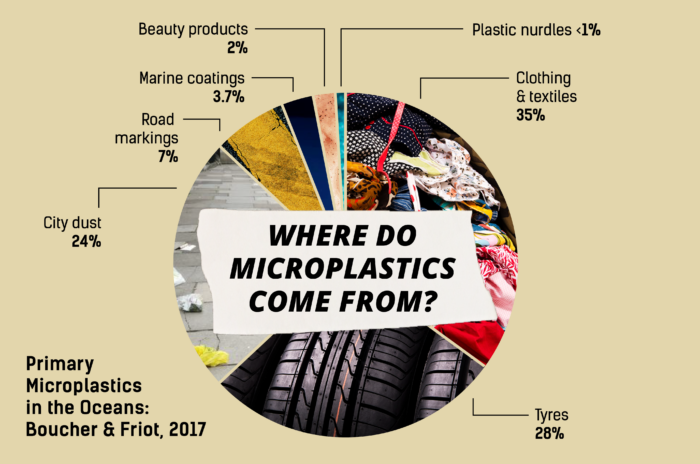
Microplastics are tiny plastic pieces that are less than <5 mm in length. Textiles are the largest source of primary microplastics (specifically manufactured to be smaller than 5mm), accounting for 34.8% of global microplastic pollution [1]. Microfibres are a type of microplastic released when we wash synthetic clothing – clothing made from plastic such as polyester and acrylic. These fibres detach from our clothes during washing and go into the wastewater. The wastewater then goes to sewage treatment facilities. As the fibres are so small, many pass through filtration processes and make their way into our rivers and seas.
Around 50% of our clothing is made from plastic [2] and up to 700,000 fibres can come off our synthetic clothes in a typical wash [3]. As a result, if the fashion industry continues as it is, between the years 2015 and 2050, 22 million tonnes of microfibres will enter our oceans [4].
What impact do microfibres have on the environment and on human health?
Due to the tiny size of microplastics, they can be ingested by marine animals which can have catastrophic effects on the species and the entire marine ecosystem.
Microfibres can absorb chemicals present in the water or sewage sludge, such as polychlorinated biphenyls (PCBs) and carcinogenic Persistent Organic Pollutants (PoPs). They can also contain chemical additives, from the manufacturing phase of the materials, such as plasticisers (a substance added to improve plasticity and flexibility of a material), flame retardants and antimicrobial agents (a chemical that kills or stops the growth of microorganisms like bacteria). These chemicals can leach from the plastic into the oceans or even go straight into the bloodstream of animals that ingest the microfibres. Once ingested, microfibres can cause gut blockage, physical injury, changes to oxygen levels in cells in the body, altered feeding behaviour and reduced energy levels, which impacts growth and reproduction [5][6]. Due to this, the balance of whole ecosystems can be affected, with the impacts travelling up the food chain and sometimes making their way into the food we eat! It has been suggested that people that eat European bivalves (such as mussels, clams and oysters) can ingest over 11,000 microplastic particles per year [7].
What can fashion brands do?
The fashion industry needs to take responsibility for minimising future microfibre releases. Brands can have the most impact if they take microfibre release into consideration at the design and manufacturing stages. Designers should consider several criteria in order to minimise the environmental impact of a synthetic garment [3]:
- Use textiles which have been tested to ensure minimal release of synthetic microfibres into the environment.
- Ensure the product is durable so it remains out of landfill as long as possible
- Consider how the garment and textile waste could be recycled, to achieve a circular system.
During manufacture, there are several methods that can be applied to reduce microfibre shedding such as brushing the material, using laser and ultrasound cutting [4], coatings and pre-washing garments [1]. The length of the yarn, type of weave, and method for finishing seams may all be factors affecting shedding rates. However, much more research from brands needs to occur in order to determine best practices in reducing microfibres and create industry-wide solutions.
Waste-water treatment…
Waste-water treatment plants (where all our used water gets filtered and treated) are currently between 65-90% efficient at filtering microfibres [6]. Research and innovations into improving the efficiency of capturing microfibres in wastewater treatment plants is essential to prevent them escaping into our environment.
Washing machine filters…
Improving and developing commercial washing machine filters that can capture microfibres may allow for an additional level of filtration, whilst also educating consumers and businesses [8]. However, current filters which need to be fitted by the user, such as that developed by Wexco, are currently expensive and reportedly difficult to install. They also place a financial burden upon the consumers, rather than pressurising brands to commit to change. To tackle this, we need more industry research and legislation to ensure all new washing machines are fitted with effective filters to capture the maximum amount of microfibres possible. However, we then have the issue of what to do with the microfibres once we have caught them – an area which requires more research and industry collaboration.
Collaboration is key
Collaboration across multiple industries is required if we are to tackle microfibre pollution. In addition to material research, waste management and washing machine research and development, there is a role for other sectors such as detergent manufacturers and the recycling industry to come together to help reduce microfibre pollution. Cross-industrial agreements could help promote collaboration between industry bodies and promote sharing of resources and knowledge.
A major issue has been a lack of a standardised measure of measuring microfibre release. However, a cross-industry group, The Microfibre Consortium recently announced the first microfibre test method. The launch will enable its members (including brands, detergent manufacturers and research bodies) to accelerate research that leads to product development change and a reduction in microfibre shedding in the fashion, sport, outdoor and home textiles industries. The Microfibre Consortium also works to develop practical solutions for the textile industry to minimise microfibre release to the environment from textile manufacturing and product life cycles.
The need for microfibre legislation
Comprehensive legislative action is needed to send a strong message and force the brands to address microfibre releases from their textiles. This is a complicated issue that will require policymakers to tackle this issue on many different levels and sectors. Currently, there are no EU regulations that address microfibre release by textiles, nor are they included in the Water Framework Directive.
However, there have been several developments in microfibre legislation in the past few years:
- As of February 2020, Brune Poirson, French Secretary of State for the Ecological and Inclusive Transition, is the first politician in the world to pass microfibre legislation. As of January 2025, all new washing machines in France will have to include a filter to stop synthetic clothes from polluting our waterways. This makes France the first country in the world to take legislative steps in the fight against plastic microfibre pollution. The measure is included in the anti-waste law for a circular economy.
- In 2018, US states of California and Connecticut proposed legislation which would see polyester garments legally required to bear warning labels regarding their potential to shed microfibres during domestic washing cycles. However, this legislation is yet to be passed.
- In 2019, the EAC urged the UK government to accelerate research into the relative environmental performance of different materials, particularly with respect to measures to reduce microfibre pollution, as part of an Extended Producer Responsibility scheme. However, the UK government rejected the proposal stating that current voluntary measures are sufficient.
What can you do?
Write to your policymaker
It is vital that policy is put into place to tackle microfibres, such as the new French washing machine filter legislation. If you are concerned about microfibres, we encourage you to write to your policy representative and urge your government to take action on microfibre pollution. Now that France has enacted the microfibre legislation, it raises the bar for other governments to also take action, but they will only do so with enough pressure from the people they represent – you!
Changing your washing practices
The easiest thing you can do to minimise microfibres releasing from your clothing is to simply wash your clothes less. Given that up to 700,000 microfibres can detach in a single wash [3] ask yourself if that item really needs to be washed or can it be worn once or twice more before you do?
While some research suggested using a liquid detergent, lower washing machine temperatures, gentler washing machine settings [3] and using a front-loading washing machine [9] can reduce microfibre shedding. Researcher Imogen Napper stated they found that there was no clear evidence suggesting that changing the washing conditions gave any meaningful effect in reducing microfibre release.
You can also use a Cora Ball, a guppy bag or a self-installed washing machine filter to capture microfibres from your clothing. The CoraBall and Lint LUV-R (an install yourself washing machine filter) have been shown to reduce the number of microfibres in wastewater by an average of 26% and 87%, respectively [10]. Although these can’t solve the problem, we still want to divert as many microplastics as we can from entering our waterways.
Should we all switch from synthetic fibres?
While many people’s first instinct is to switch from synthetic materials to natural materials to minimise microfibre release, this is not always a simple choice as there are other sustainability aspects involved. The UK’s Environmental Audit Committee in their report states ‘A kneejerk switch from synthetic to natural fibres in response to the problem of ocean microfibre pollution would result in greater pressures on land and water use – given current consumption rates’ [11].
Demand brands to do more to take action on microfibres
“Ultimate responsibility for stopping this pollution, however, must lie with the companies making the products that are shedding the fibres.” states the Environmental Audit Committee [11], but there are still too many major fashion brands not taking responsibility for what happens in their supply chains and in the life cycle of their products. As well as demanding action from your policymaker, we should also ask brands what they are doing to minimize the microfibre release from their products. It is clear that there is still a lot of work to do, and as their customers, we have a lot of power in influencing the impacts of the brands we buy.
The impacts of microfibres on the environment can be mitigated, but only with systematic and meaningful change supported by policymakers, brands, industry, NGOs and citizens all working together.
References
[1] Boucher, J. and Friot, D. (2017). Primary Microplastics in the Oceans: A Global Evaluation of Sources. IUCN. Available at: https://portals.iucn.org/library/sites/library/files/documents/2017-002-En.pdf
[2] Textile Exchange (2019). Preferred Fiber and Material Market Report. Available at: https://store.textileexchange.org/wp-content/uploads/woocommerce_uploads/2019/11/Textile-Exchange_Preferred-Fiber-Material-Market-Report_2019.pdf
[3] Napper, I. and Thompson, R. (2016). Release of synthetic microplastic plastic fibres from domestic washing machines: Effects of fabric type and washing conditions. Marine Pollution Bulletin. Available at: https://www.sciencedirect.com/science/article/pii/S0025326X16307639?via%3Dihub
[4] Ellen MacArthur Foundation (2017). A new textiles economy: Redesigning fashion’s future. Available at: https://www.ellenmacarthurfoundation.org/assets/downloads/publications/A-New-Textiles-Economy_Full-Report_Updated_1-12-17.pdf
[5] Koelmans, A., Bakir, A., Burton, G. and Janssen, C. (2016). Microplastic as a Vector for Chemicals in the Aquatic Environment: Critical Review and Model-Supported Reinterpretation of Empirical Studies. Environmental Science & Technology. Available at: https://pubs.acs.org/doi/abs/10.1021/acs.est.5b06069
[6] Henry, B., Laitala, K. and Grimstad Klepp, I. (2018). Microplastic pollution from textiles: A literature review. Consumption Research Norway SIFO. Available at: https://www.hioa.no/eng/About-HiOA/Centre-for-Welfare-and-Labour-Research/SIFO/Publications-from-SIFO/Microplastic-pollution-from-textiles-A-literature-review
[7] Van Cauwenberghe, L. and Janssen, C. (2014). Microplastics in bivalves cultured for human consumption. Environmental Pollution. Available at: https://www.sciencedirect.com/science/article/pii/S0269749114002425
[8] Browne, M., Crump, P., Niven, S., Teuten, E., Tonkin, A., Galloway, T. and Thompson, R. (2011). Accumulation of Microplastic on Shorelines Worldwide: Sources and Sinks. Environmental Science & Technology. Available at: https://pubs.acs.org/doi/abs/10.1021/es201811s
[9] Hartline, N., Bruce, N., Karba, S., Ruff, E., Sonar, S. and Holden, P. (2016). Microfiber Masses Recovered from Conventional Machine Washing of New or Aged Garments. Environmental Science & Technology. Available at: https://pubs.acs.org/doi/abs/10.1021/acs.est.6b03045
[10] McIlwraith, H., Lin, J., Erdle, L., Mallos, N., Diamond, M. and Rochman, C. (2019). Capturing microfibers – marketed technologies reduce microfiber emissions from washing machines. Marine Pollution Bulletin. Available at: https://doi.org/10.1016/j.marpolbul.2018.12.012
[11] Environmental Audit Committee (2019). Fixing Fashion: clothing consumption and sustainability. House of Commons. Available at: https://publications.parliament.uk/pa/cm201719/cmselect/cmenvaud/1952/1952.pdf
Research and writing by Sienna Somers, Policy and Research Co-ordinator at Fashion Revolution
In Autumn 2018 the Environmental Audit Committee wrote to sixteen leading UK fashion retailers, among them M&S, ASOS and Boohoo, asking what they are doing to reduce the environmental and social impact of the clothes and shoes they sell. Today they released their Interim Report on the Sustainability of the Fashion Industry.
Fashion Revolution welcomes the UK Environmental Audit Committee’s findings of their inquiry into the sustainability of the fashion industry. We too want to see a thriving fashion industry in the UK that employs people, inspires creativity and contributes to sustainable livelihoods in the UK and around the world. We agree with the Environmental Audit Committee’s conclusion that the global fashion industry is exploitative and environmentally damaging and that brands and retailers have an obligation to address the fundamental business model.
This report states “We believe that there is scope for retailers to do much more to tackle labour market and environmental sustainability issues. We are disappointed that so few retailers are showing leadership through engagement with industry initiatives.”
Fashion Revolution believes that fashion brands and retailers should sign up to pledges and multi-stakeholder initiatives which are working towards improving workers’ rights, paying a living wage and striving towards a closed loop system. They should also use our Transparency Index as a tool to disclose more about their social and environmental policies, practices and impact both within their companies and throughout their supply chain.
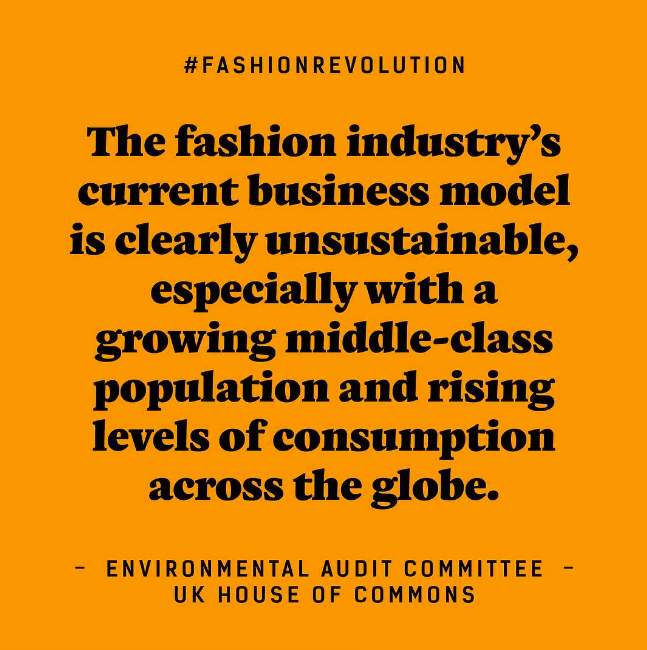
The Committee believes that “The fashion industry’s current business model is clearly unsustainable, especially with a growing middle-class population and rising levels of consumption across the globe. We are disappointed that few high street and online fashion retailers are taking significant steps to improve their environmental sustainability”. Brands are criticised for inadequate sustainability actions and initiatives. The report concludes that recycling waste and complying with the Government’s Carbon Reduction Commitment is not sufficient to offset the environmental damage caused by the fashion industry.
We believe that the fashion industry in the United Kingdom and globally needs far reaching systemic change in order to tackle poverty, inequality and environmental degradation and greater transparency is the first crucial step towards solving its human rights and environmental crises. Our Fashion Transparency Index research has shown that some major brands and retailers are making significant efforts to tackle these issues in their companies and across their supply chains, whilst at the same time far too many large brands and retailers are turning a blind eye. Increased transparency means issues along the supply chain can be identified, addressed and remedied much faster. Greater transparency also means best practice examples, positive stories and effective innovations can be more easily highlighted, shared and potentially scaled or replicated elsewhere.
In an Ipsos MORI survey of 5,000 people across the five largest EU markets published by Fashion Revolution in November, consumers told us they want to know more about the social and environmental impacts of their garments when shopping for clothes and they expect fashion brands and governments to be doing more to address these issues. 77% strongly/somewhat agree that fashion brands should be required by law to respect the human rights of everybody involved in making their products, 75% strongly/somewhat agree that fashion brands should be required by law to protect the environment at every stage of making their products. The majority of people surveyed believed governments should be responsible for holding fashion brands to account for disclosing information about the way their products are made, what suppliers they are working with and how they’re applying socially and environmentally responsible practices in their supply chains.
It is clear that greater government intervention will be necessary if companies are to be held to account for the impacts of their practices on people’s lives and the environment. We want the U.K. Government to pass mandatory due diligence laws, building upon the recent regulatory examples in France and Switzerland. Ultimately, if the UK Government is serious about improving human rights, social impacts and environmental sustainability in the fashion industry, then it must rewrite the rules of the economy so that shareholder profit is no longer prioritised above the protection of our ecosystems and the health and wellbeing of our communities.
On 2nd December 2015, Fashion Revolution launched its first white paper, It’s Time for a Fashion Revolution, for the European Year for Development. The paper sets out the need for more transparency across the fashion industry, from seed to waste. The paper contextualises Fashion Revolution’s efforts, the organisation’s philosophy and how the public, the industry, policymakers and others around the world can work towards a safer, cleaner, more fair and beautiful future for fashion.
“Whether you are someone who buys and wears fashion (that’s pretty much everyone) or you work in the industry along the supply chain somewhere or if you’re a policymaker who can have an impact on legal requirements, you are accountable for the impact fashion has on people’s lives. Our vision is is a fashion industry that values people, the environment, creativity and profit in equal measure”
explained Sarah Ditty on behalf of Fashion Revolution.
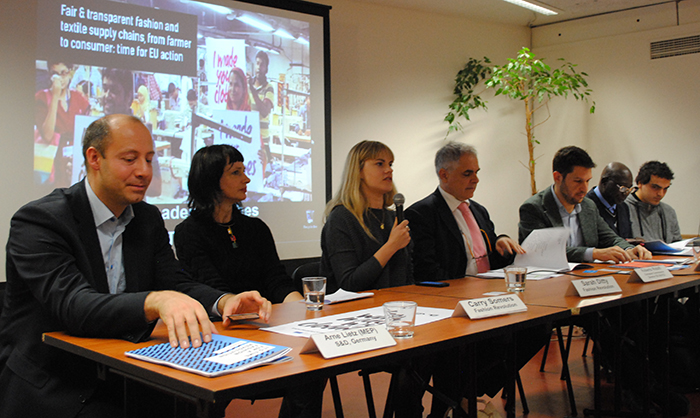
Carry Somers, co-founder of Fashion Revolution, said
“Most of the public is still not aware that human and environmental abuses are endemic across the fashion and textiles industry and that what they’re wearing could have been made in an exploitative way. We don’t want to wear that story anymore. We want to see fashion become a force for good.”
The paper was launched at a joint event with the Fair Trade Advocacy Office in Brussels and hosted by Arne Leitz, Member of the European Parliament to mark the European Year for Development.
The event included contributions by Dr Roberto Ridolfi, Director at the European Commission Directorate-General for Development and Cooperation, Jean Lambert MEP, and Sergi Corbalán, on behalf of the Fair Trade movement.
“We need an integrated approach, from cotton farmer to consumer, and we need EU support,”
explained Sergi Corbalán.
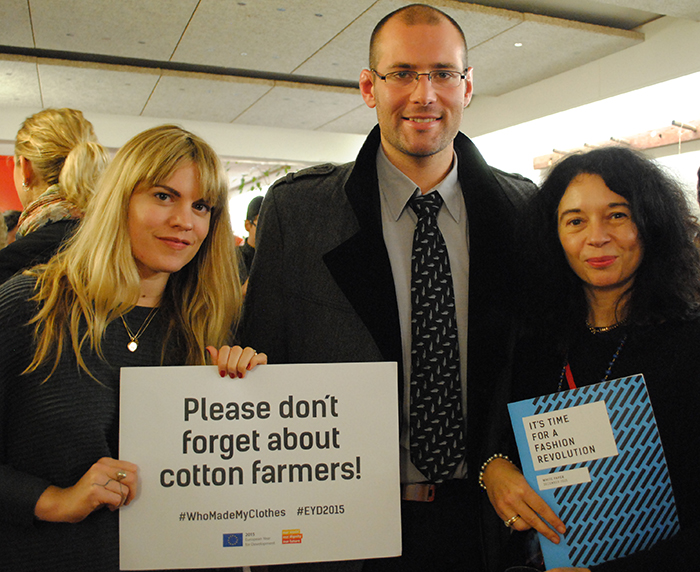
Fashion Revolution lays out its five year agenda in the paper. By 2020, Fashion Revolution hopes that:
- The public starts getting some real answers to the question #whomademyclothes
- Thousands of brands and retailers are willing and able to tell the public about the people who make their products
- Makers, producers and workers become more visible
- The stories of thousands of actors across the supply chain are told
- More consumer demand for fashion made in a sustainable and ethical way
- Real transformative positive change begins to take root.
With many congratulations on the launch of the white paper, Dr Roberto Ridolfi proclaimed:
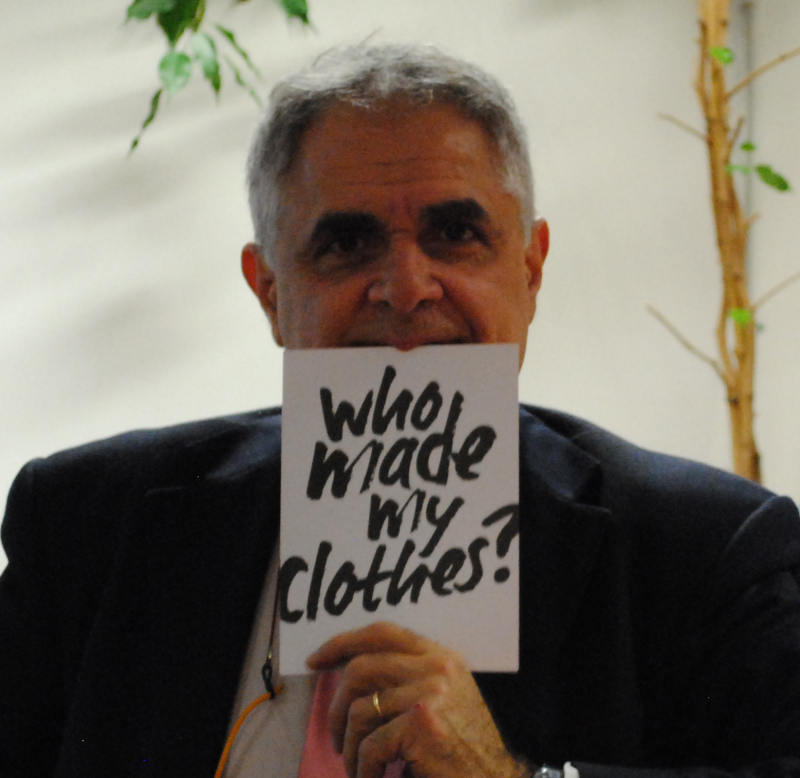
“My ambition, as of tomorrow, is to become a Fashion Revolutionary!”
Although our resources are free to download, we kindly ask for a £3 donation towards booklet downloads. Please donate via our donations page
[download image=”https://www.fashionrevolution.org/wp-content/uploads/2014/04/FRD_resources_thumbnail_whitepaper.jpg”]Download our White Paper ‘It’s time for a Fashion Revolution‘, published December 2015.
Download[/download]
Fashion Revolution also launched a new video for the European Year for Development at the event: Why We Need a Fashion Revolution.
Alf-Tobias Zahn interviews Anna Troupe, Head of Fashion Design and Technology at BGMEA, Bangladesh.
Alf: It is more than a pleasure having this time with you, Anna. You are new Head of the Fashion Design and Technology department at BGMEA University of Fashion and Technology. In this position you are trying to unite education with industry to advance design skills and sustainability know-how in Bangladesh. How are you connected with Fashion Revolution Day and the project Trace my Fashion?
Anna: I’m involved in Fashion Revolution Day and the Trace my Fashion project because Bangladesh’s activities for this event centered on the design students in my department and their engagement with industry sustainability leaders to learn about best practices. My role was to organize and guide them while interfacing with industry stakeholders on this initiative as a Communications Head and Strategic Partner.
“All the momentum for vital change in the garment sector is here”

Alf: How long have you been in Bangladesh – and why Bangladesh?
Anna: I’ve been here eight months and the short reason why is that all the momentum for vital change in the garment sector is here, because of Bangladesh’s significance as the second largest garments exporter and the site of the worst disaster in garment industry history.
The longer, more personal story of why I came to Bangladesh is that I entered and won a fabric design competition in 2011 that was created to support the weaving communities in the Sirajganj district of Bangladesh. Just a few months before I had very randomly discovered Muhammad Yunus’s book, Creating a World without Poverty, and decided he was my new hero and role model. After I won the fabric competition, I learned that Yunus was behind it, which was so cool because the fabric design had to symbolize “hope” and I had to include an essay explaining the symbolism. To realize that my new hero had now read my personal philosophy of hope, and liked it, really meant something to me – it felt like destiny I guess, so I took it seriously.

Then I discovered that I had just relocated to the vicinity of the top textiles program in the world, NCSU College of Textiles, so I applied to do my masters there. And within a month of starting my studies, some funding for sustainability research became available and they hired me to focus on this. But my advisor believed helping companies go green was the greater concern while I suspected that companies were jumping on the eco-friendly bandwagon to tap the “green market” while neglecting the human capital in their supply chains. Then Rana Plaza happened and settled the debate.
Meanwhile I had met Yunus at a conference he gave in North Carolina and struck up a friendship – he was very supportive and responsive to me. The day of the Rana Plaza trageday, I was in statistics class in North Carolina when I saw the news on my phone that day. The day after the collapse, I wrote Yunus, offering my condolences and asking to help and he invited me to come to Bangladesh for Social Business Day 2013. At that event I met philanthropists who appreciated what I was doing and encouraged me to return the following year. I almost didn’t do it because I’d graduated and felt the pressure to find a “real job” but luckily I came to my senses at the last minute, flew out, had delayed flights the whole way, took 4 days to arrive, missed the Social Business Day 2014 conference, but managed to connect with the philanthropists and secure funding to relocate to Dhaka and continue my research.
While visiting I learned about the need for design faculty at BUFT and was dubious because I’d never envisioned myself as a teacher. But I met with them anyway and they were so supportive and willing to let me work part-time that I decided it would be wise to get firsthand experience with the future employees of the industry I was hoping to improve. Later I lost my research funding because the donors were having to pour resources into a different project, so I made a proposal to BUFT for full-time work and they asked me to lead the department.
Alf: How many fashion students do you teach in the moment?
Anna: I currently teach 97 students myself, but there are 756 total in the department.
“We want to remove the stigma of “Made in Bangladesh”
Alf: As you said before, you have a personal relation to the Rana Plaza tragedy and a professional relation to the textile industry. You are also part of the team behind Fashion Revolution Bangladesh. Can you tell me more about the other team members and what do you want to achieve with your actions?
Anna: The country coordinator for Fashion Revolution Bangladesh this year is Bangladeshi fairtrade designer, Nawshin Khair. The larger Fashion Revolution group is a British NGO comprised of designers, academics, scientists, industry leaders, and other stakeholders. Fashion Revolution Bangladesh is currently a collaboration between BUFT, myself, Nawshin, as well as a Hong Kong-based non-profit called Lensational which provides photography training and job support to disadvantaged women such as garment workers. Fashion Revolution Bangladesh is a part of a larger consumer awareness campaign to promote better transparency and more ethical labor practices, with the specific mission to remove the stigma of “Made in Bangladesh” by highlighting the sustainability initiatives of progressive factories here.

However, Fashion Revolution Bangladesh is also a long term effort to achieve much more than that. Together we are investigating the relationship between the shortcomings in the local education system and those of the Ready-Made Garment sector, while developing training solutions to improve both, and spurring dialogue on these issues among the local and international communities that are involved. We hope to make the annual Fashion Revolution Bangladesh campaign activities a course in the BUFT fashion curriculum, as well as provide internships to students, and continue to engage industry leaders in teaching design students about sustainability, ethical practice, and compliance. We’ll also focus on gender equality in the sector by targeting female graduates specifically and informing all students about this issue.
Finally, we aim to raise the sustainability and leadership skills of Ready-Made Garment mid-level management through more advanced training programs which currently don’t exist in the country, which is why so many of these positions are held by foreigners.
Alf: Can you tell me a little bit more about the 4 case companies of your actions, especially: why have you chosen exactly these companies?
Anna: First, the companies we chose were willing to participate, which is significant because there are plenty of great progressive factories who are nevertheless skittish about shining a spotlight on what they are doing right now, especially in something that seems like an activist movement focused on the Rana Plaza disaster. Our work for next year’s event is to spend much more time in outreach, to help the industry progressives see the benefits of what we are trying to do.
Second, we chose two fairtrade and/or impact-focused firms with alternative business models as well as two mainstream factories who are producing for many big name, conventional brands, but who are regardless making great efforts to reduce environmental impact and improve the social impact.
Desh Garments was established in 1977 and was the first export-oriented Ready-Made Garment factory in Bangladesh. The import and introduction of garments technology itself is credited to Desh Garments, which in 1978 sent 130 workers and management trainees to be trained at Daewoo in South Korea. We thought introducing Desh and its journey to the students at BUFT and wider audience will help us understand how Bangladesh came to be one of the leading countries for Ready-Made Garment business.
Beximco is a vertically-integrated factory in Dhaka that supplies for major brands as well as its own local label, Yellow. In terms of work environment, it is SA8000-certified and boasts a stunning campus and facilities, including on-site medical care and childcare. So it is already setting a high standard, but we were also interested in its impressive waste management initiative: For nearly three years, it has been developing and producing upcycled clothing, or clothing that is made entirely from the scrap of other garments (pre-consumer waste), under the guidance of Aus Design, from Estonia. This is part of its dedicated sustainability department, which we wanted to highlight as an ideal for other factories to replicate.
Living Blue is a fair trade concern, where the artisans not only get a fair wage and democratically manage and run their own businesses, but also have total control over profits. The surplus generated by these various social enterprises contribute to the general well-being of local communities and help to create sustainable social, cultural and economic life.
Friendship’ Colours of the Char’ works in some of the hardest to reach areas of Bangladesh that are almost completely deprived of government or non-government amenities and facilities. These are mostly disaster prone areas comprised of inhabitants who are almost completely dependent on agricultural based livelihoods. In order to ensure constant sources of income, Friendship ‘Colours from the Chars’ provides Vocational Training Courses and alternative income generation options. It also empowers women through training and job placement at its 7 weaving centres. The fabric they make from the weaving centres uses azo-free dyes.
The above four organisations each have unique and wonderful characteristics which add to the heritage of Bangladesh. We want to communicate their stories so that there is a fuller concept behind “Made in Bangladesh.”
“Fashion would truly be a democratized and individualized art that includes and enriches all societies and our material culture”

Alf: Bangladesh is the biggest textile exporter besides China. The future of Fashion in terms of the production will be designed in Bangladesh. So, what do you think: How could the future of ethical and sustainable apparel industry look like?
Anna: This is a great question, without easy answers because the current state is so far gone, and because technological solutions, along with decreased consumption (a presumed fundamental requirement in the sustainability vision) could create massive unemployment for an uneducated labor pool if applied to the current mass-produced business model. So an entirely different approach is needed really.
My vision would be creative production clusters that are provided high-skilled and knowledgeable employees by holistic training programs and global networks in the university system (in terms of international R&D partnerships with hubs in production areas, more cultural exchange programs, and also garment-related social impact programs as a basic component of learning in university-level textiles and fashion programs). Further, these clusters would be nurtured through committed partnerships with buyers and direct relationships with individual customers who care to know the people behind their clothing.
The orgs and businesses within these clusters would value their empowered, multi-skilled workers and take responsibility for the stability and growth of their communities, through all the benefits we already know contribute to an ideal work/life balance and greater gender equality such as we see working so successfully in the Nordic countries.
The concept of mass production and multinational brands would be left behind for higher quality, custom clothing that actually represents an enduring value to the wearer because it is unique to them and required their participation in its design.
Fashion would truly be a democratized and individualized art that includes and enriches all societies and our material culture. Textiles and clothing was, for many cultures and for so much history, full of meaning and personal stories; we lost that when it became an industrialized activity, so bringing it back will help re-instate the value of the producer-artist again.
Alf: Last but not least, one more personal question: What is your favorite clothing and who made it?
Anna: My preferred clothing is vintage, second hand finds, but here in Dhaka that is no longer available to me. I try to buy from sustainable brands like Threads for Thought, Osborne Shoes, and Aus Design’s upcycled clothing, which is made right here in Dhaka at Beximco. I also want to support independent emerging designers whenever I can – Joe Mas with his label ANGEMAS out of Hong Kong is a current fav.
Alf: Thanks for your time, Anna. I wish you all the best for your work in Bangladesh and for the future of (y)our Fashion Industry!
Interview/Text: Alf-Tobias Zahn. This post first appeared in http://www.grossvrtig.de/alftobiaszahn/
Fotos: Fashion Revolution Bangladesh
The True Cost is a documentary film about the impact of fashion on people and the planet. Filmed in countries all over the world, from the brightest runways to the darkest slums, and featuring interviews with the world’s leading influencers including Stella McCartney, Livia Firth, and Vandana Shiva.
The True Cost is an unprecedented project that invites us on an eye opening journey around the globe and into the lives of the many people and places behind our clothes.
Fashion Revolution is partnering with The True Cost to share the trailer.
The film will be released on May 29th. In the meantime, please watch the trailer below:
Social Media Links/Handles:
Website: truecostmovie.com
Twitter: @truecostmovie
Instagram: @truecostmovie
Facebook: facebook.com/truecostmovie
Hashtags: #truecostmovie #whopaystheprice


The garment industry is and has historically been one of the most female-dominated industries in the world. Today, more than 70% of garment workers in China are women, in Bangladesh the share is 85%, and in Cambodia as high as 90%[i]. For these women, development is closely linked to their conditions at work. It’s about gaining a decent pay, working under dignified conditions and having basic work security. It’s about moving out of poverty, being able to provide children with education, and to become more independent and grow as an individual.
The reality for most garment workers in the Global South is far from here. Although producing for some of the most profitable companies in the world, they are working for poverty wages, under dreadful conditions, and they have to undertake an excessive amount of overtime. In Bangladesh (the world’s second largest exporter of clothes) the minimum wage for garment workers is 5,300 taka (£45/€62) per month which is far from the 8,900 taka (£75/€104) that are needed to cover a worker’s basic needs, and even further away from a living wage. Many garment workers are working between 60 and 140 hours of overtime per week and it is common to be cheated of the overtime pay. Health and safety are often neglected, workers are denied breaks, and abuses are common – to mention a few of the problems in the industry[ii].

Yet, there are some who argue that this exploitation is the road to female empowerment. Historically, women’s integration into paid work has been one of the important forces to emancipation and growing gender equality. Liberal writers such as Leslie T. Chang, argue that the globalised garment industry has had this empowering effect as women from poor backgrounds are able to find work and earn a salary[iii]. In similar vein, social economist Naila Kabeer emphasises how work in the garment industry has allowed women in Bangladesh to gain recognition for their economic contribution for the family, and that garment workers tend to be more conscious about their rights and have a more critical mindset than other women[iv].
These gains are important to recognise. Still, there are reasons to be sceptical about the transformative potential that garment work has for women in the Global South. Firstly, it is important to understand the way in which women have been integrated to the industry. In the neoliberal deregulated global economy, developing countries are competing to produce for multinational brands by offering the lowest costs and the fastest and most flexible production. In a labour-intensive industry such as garment, this is mainly achieved by making labour cheaper and more flexible, that is, by paying lower salaries, push for longer hours, and reducing work and environmental standards.

Women’s integration to the garment factories has played a crucial role in this process. Factory owners have been taken advantage of women’s unequal position in society to form an even cheaper, more docile and flexible work force. So, rather than challenge their subordination in society, work in the garment industry is reproducing it. Women tend to earn significantly less than men, they face systematic discrimination, and they are only able to access the lowest paid jobs with very poor prospects for promotion. Many of them have low work security, and if they are not prepared to work on the terms set out by their employers they run the risk of losing their jobs[v].
The exploitation of women workers has allowed European fashion companies to make huge profits while denying the workers who produce their clothes the most basic rights. By outsourcing production, these companies are able to both step away from their responsibility and to play producers against each other to get the best and most profitable deal. The deregulated nature of the global economy makes worker’s legal protection very thin and their right to organise and bargain collectively is constantly restricted.
Despite these challenges, there are many women who are mobilising into unions and other labour movements to challenge the inequalities and exploitation in the garment industry. From Bangladesh, to Cambodia and Honduras, workers are defying threats, violence, social oppression and powerful capitalist forces in order to defend their basic rights. Their struggle is key for the development of the workers, their families and whole societies. It also has an important empowering effect for women who commonly are marginalised and discouraged to act politically. This could allow real emancipatory change for women and the chance to move out of poverty and become stronger, more independent individuals.
The citizens of Europe have an important part to play in their struggle. Garment workers need resources and support to confront the powerful forces that they are up against, and there are many organisations that are working on these issues, including Clean Clothes Campaign, War on Want and TRAID. By supporting them we can make an important contribution for the garment workers’ fight. We can also act in solidarity with garment workers by putting pressure on the European firms – notably to pay up for the production and ensure that production is not going to be moved to a new location if labour prices go up. Toothless CSR policies are not enough. We need real commitments from fashion companies and they have to stop counteracting the struggle of garment workers.

Moreover, we must campaign for changes in the global garment industry to stop large fashion retailers from playing producers against each other. Profits can no longer come to any price. Ethics and the environment have to be brought into the centre of the debate and we need to show that, as European citizens, we do not accept the violations that are taking place in the garment industry. European fashion brands should become accountable for the human rights abuses that are taking place in their supply chains, and they should be obliged to ensure that fair wages and work conditions are met. Organisations such as CORE and European Coalition for Corporate Justice are currently campaigning for these changes on national and EU levels, and by supporting them we can make their campaigns grown larger.
Coming back to the initial question of development, the garment industry could have a great potential as an emancipatory force for women in the Global South. However, as we have seen, work in in itself is not sufficient for creating development and challenge gender inequality – the nature of work is as important and this has to be urgently reconsidered. The most important source for that change comes from the garment workers themselves, but the people in Europe has an important role to play by supporting their struggle and campaigning for legislative change on the national and EU levels. Together we can build strength and push for a fairer and sustainable fashion industry.
Emilie Schultze, MSc graduate in Development Studies, SOAS University of London
Photo credits: Rainbow Collective
[i] Rock M. (2001) p. 34 in ‘The rise of the Bangladesh Independent Garment Workers’ Union (BIGU)’ in Hutchison J. and Brown A. (eds.) Organising Labour in Globalising Asia, London and New York: Routledge; Hilary J. (2013) p. 110 in ‘The Poverty of Capitalism: Economic Meltdown and the Struggle for What Comes Next’, Pluto Press: London
[ii] Bloomberg, Bangladesh raises minimum wage for garment workers after unrest. Available at: http://www.bloomberg.com/news/articles/2013-11-13/bangladesh-garment-factories-to-stay-shut-amid-worker-protests
War on Want (2011) p. 4 in Stitched Up: Women workers in the Bangladeshi garment sector, London: War on Want
[iii] Chang L. Ted Talk, The Voices of China’s Workers. Available at https://www.ted.com/talks/leslie_t_chang_the_voices_of_china_s_workers?language=en
[iv] Swedwatch (2012) p. 23-24, A Lost Revolution? Empowered but Trapped in Poverty. Women in the Garment Industry in Bangladesh Want More, Stockholm
[v] WIEGO website, Garment Workers. Available at: http://wiego.org/informal-economy/occupational-groups/garment-workers
As 2015 is the official European Year for Development, we should stop to consider what space the European garment, textile and fashion industry fills in the context of the wider world and the global development agenda.
Europe is home to some of history’s most important textile and fashion inventions and today’s most celebrated manufacturers, innovators and artists. Made in Europe is a label steeped in heritage, unparalleled quality and award-winning craftsmanship. Europe is home to hundreds of leading retailers and brands, internationally acclaimed designers, thousands of talented emerging designers and forward-thinking entrepreneurs, researchers and educators.
Today, the EU textile and clothing sector remains a SMEs based industry. Companies of less than 50 employees account for over 90% of the workforce and produce almost 60% of the value added. Clothing and textiles is also one of the most globalised industries with the chain of production, wholesale and retail of even just one product spanning dozens of stakeholders and many continents.

Europe’s relationship with the fashion industry in the developing world is complex. EU clothing imports increased strongly over each quarter of 2014. Europe now imports about half of the world’s entire clothing production with China manufacturing an estimated 65 percent of the world’s textiles. Other major clothing and textile manufacturing countries and emerging economies include India, Cambodia, Bangladesh and Turkey where farmers and workers commonly make less than a living wage and benefit from very little social protection.
European trade in clothing and textiles has the capacity to positively impact the course of human development across the world. But there is much work to be done to ensure this happens and does so in a way that is empowering, participatory and sustainable for the entire global value chain.
This is what Fashion Revolution Day is all about. On the 24th April of each year, people come together from every continent and corner of the world to challenge the current industry-wide system and to demand that fashion be used as force for good.
The truth is that the relationships along fashion’s long value chain are broken. Consumers don’t know how and where things are made, and producers have effectively become invisible. This opaqueness breeds the conditions that allow disasters to happen and obscures responsibility and accountability when things go wrong — like what happened at Rana Plaza in Bangladesh during 2013, when nearly 1,200 garment workers lost their lives due to bad working conditions.
This way of working also allows environmental catastrophe to persist. According to the Danish Fashion Institute (2013), fashion is the world’s 2nd most polluting industry, second only to oil. 25% of chemicals produced worldwide are used for textiles and the industry is often noted as the number two polluter of clean water – after agriculture.
Another unfortunate side effect of the current model is the loss of time-honoured crafts, culture and skills. Europe has seen the decimation of techniques such as Harris Tweed weaving, haute couture embroidery and specialist leather making over the past several decades.

Fashion Revolution believes in building an industry that values people, the environment, creativity and profit in equal measure. Everywhere — for Europe as much as the rest of world.
The true cost of the current fashion industry business model must not be forgotten: complacency and distraction means unless we stamp our resolve here and now, incidents such as Rana Plaza will be dismissed as an unfortunate reality of contemporary life.
It doesn’t have to be this way forever. Fashion Revolution believes that we should start by making the industry more transparent, so that collectively we can see and begin to understand how it truly works. And only then can we begin to fashion a new way of working. It’s like tackling addiction. The key to overcoming is to start by looking at and being honest about the scale of the problem.
As we enter the EU’s Year of Development, the time is now to consider how we can legislate a cleaner, fairer, more sustainable future for the fashion industry within Europe and with those who we trade in clothing and textiles.
Photo credit: Parisian/Vietnamese brand Linda Mai Phung

This website was created and maintained with the financial support of the European Union. Its contents are the sole responsibility of Fashion Revolution and do not necessarily reflect the views of the European Union.