A love letter to your clothes is a significant act of responsibility
Finnish
Rakkauskirje vaatteellesi on merkittävä vastuullisuusteko
Vaatteiden tunnearvolla on suuri merkitys sille, miten hyvin huollamme vaatteitamme ja miten pitkään ne pysyvät käytössämme. Siksi vastuullisuus on myös vaatteidemme rakastamista.
Vaatteiden vastuulliseen ja kestävään kulutukseen liittyy useita eri aspekteja, ja erityisesti vastuullisesti tuotettujen vaatteiden ostamisen roolia ollaan korostettu vastaiskuna pika- tai ultrapikamuotiketjujen tuotteiden ostamiselle. Vastuullisesti tuotettujen vaatteiden suosimisen lisäksi on vähintään yhtä tärkeää kiinnittää huomiota siihen, kuinka käytämme ja huollamme vaatteita. Kuluttamisella viitataankin itse ostopäätöksen tekemisen lisäksi kaikkeen siihen, mitä tapahtuu ostohetken jälkeen: miten vaatetta käytetään, säilytetään ja huolletaan, ja miten siitä loppujen lopuksi hankkiudutaan eroon, kun se ei enää täytä tarpeitamme. Se, miten kohtelemme vaatteitamme ei ole yhdentekevää, ja merkittävimpiä ympäristötekoja, jota voimme kunkin vaatteen kohdalla tehdä, on maksimoida niiden käy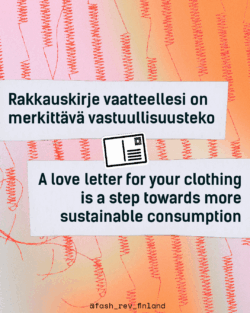 ttöikä ja ottaa niistä kaikki ilo irti niin pitkään kuin suinkin vain on mahdollista.
Lähtökohdat vaatteiden elinkaaren pidentämiseen sekä vaatteen kestävyyteen ovat jokaisen yksilön ja vaatteen kohdalla erilaiset ja riippuvat monista eri tekijöistä. Yksi tekijä, joka harvemmin nousee keskustelun aiheeksi, on tunneside vaatetta kohtaan. Anniina Nurmi toteaa kirjassaan Rakastan ja vihaan vaatteita vastuullisuuden olevan rakkautta vaatteita kohtaan. Vaatteella voikin rahallisen tai käytännöllisen arvon lisäksi olla erityistä tunnearvoa, joka puolestaan saa meidät huolehtimaan niistä paremmin.
Vaatteen tunnearvolla viitataan usein vaatteen kykyä säilyttää merkityksensä, haluttavuutensa ja paikkansa osana vaatekaapin sisältöä pitkänkin ajan kuluessa. Tarve tai halu korvata vaate uudella vähenee, sillä tunneside liittyy nimenomaisesti jo omasta vaatekaapista löytyvään kappaleeseen. Vahva, positiivinen tunneside johtaa tutkitusti parempaan huolenpitoon vaatteesta – säilytykseen, pesuun ja käyttöön kiinnitetään tarkempaa huomiota, ja pienet kulumat tai viat pyritään korjaamaan mahdollisuuksien mukaan. Vaikka tälläiset yksittäiset teot yksittäisen vaatteen kohdalla voivat tuntua pieniltä, ne ovat tosiasiassa merkittävä tapa pidentää vaatteen elinkaarta ja siten vaikuttaa sen vastuullisuuteen. Mitä jos kohtelisimme jokaista vaatettamme tällaisella tunnelatauksella?
Tunnesiteen muodostuminen ei kuitenkaan ole looginen tai järkiperäinen prosessi, eikä sen muodostumista voi aina ennakoida. Tunnesiteitä on myös monia erilaisia, ja ne voivat syntyä tai rakentua useita eri reittejä. Tunnesiteen syntymistä voidaan edistää suunnittelulla, joka tukee vaatteen kestävyyttä yleisellä tasolla ja pyrkii varmistamaan, että vaatteet ikääntyvät kauniisti ja vastaavat käyttäjänsä tarpeisiin mahdollisimman monipuolisesti. Kuluttajien osallistaminen suunnitteluprosessiin voi myös tukea tunnesiteen syntymistä, sillä se luo mahdollisuuden tehdä vaatteesta juuri omannäköinen ja omiin tarpeisiin vastaava.
Yksilön oma panos vaatteeseen voi olla yksi merkittävimmistä tavoista luoda tunneside vaatteeseen. Oman kädenjäljen näkeminen ja arvostaminen vaatteessa korjaamisen, personoinnin tai suunnittelun kautta voi synnyttää positiivisen tunnelatauksen tai vahvistaa sitä entisestään. Vaatteiden työstäminen itse tai yhteistyössä itselleen läheisen henkilön kanssa on merkittävä tapa rakentaa tunnesidettä tarkoituksenmukaisesti, ja siksi vaatteiden korjaustaidot ovatkin tärkeitä vaatteen elinkaaren pidentämiseksi.
Aina vahva tunneside ei välttämättä liity suoranaisesti vaatteen vastuullisuuteen tai elinkaaren pidentämiseen. Häämekko on esimerkki vaatteesta, jota suurin osa ihmisistä käyttää vain yhtenä päivänä elämässään, mutta säilyttävät sitä vuosikausia jälkeenpäin siksi, että vaate on ollut tärkeä osa juhlapäivää, johon liittyy valtava, positiivinen tunnelataus. Yleisestikin vaatteen yhdistäminen johonkin itselle merkitykselliseen tapahtumaan, henkilöön tai ajankohtaan elämässä voi luoda siihen vahvan tunnesiteen, vaikka vaate ei välttämättä muuten edes olisi löytänyt tietään osaksi vaatekaapin sisältöä vuosikausien ajaksi. Mökkivaatteeksi päätynyt huppari voi muistuttaa lapsuuden kesistä, pieneksi jäänyt mekko ylioppilaaksi valmistumisesta tai keikkapaita uskomattomasta kokemuksesta. Lahjaksi saadut tai perityt vaatteet voivat sisältää vahvan tunnelatauksen ja muistuttaa vaatteen alkuperästä aina sitä käytettäessä – erilaisia esimerkkejä on lukemattomia, ja ne kaikki kertovat omanlaisensa tarinan.
Rakkauskirjeitä vaatteillemme -taidenäyttely
Rakkaus vaatteitamme kohtaan on merkittävä tapa pyrkiä kohti vastuullisempaa kuluttamista, ja siksi haluammekin kerätä tarinoita ja vaatekappaleita, joilla on käyttäjilleen vahva tunnearvo ja luoda näiden pohjalta taidenäyttely. Tarkoituksemme on valokuvata vaatteet ja liittää niiden oheen rakkauskirje vaatteen omistajalta, joka kuvaa vaatteen tarinaa ja sitä, kuinka tunneside siihen on syntynyt ja miten tuo tunneside on vaikuttanut siihen, miten vaatetta on käytetty vuosien saatossa. Haluamme korostaa vaatteiden tunnearvon tärkeyttä osana vastuullista kuluttamista ja kerätä kokemuksia ja tarinoita, jotka tukevat tätä viestiä.
Tavoitteemme on luoda taidenäyttely, jonka jokainen voi olla mukana tekemässä lähettämällä meille tiedot valitsemastaan vaatteesta. Me valokuvaamme vaatekappaleen ja painamme kuvan sekä rakkauskirjeen vaatteelle osaksi näyttelyä, joka järjestetään myöhemmin tänä vuonna.
Jos haluat osallistua näyttelyn tekemiseen, ota meihin yhteyttä! Näyttelyyn lähetettävä vaate voi olla uusi tai vanha, korjattu, muokattu, vintagelöytö tai yksinkertaisesti vaate, jota pidät rakkaana ja jonka pariin palaat yhä uudelleen. Se voi olla suosikkivillapaitasi, jota olet käyttänyt lukemattomia kertoja, tai vaate, joka liittyy erityiseen hetkeen elämässäsi – haluamme kuulla sinun, ja erityisesti vaatteesi tarinan!
English
The emotional value of clothes plays a major role in how well we care for them and how long they last. Therefore, responsibility is also about loving our clothes.
There are several different aspects to responsible and sustainable consumption of clothes, and in particular the role of buying responsibly produced clothes has been emphasized as a counterweight to buying products from fast or ultra-fast fashion chains. In addition to preferring responsibly produced clothes, it is at least as important to pay attention to how we use and care for clothes. Consumption refers not only to the purchase decision itself, but also to everything that happens after the purchase: how the garment is used, stored and cared for, and how we ultimately get rid of it when it no longer meets our needs. How we treat our clothes is not unimportant, and the most significant environmental actions we can take with each piece of clothing is to maximize its lifespan and get the most out of it for as long as possible.
The starting points for extending the life cycle of clothing and the durability of clothing are different for each individual and each garment and depend on many different factors. One factor that is less often discussed is the emotional attachment to the garment. Anniina Nurmi states in her book I Love and Hate Clothes that responsibility is a love for clothing. In addition to monetary or practical value, clothing can have a special emotional value, which in turn makes us take better care of it.
The emotional value of clothing often refers to the ability of a garment to maintain its meaning, desirability and place as part of the contents of the wardrobe over a long period of time. The need or desire to replace a garment with a new one decreases, because the emotional attachment is explicitly related to the piece already in one’s wardrobe. A strong, positive emotional attachment has been shown to lead to better care for the garment – more careful attention is paid to storage, washing and use, and small wear and tear or defects are repaired where possible. Although these individual actions for a single garment may seem small, they are actually a significant way to extend the garment’s lifespan and thus affect its sustainability. What if we treated every piece of clothing with such an emotional charge?
However, the formation of an emotional bond is not a logical or rational process, and its formation cannot always be predicted. There are also many different types of emotional bonds, and they can arise or be built in several different ways. The formation of an emotional bond can be promoted by design that supports the durability of the garment on a general level and strives to ensure that the clothing ages beautifully and meets the needs of its wearer as diversely as possible. Involving consumers in the design process can also support the formation of an emotional bond, as it creates the opportunity to make the garment look exactly like yours and meet your needs.
The individual’s own contribution to the garment can be one of the most significant ways to create an emotional bond with the garment. Seeing and appreciating your own handiwork in a garment through repair, personalization, or design can create or further strengthen a positive emotional charge. Working on clothes yourself or in collaboration with someone close to you is a significant way to build an emotional bond in a meaningful way, and therefore clothing repair skills are important for extending the life of a garment.
A strong emotional connection is not always directly related to the garment’s responsibility or extending its lifespan. A wedding dress is an example of a garment that most people wear only one day in their lives, but keep for years afterwards because the garment has been an important part of the celebration, which is associated with a huge, positive emotional charge. In general, associating a garment with an event, person or time in life that is meaningful to you can create a strong emotional connection to it, even if the garment might not have otherwise found its way into your wardrobe for years. A hoodie that ended up as a summer outfit can remind you of childhood summers, a dress that is too small of a graduation, or a gig shirt of an incredible experience. Clothes received as a gift or inherited can contain a strong emotional charge and remind you of the garment’s origin every time you wear it – there are countless different examples, and they all tell their own story.
Love Letters to Our Clothes Art Exhibition
Loving our clothes is a significant way to strive towards more responsible consumption, and that is why we want to collect stories and pieces of clothing that have a strong emotional value for their wearers and create an art exhibition based on them. Our goal is to photograph the clothes and attach a love letter from the owner of the garment, describing the story of the garment and how the emotional bond with it was created and how that emotional bond has influenced how the garment has been worn over the years. We want to emphasize the importance of the emotional value of clothing as part of responsible consumption and collect experiences and stories that support this message.
Our goal is to create an art exhibition that everyone can participate in by sending us information about the garment they have chosen. We will photograph the garment and print the image and love letter on the garment as part of the exhibition, which will be held later this year.
If you would like to participate in making the exhibition, please contact us! The garment you submit to the exhibition can be new or old, repaired, altered, a vintage find or simply a garment that you hold dear and return to again and again. It can be your favorite sweater that you have worn countless times, or a garment that is associated with a special moment in your life – we want to hear your story, and especially the story of your garment!