Hablemos de Fast Fashion y Salud. Si estás leyendo este artículo quizás ya estés familiarizado con los aspectos económico, medioambientales y sociales del mundo de la moda en general, y de la Fast Fashion en particular. Pero quizás no sepas que hay una faceta más, que merece la pena considerar cuando hablamos de nuestra manera de producir y consumir textiles. Me refiero al impacto directo que los textiles pueden tener sobre nuestra salud.
En Europa se utilizan alrededor de 15.000 formulaciones químicas diferentes para textiles. Para la producción de una sola prenda se pueden llegar a utilizar hasta 40 compuestos químicos diferentes (1). Estas sustancias confieren a la prenda características que la industria nos ha vendido como necesarias. Se trata de propiedades como el antiarrugas y antimanchas, que nos permiten – según la publicidad – ahorrar tiempo y dinero. Incluso, dicen, nos podrían salvar la vida, como es el caso de las telas tratadas con retardantes de llamas, que hacen que las prendas no ardan en caso de incendio.
PERO ¿CUÁL ES EL COSTE REAL QUE ESTAMOS PAGANDO?
En números: 9,3 millones de toneladas métricas de productos químicos se utilizan en la producción mundial de textiles cada año. El 25% de todas las sustancias químicas producidas a nivel mundial se emplea en la industria de la moda (1). Las implicaciones medioambientales son ingentes. Las consecuencias para los trabajadores del sector textil son incalculables tanto en término de morbilidad como de mortalidad.
¿Y CUALES SON LAS CONSECUENCIAS PARA EL CONSUMIDOR?
Cuando esa prenda, que no arde, es impermeable, de colores vivos que resisten al sol y a los lavados, acaba en nuestros armarios, se convierte en una amenaza directa para nuestra salud. Los investigadores de la Universidad de Granada en el 2019 publicaron un estudio analizando la presencia de bisfenol-A y parabenos en textiles y la correspondiente actividad hormonal derivada de la exposición dérmica a calcetines para bebés y niños de 0 a 48 meses. Los resultados fueron contundentes: “las concentraciones de bisfenol-A son alarmemente altas y la actividad hormonal es la esperada para tales concentraciones” (2).
Estas sustancias están clasificadas como disruptores endocrinos: tienen la capacidad de alterar el equilibrio hormonal de un organismo aumentando, reduciendo o bloqueando aquellos procesos fisiológicos controlados por las hormonas. Las consecuencias de una exposición prolongada a estas sustancias sintéticas incluyen: trastornos del comportamiento, pubertad precoz, obesidad, asma y cáncer de mamas entre otros.
El problema es que este aspecto no está regulado, no hay control, ni límites que respetar (3). En las etiquetas de las prendas hay muy poca información: nos indican el tipo de fibra utilizada y el lugar en que se ha producido; pero no sabemos nada de las sustancias químicas empleadas durante el proceso de producción. ¿Compraríamos una camiseta cuya etiqueta pusiera: 20% algodón, 80% poliéster + polibromados + metales pesados + ftalatos + alquifenoles?
Aunque la legislación no nos ampare todavía, tenemos que hacer un ejercicio de responsabilidad, no solo para nosotros, sino para todos aquellos que dependen de nuestras decisiones: nuestros hijos, familiares y todos aquellos trabajadores que viven rodeados de sustancias tóxicas todos los días, para que podamos ahorrarnos de planchar un pantalón.
Como declara con tajante ironía Lucy Siegle en su libro “To die for. Is fashion wearing out the world?”: para crear un armario perfecto tenemos que tener en mente que lo que no compramos es igual de importante a lo que compramos (4). Tenemos que estar dispuestos a renunciar a algo, a perder algo, para que todos podamos ganar.
ACTÚA
Si a ti te interesa el tema, te invitamos a mirar el trailer de Detox Fashion: Moda libre de tóxicos, de Greenpeace y también a sumarte a la campaña #QuéHayEnMiRopa a través de tus redes sociales.
Referencias:
- Andrew Hudson “Aiming to zero” sgs.com, 2017.
- Freire C et al. “Concentration of bisphenol A and parabens in socks for infants and young children in Spain and their hormone-like activities”. Environmental International, 2019.
- Nicolás Oles “Libérate de los tóxicos. Guía para evitar los disruptores endocrinos. RBA, 2019.
- Lucy Siegle “To die for. Is Fast Fashion wearing out the world?” Fourth Estate, 2011.
The UK government has said it wants all pupils back at school in the autumn, but there is uncertainty as to what children will be permitted to wear. Blazers and ties, which can’t be washed every day, may be banned to reduce the spread of Covid-19 and an affordable uniform bill currently going through Parliament would require schools to offer unbranded choices in order to reduce costs. This follows the statutory guidance introduced in Wales last year to make school uniforms more affordable, accessible and gender-neutral.
As parents’ thoughts turn to back-to-school, Fashion Revolution warns that the chemicals found in school uniforms could prove a risk to children’s health. In Europe, around 15,000 chemical formulations are used in textile production[i] and it takes between 10% and 100% of the weight of the fabric in chemicals to produce that fabric.[ii] Many of these chemicals are found in our clothing, including pesticides, dyestuffs & pigments, crease-resistant agents, oil & water repellents and antibacterial agents. The skin is the body’s largest organ and, since it is porous, it can absorb harmful chemicals which then enter the blood stream.
School uniforms are frequently advertised as stain-resistant, non-iron or easy-care, but many of the chemicals designed to make uniforms easier for parents to launder are known to be damaging to human health and to wildlife. After evidence of serious health problems from the use of PFOA, used by DuPont to make Teflon, a coating frequently used to make school clothing stain and water repellent, came to light, it was phased out under a voluntary agreement and in May last year more than 180 countries agreed to ban its production and use under the international Stockholm Convention on Persistent Organic Pollutants (POPs). It is known that PFOAs remain in the body for a long period of time and have been found in almost everyone in the world and even in penguins and polar bears.
The next generation of chemicals, known as PFAS (Perfluoroalkyl and Polyfluoroalkyl Substances), may be a regrettable substitute as evidence from the US Environmental Protection Agency (EPA) suggests their effects are just as bad or even worse than the chemicals they have replaced. PFAS chemicals are not only harmful to wildlife and the environment, but there are probable links to tumors and cancer, liver and kidney function, hormone disruption and reduced immunity.[iii] The US based Agency for Toxic Substances and Disease Registry reports that this is an area of particular concern during the current Covid-19 pandemic as studies suggest that exposure to PFAS may reduce antibody responses to vaccines and may reduce resistance to infectious diseases. More research is needed to understand how PFAS exposure may affect illness from COVID-19. [iv]
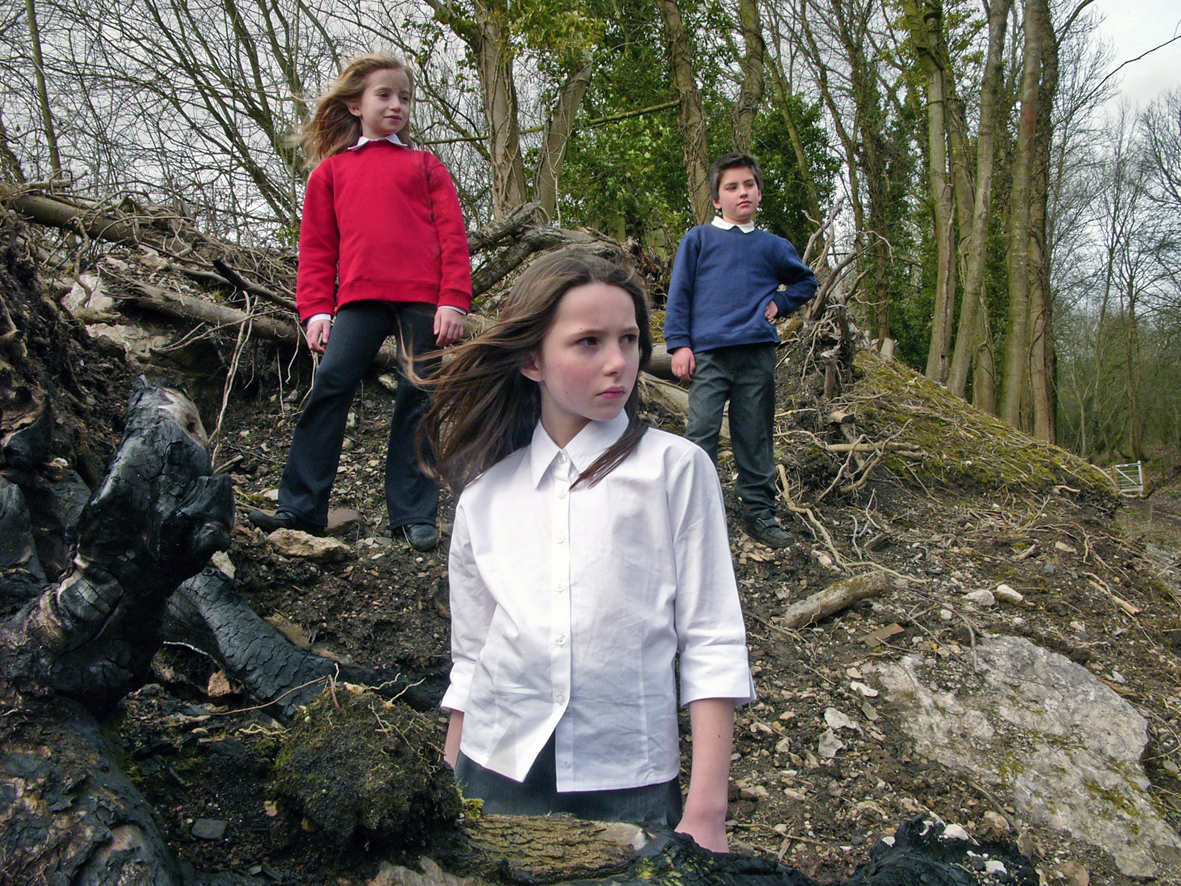
Even when clothing doesn’t come directly into contact with the skin, such as blazers and outerwear, it can still have significant health implications. One survey found that “the drying and storage of winter clothing indoors in schools and institutions may possibly in the worst case cause significant indoor air exposures …thereby contributing to the health problems that can result from the combined exposure to PFASs”.
Although these chemicals should mean that school uniforms last longer and need to be washed less frequently, a study concluded that the chemicals actually made no difference to parents laundering and purchasing habits, which raises the fundamental question of whether they are needed on our clothing in the first place.[v] Moreover, current government guidance is to wash school uniforms on a daily basis.
Formaldehyde is another chemical that has been used in clothing for decades due to its ability to reduce wrinkling and is widely found in school uniforms that are advertised as easy-care or non-iron. When it comes into contact with the skin, formaldehyde can cause rashes and allergic reactions[vi]. Formaldehyde, along with disperse dyes which are typically used to colour synthetic yarns and fabrics[vii], is being cited as one of the chemicals which caused some airline staff to become highly allergic to their uniforms, resulting in over 500 Delta employees filing a class-action lawsuit against the uniform manufacturer earlier this year. Although formaldehyde eventually washes out of clothing, studies have found that there is no reduction in formaldehyde levels after two washes. Delta employees claim they were still suffering allergic reactions a year after they received their new uniforms[viii].
Fashion Revolution’s Fashion Transparency Index was released in April 2020 and included 250 of the world’s biggest brands and retailers, including all of the major UK high street school uniform retailers. 60% of the brands in the Index weren’t publishing a Restricted Substances List, so there is often no way of knowing what chemicals are, or aren’t, permitted to be used in the manufacture of school uniforms.
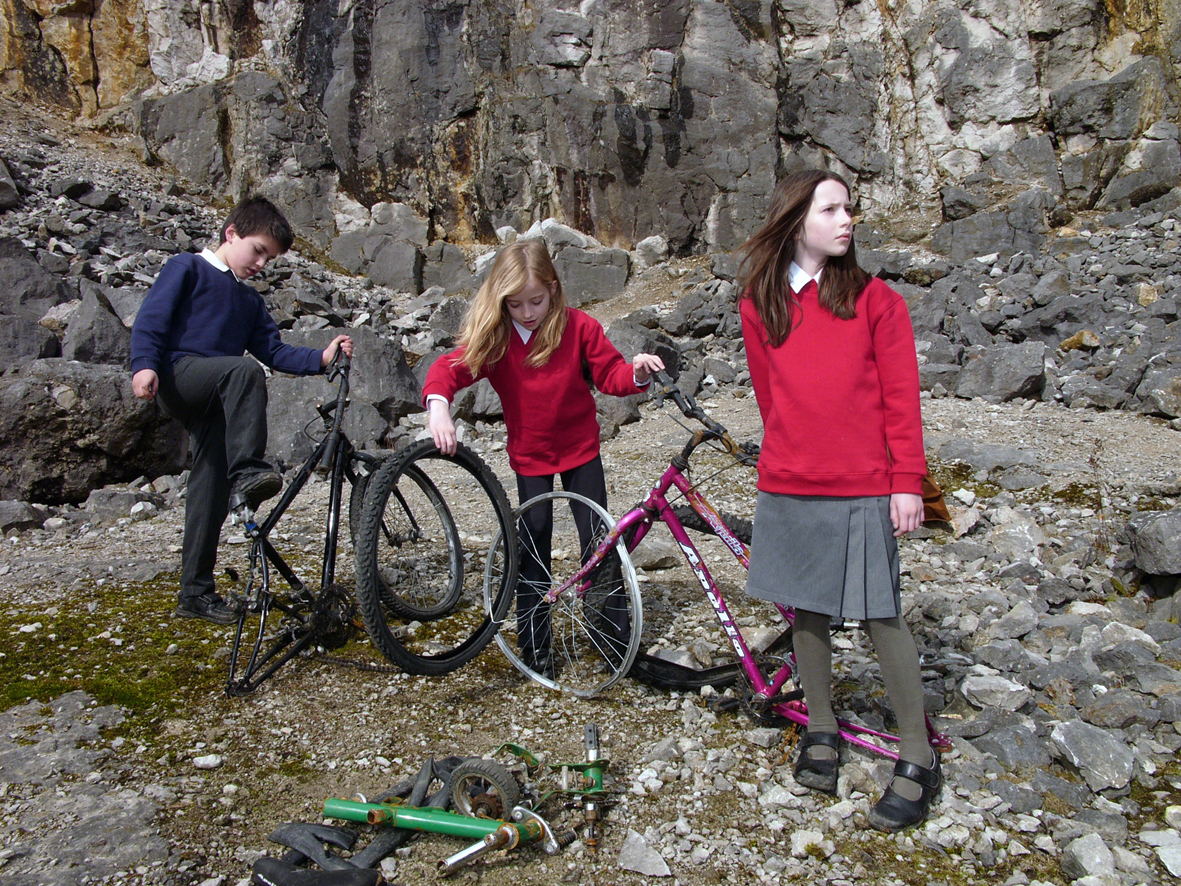
Parents can be a powerful force to bring about change. Ask #whatsinmyclothes to let brands and retailers know we don’t want materials which compromise children’s health and nature’s ecosystems, and request that your school offers chemical-free options if there is no choice of retailer. Writing to your local MP to encourage support for the school uniform bill will also help to ensure a wider choice of uniforms are made available to all parents.
The first step when buying a new school uniform is to see how much is disclosed about the coatings and treatments used, either in the product description section of the website or on the garment label in store. For parents on a tight budget, this is a rare case where the best option can also be the money-saving choice as school uniforms which are not sold as non-iron, stain-resistant, water-repellent or easy-care tend to be cheaper and are offered by many retailers[ix]. Parents who children have a pre-existing skin condition like eczema or dermatitis may want to choose an organic option. Fashion Revolution also recommends buying second-hand school uniform as the more a garment has been washed, the more likely it is to have shed most or all of its chemicals. Where there is no option but to buy new school uniforms with chemical treatments, they can be soaked for a day in a bucket with baking soda. Alternatively, adding white vinegar to the wash cycle will also to help remove formaldehyde. Ideally,the clothing should then be line-dried for a day before being worn[x]
Ask #WhatsInMyClothes? Click here for our free printable posters and learn more about asking brands and policymakers ‘What’s in my clothes?‘ in our digital activism guide.
[i] https://www.sgs.com/en/news/2017/07/aiming-for-zero
[ii] Jain 2017 https://scientificresearchjournal.com/wp-content/uploads/2017/06/Home-Science-Vol-4_A-623-633-Full-Paper.pdf
[iii] https://www.epa.gov/pfas/basic-information-pfas
[iv] https://www.atsdr.cdc.gov/pfas/health-effects/index.html?CDC_AA_refVal=https%3A%2F%2Fwww.atsdr.cdc.gov%2Fpfas%2Fhealth-effects.html
[v] https://www.pfasfree.org.uk/wp-content/uploads/FidraUniformSurvey_Report_Final.pdf
[vi] https://onlinelibrary.wiley.com/doi/full/10.1111/j.1600-0536.2009.01582.x
[vii] https://link.springer.com/article/10.1007/s40521-019-0197-5
[viii] https://www.theguardian.com/business/2019/apr/03/delta-flight-attendants-uniforms-rash-claims
[ix] https://www.ethicalconsumer.org/fashion-clothing/stain-resistant-school-uniforms
[x] https://www.wikihow.com/Remove-Formaldehyde-from-Clothing#:~:text=Allow%20your%20clothes%20to%20off,may%20be%20in%20your%20clothes.
ترجمه: شبنم احدی
منبع: وبسایت https://www.eco-stylist.com/
آیا تا به حال راجع به مواد تشکیل دهنده ی لباس هایی که می پوشید، فکر کرده اید؟ شاید شما جنس بعضی از پارچه ها را دوست نداشته باشید. شاید این پارچه ها بیش از حد گرم و تنگ باشند یا شست و شوی آنها سخت باشد. شاید هم اصلا به این موارد فکر نکرده باشید
در هر حال در اینجا سوال مهمی مطرح است: این پارچه ها چه تاثیری بر محیط زیست و بدن ما دارند؟
همانطور که بارها به آن اشاره کرده ایم انتشار ۳ تا ۶.۷ درصد از انتشار گازهای کربن بر اثر تولیدات پوشاک می باشد. این نه تنها از تولید پارچه بلکه مراقبت هایی که پس از خرید به عمل می آورید، می باشد. شست و شوی لباس ها بیشترین تاثیر را بر محیط زیست، بسته به لباس و نوع پارچه دارد. بنابراین اگر می توانید حتی یکبار کمتر لباسی را بشویید، حتما این کار را بکنید
پارچه ای که ۱۰۰٪ پایدار باشد وجود ندارد اما برخی از پارچه ها به نسبت از دیگری پایدارتر می باشند. هنگامی که می خواهیم برچسب پایدار بودن را بر جنسی بزنیم، میزان منابع استفاده شده در تولید آن جنس و تجزیه و تحلیل چرخه ی عمر محصول از سری عوامل مهم تعیین کننده می باشند. تجزیه و تحلیل چرخه ی عمر یک محصول، آن محصول را از زمان “تولد” تا “مرگ” و تاثیر آن را بر محیط زیست در هر مرحله بررسی می کند
برای شروع این مطلب اجازه دهید ناپایدارترین پارچه ها را مورد بررسی قرار دهیم
ناپایدارترین پارچه ها
پلی استر
محصولات مختلفی را می توان از پلی استر تولید کرد: تی شرت، پتو، طناب، تسمه نقاله و بطری. این ماده در تولید پوشاک بسیار مورد استفاده قرار می گیرد که شما با نگاه کردن به تگ روی لباس هایتان به سادگی می توانید متوجه آن شوید. در هر حال این چیز خوبی نیست.
بیشتر پلی استرها تخریب ناپذیر هستند، به این معنی که در محل دفن زباله ها بین ۲۰ تا ۲۰۰ سال تجزیه نمی شوند. پلی استر از مشتقات روغن است که منبع اصلی آلودگی می باشد. تنها در ایالت متحده آمریکا صنعت نفت و گاز سالانه حدود ۸ میلیون تن گاز متان را در هوا منتشر می کند. مقادیر زیادی آب برای خنک کردن فرآیند پر شدت انرژی به منظور تولید پلی استر مورد استفاده قرار می گیرد. این امر در مناطقی که با کمبود آب مواجه هستند خطرناک است چون منجر به کاهش دسترسی به آب آشامیدنی تمیز می شود. ناگفته نماند که آب اضافی حاصل از تولید، مملو از رنگ های شیمیایی است که به گیاهان، حیوانات و انسان آسیب می زند.
در کنار همه ی این موارد پلی استر میکروپلاستیک ها را هنگام استفاده و شستشو آزاد می کند. در هر چرخه ی شستشو ممکن است بیش از ۷۰۰،۰۰۰ مینی فیبر پلاستیکی وارد محیط شود. میکروپلاستیک ها علاوه بر آلودگی به موجودات دریایی نیز آسیب می زنند.
اکریلیک
برخی از رایج ترین کاربردهای اکریلیک در تولید ژاکت، کلاه، دستکش و قالیچه می باشد. از اکریلیک به دلیل گرم بودنش در تولید لباس های زمستانی استفاده می شود.
تولید اکریلیک شامل مواد شیمیایی سمی می باشد که سلامت کارگران کارخانه ها را به خطر می اندازند. ماده ی کلیدی در تولید اکریلیک یعنی آکریلونیتریل حتی با پوشیدن لباس هم می تواند از طریق تماس پوستی یا استنشاق وارد بدن شود. تصور کنید که پوشیدن یک پارچه ی خاص می تواند سلامت شما را به خطر اندازد
علاوه بر اینکه اکریلیک به راحتی بازیافت نشده و می تواند مانند پلی استر تا ۲۰۰ سال در محل دفن زباله تجزیه نشده باقی بماند، تخمین زده می شود که تقریبا منبع اولیه ی ۲۰ تا ۳۵٪ از میکروپلاستیک های موجود در محیط های دریایی از الیاف استفاده شده در تولید لباس های سنتتیک ( مصنوعی ) می باشند
بنابراین تولید و استفاده ی اکریلیک برای سلامت انسان، محیط و حیوانات خطرناک است، پس به چه دلایل قانع کننده ی بیشتری نیاز داریم تا از خرید آن جلوگیری کنیم؟
پنبه – رایج
پنبه یکی از رایج ترین پارچه های مورد استفاده در تولید لباس است. هوا به راحتی از آن عبور می کند و احتمالا بیشتر جین های آبی رنگ و تی شرت های موجود در کمد شما از پنبه تشکیل شده اند. هر چند پنبه یک فیبر طبیعی است اما مشکلات زیادی را برای محیط زیست ایجاد می کند.
مطالعات نشان می دهند که در تولید یک تیشرت پنبه ای یا یک شلوار جین بیش از ۲۰،۰۰۰ لیتر آب مصرف می شود. آب اضافی حاصل از این تولید آلوده به مواد شیمیایی و رنگ ها می باشد. دفع صحیح این مواد خطرناک پرهزینه می باشد به همین جهت کارخانه ها به منظور اینکه قیمت محصولاتشان کم بماند این مواد را در رودخانه ها می ریزند
نمونه ای از هزینه ی واقعی تولید پنبه را می توان در مورد دریاچه ی آرال مشاهده کرد که در سال ۲۰۱۴ به دلیل مقدار آب مورد نیاز در فرآیند تولید پنبه خشک شد. واندانا شیوا اکتیویست محیط زیست با بیان این واقعه اظهار داشت: صنعت مد یکی از آلوده ترین صنایع جهان است که باعث بدبختی انسان، هزینه های عظیم زندگی و ویرانی های عظیم محیط زیست می شود
ریون – با نام مستعار ویسکوز
وقتی صحبت از کارخانه ها به میان می آید، خطرناک ترین موادی که منجر به آسیب به محیط زیست یا به اصطلاح سبز شویی می شوند، دقیقا همان موادی هستند که منشا طبیعی دارند. ریون به عنوان جایگزین پایدار پلی استر طبقه بندی شده است، اما بیایید این تئوری را به چالش بکشیم.
ریون با حل کردن سلولز ( ماده ی اصلی تشکیل دهنده ی دیواره های سلولی گیاهان ) در محلولی شیمیایی و سپس وارد کردن آن در نخ ها به وجود می آید. الیاف آن به تنهایی تجزیه پذیر و غیر سمی است ولی نحوه ی تولید آن می تواند به کارگران کارخانه ها و محیط زیست آسیب برساند.
صنعت مد سریع از ریون برای تولید لباس ارزان قیمت با استفاده از مقادیر زیادی آب ،انرژی و همچنین فرآیندهای شیمیایی بسیار فشرده استفاده می کند. این فرآیندها مواد شیمیایی خطرناکی را در هوای اطراف و آبراه ها آزاد می کنند که سلامت کارگران و جوامع محلی را به خطر می اندازند
همچنین به هر اندازه تقاضا برای این ماده ی گیاهی بیشتر شود مشخصا استفاده از گیاهان نیز افزایش می یابد.بسیاری از مناطق مانند جنگل های در معرض انقراض و محافظت شده به دلیل قطع درختان برای تولید ریون جنگل زدایی شده اند
هم گونه های حیوانی که در معرض انقراض هستند هم گونه هایی که در معرض انقراض نیستند اما به این درختان برای آشیانه ی خود وابسته هستند با خطر از بین رفتن زیستگاه مواجه هستند
گونه های حیوانی که به طور خاص به دلیل صنعت مد سریع در معرض خطر انقراض هستند عبارتند از : اورانگوتان ها، ببرها، کرگدن ها و فیل های سوماترا
نایلون
معمولا در اقلامی نظیر جوراب شلواری و جوراب از آن استفاده می شود. نایلون ماده ای است که از روغن خام تولید می شود. همچنین از آن در تولید لباس های تنگ یا ورزشی استفاده می شود. هیچ نوعی از نایلون قابل تجزیه نیست و ممکن است در محل دفن زباله بین ۲۰ تا ۲۰۰ سال باقی بماند. تعجب آور نیست که نایلون از مشتقات نفت بوده که یکی از آلوده ترین صنایع و انواع انرژی است. تولید نایلون نیتروژن اکسید که نوعی گاز گلخانهای است را ایجاد کرده و در تولید آن از مقادیر زیادی آب و انرژی استفاده می شود. مانند پلی استر نایلون نیز هنگام شست و شو میکروپلاستیک آزاد می کند.
در ادامه به شما پایدارترین پارچه هایی که در دسترس می باشند را معرفی میکنیم که میتوانند انتخابهای مناسبتری باشند
پنبه ی ارگانیک یا بازیافت شده
جایگزین پایدارتر برای پنبه ی رایج، پنبه ی ارگانیک است. پنبه ی ارگانیک بدون استفاده از سموم دفع آفات و سایر مواد شیمیایی خطرناک که در تولید پنبه ی معمولی استفاده می شود، تولید می شود. پایدارترین روش برای پوشیدن پنبه شکل بازیافتی آن است. این پارچه با ضایعات پسا صنعتی و پسا مصرفی ساخته می شود و آب و انرژی بسیار کمتری در مقایسه با پنبه ی معمولی در تولید آن استفاده می شود.
کنف ارگانیک
کنف به دلیل دوام عالی که دارد در ساخت لباس، طناب و بادبان قایق ها مورد استفاده قرار می گیرد. همچنین طبیعتی غیرقابل نفوذ، خنک کننده و محافظ در برابر اشعه های یو وی دارد. همچنین امتیاز آن در برابر سایر مواد، سازگاری آن با محیط زیست است. این گیاه به شدت مقاوم است و برای رشد به آب کمی احتیاج دارد. همچنین ۷۰ تا ۸۰ درصد از مواد معدنی را به خاکی که در آن رشد می کند باز می گرداند. به علاوه هنگام فرآیند نساجی به هیچ ماده ی شیمیایی احتیاج ندارد. توجه داشته باشید که برخی از تولیدکنندگان از پروسه های فشرده تر شیمیایی برای سرعت بخشیدن به روند تولید استفاده می کنند که برای محیط زیست مناسب نیست.
تا زمانی که کنف به شکل ارگانیک بدون استفاده از مواد شیمیایی تولید شود، یک انتخاب پارچه ی بسیار پایدار است. کنف از طریق شست و شو نرم تر می شود که باعث راحتی هرچه بیشتر آن می شود
گیاه کنف بذری را تولید می کند که دارای مواد مغذی بوده و ممکن است که آن را در فروشگاه های مواد غذایی محلی خود مشاهده کرده باشید. با توجه به اینکه استفاده از کنف تا این اندازه بی خطر است نباید با پوشیدن آن مشکلی داشته باشیم
کتان (لینن) ارگانیک
پارچه ی کتان که به سبکی و تابستانی بودن معروف است، از گیاه تولید می شود. مانند کنف، کتان نیز به آب و سموم دفع آفات کمی نیاز دارد. لینن اگر رنگ نشود کاملا تجزیه پذیر است
فرآیند تولید کتان بیشتر از لحاظ مکانیکی فشرده است تا اینکه به آب زیادی نیاز داشته باشد، بنابراین هم گیاه و هم پارچه ای که از مشتقات این گیاه است به کمترین آب ممکن نیاز دارند. فرآیند فشرده ی مکانیکی جهت تولید کتان مقداری گازهای گلخانه ای منتشر می کند، اما فرآیند کلی تولید به نسبت میزان کمتری دی اکسید کربن منتشر می کند – بر اساس آمار
green story’s green fabric guide
گیاه کتان بسیار در دسترس بوده و فرآیند تولید آن بازدهی بالایی دارد. این یک گزینه ی عالی برای تولید محلی و در صورت عدم دستکاری بسیار پایدار است
مانند بذر کنف، ممکن است شما استفاده از بذر کتان را در سالاد یا اسموتی دیده باشید. نکته ی جالب این است که ترکیب بذر کتان با آب جایگزین گیاهی تخم مرغ است
تنسل
پارچه ای نسبتا جدید است که از خمیر چوب به دست می آید و خواص آن مشابه پارچه ی ریون است. از آنجایی که از مشتقات گیاه است، تجزیه پذیر می باشد. براساس ادعای سازمان” جی اس جی اف جی” این پارچه به منظور کاهش تاثیرات مخرب زیست محیطی طراحی شده است
در تولید تنسل تنها یک سوم از آب مورد نیاز برای تولید ریون لازم است و ۹۹٪ از آب و حلال های استفاده شده قابل بازیافت هستند. این به این معنی هست که نیاز به استفاده از حلال های جدید نیست. این امر تا حد زیادی آزاد شدن مواد شیمیایی خطرناک به محیط اطراف را کاهش می دهد. حلال هایی که در تولید تنسل استفاده می شوند برعکس حلال های مورد استفاده در تولید ویسکوز غیر سمی هستند. تنسل بسیار گران قیمت است اما از طرفی بسیار بادوام است و طول عمر بالایی دارد. هرچند که هنوز به شکل گسترده برای تولید در دسترس نیست اما صنعت آن به سرعت در حال رشد است
پلی استر بازیافت شده
این ماده معمولا از بطری های پلاستیکی موجود در محل دفع زباله ها ساخته می شود که راه حلی خارق العاده برای رفع مشکل آلودگی پلاستیک بوده و نیاز به مواد خام را کاهش می دهد. نسخه ی بازیافت پلی استر به دلیل آنکه نیاز به فرآیند استخراج نفت با انرژی بالا را ندارد با کاهش انتشار گازهای گلخانه ای گزینه ای بسیار پایدار می باشد.
مطابق توضیحات انجمن “داستان سبز” فرآیند تولید پلی استر بازیافت شده نسبت به پلی استر معمولی ۳۵٪ کمتر آب مصرف می کند. بخشی که بیشترین نیاز به آب را دارد فرآیند رنگرزی می باشد. به علاوه به عنوان مثال تیشرتی که ۱۰۰٪ از پلی استر ساخته شده قبل از اینکه کاملا غیرقابل استفاده شود می تواند چندین بار بازیافت شود
مشکل پلی استر بازیافت شده این است که در طول شست و شو میکروپلاستیک آزاد می کند.تنها راه حل این مشکل آن است که لباس های خود را کمتر بشورید که تا حد ممکن از ورود میکروپلاستیک ها به آبراه ها جلوگیری کنید
ایکانیل
اگر دنبال جایگزین بهتری برای نایلون هستید ایکانیل را امتحان کنید. این پارچه از مواد زائد مانند پلاستیک های صنعتی و تورهای ماهیگیری ساخته شده است. فرآیند تولید آن فرآیندی با نام حلقه-بستهاست که به نظر می رسد میان کارخانه های تولید پایدار رایج می باشد. در نظر داشته باشید که از آنجایی که این پارچه از پلاستیک ساخته شده است ممکن است در حین شست و شو کمی میکروپلاستیک آزاد کند. ایکانیل در صورتی پایدار است که در ساخت اقلامی مورد استفاده قرار گیرد که نیاز به شست و شوی مداوم نداشته باشند، نظیر کفش کتانی یا کوله ی پشتی. برای وسایلی که نیاز به شست و شوی بیشتری دارند از یک کیسه ی شست و شو که از انتشار میکروپلاستیک ها به آبراه ها جلوگیری می کند، استفاده کنید
پارچه های پایدار که متعلق به آینده میباشند
پینیاتکس
چه کسی فکرش را می کرد که برگ های آناناس را بتوان تبدیل به پارچه کرد؟پینیاتکس جایگزین پایدارتری برای چرم است که از کشاورزان میوه های محلی حمایت می کند. قسمت هایی از آناناس که قبلا دور ریخته می شد در واقع می تواند تبدیل به لباسی شود که آن را بپوشیم. آناناس آلام این ماده را در سال ۲۰۱۷ تولید کرد و هم اکنون با کشاورزان فیلیپین همکاری می کند.
در مقایسه با چرم پینیاتکس نیازی به مواد خام اضافی برای تولید نداشته و در تولید آن تنها مواد شیمیایی غیر سمی ای به کار می روند که مجددا از طریق سیستم حلقه-بسته مورد استفاده قرار می گیرند. سیستم حلقه-بسته همچنان ورودی اولیه را مورد استفاده قرار می دهد و نیازی به مواد اضافی ندارد.
هرچند، پینیاتکس از ضعف هایی نظیر غیر قابل بازیافت بودن برخوردار است به دلیل آنکه محصول نهایی حاوی درصدی نفت است. علاوه بر این کشت آناناس نیازمند منابع طبیعی زیادی است که در صورتی که تقاضا برای پینیاتکس به سرعت زیاد شود، ممکن است منجر به جنگل زدایی شود.
گومونس
حتی اگر طرفدار عنکبوت ها نباشید، آنها مخلوقات بسیار مهمی به چند دلیل هستند. یکی از آن دلایل توانایی آن ها در تولید تارهای ابریشمی برای کارخانه های پارچه ی پایدار می باشد
گومونس پارچه ی ابریشمی سنتتیک تولید شده توسط عنکبوت هاست که یکی از قوی ترین الیاف موجود در طبیعت است. کاملا قابل بازیافت بوده و هیچ نیازی به تکثیر عنکبوت ها ندارد. گومونس به شکل کاملا پایدار و اخلاقی تولید می شود. این ماده با توجه به ویژگی هایی که دارد اغلب با نایلون و ابریشم مقایسه می شود
یک پارچه ی مبهم
بامبو
زادگاه های اولیه ی بامبو چین و تایوان می باشند که این امر تولید محلی آن را در آمریکا سخت می کند اما به لطف تجارت جهانی دسترسی به آن ممکن می باشد. این ماده در مرحله ی رشد تخریب پذیر و پایدار است که سبب محبوبیت مسواک های ساخته شده از آن شده است.
هنگامی که صحبت از بامبو به عنوان یک پارچه به میان می آید به دلیل در دسترس بودن و بازده بالای آن، سازگار با محیط زیست در نظر گرفته می شود. گیاه بامبو به سرعت رشد می کند، بسیار مقاوم است و باعث صرفه جویی در مقدار زیادی آب می شود.
اما ماجرا به همین جا ختم نمی شود. بیشتر بامبوها با فرآیندی مشابه ریون تولید می شوند که فرآیندی بسیار فشرده و شیمیایی است. درحالی که بامبو می تواند به شکلی پایدارتر نظیر ترکیب آن با کتان تولید شود، اما این نوع از بامبو بسیار نادر است. به همین دلیل در حال حاضر “گاتس” بامبو را هرچند که الیافی طبیعی است تایید نمی کند
طبق آمار بهتر است از پوشیدن لباس های ساخته شده از بامبو خودداری کنید مگر آنکه از نحوه ی تولید ” تی ال دی آر” آنها مطمئن باشید
تاییدهی گاتس- GOTS
زمانی که صحبت از الیاف طبیعی ( پنبه، کتان، کنف) به میان می آید به دنبال تاییدیه ی گاتس باشید. گاتس استاندارد های جهانی پارچه ی ارگانیک است و تاییدیه ی آن به محصولاتی داده می شود که در ساخت آنها حداقل ۷۰٪ از مواد ارگانیک استفاده شده باشد. هر ماده ی شیمیایی اضافه شده یعنی رنگ ها باید معیارهای خاصی را در رابطه با تاثیرات زیست محیطی و میزان سمی بودنشان رعایت کنند
میزان استفاده از آب نیز عامل دیگری ست که در فرآیند صدور تاییدیه گاتس در نظر می گیرد. آنها نیاز به شفاف سازی داده های مربوط به میزان مصرف انرژی و آب در هر کیلوگرم از پارچه دارند. هدف می بایست کاهش هرچه بیشتر مصرف آب و انرژی باشد
چکیده
امیدواریم که شما ایده ی کلی از پارچه های ناپایدار اما محبوب پیدا کرده باشید. هم اکنون که این اطلاعات را در دسترس دارید، می توانید پایدارترین گزینه ها را با توجه به توان مالیتان انتخاب کنید. حتی اگر لباس های دست دوم بخرید پارچه ای که با پوستتان تماس پیدا میکند اهمیت دارد. از مصرف پارچه های سمی خودداری کنید و در جست و جوی پارچه هایی باشید که با پوشیدنشان احساس خوبی می کنید. زمانی که می خواهید لباس پایدار بخرید برندهای پایدار، تاییدیه ی گاتس و برچسب لباس ها را مورد بررسی قرار دهید. اگر پارچه ای هست که راجع به آن سوالاتی دارید با ما تماس بگیرید و سوال های خود را بپرسید
The sea. It is a sea upon which wars have been fought, across which goods and slaves have been traded, across which we have journeyed for centuries to exploit ‘new’ lands, decimate indigenous populations with our diseases and return with their treasures, and across which we are sailing today to investigate ocean plastic pollution.
The sea. Writers and poets speak of the silver sea, the lonely sea, the audacious sea, the sublime sea…. The plastic sea doesn’t have quite the same ring to it, yet that is one of the predominant qualities of the sea in this area of the South Pacific, and the reason why we are making this voyage south from Galápagos to Rapa Nui, Easter Island. We will be sailing into the South Pacific Gyre where the world’s predilection for plastic is at its most visible.
As we sail with two thousand miles of blue before us, we will experience many faces of this mercurial sea.
On our first day at sea, an hour out of harbour, we passed the meeting of currents which had split as they passed around San Cristóbal and were rejoining on the other side of the island, tracing an almost glass-like, curvilinear track between deeply furrowed verges.
CURRENT, in navigation, courans, (currens, Lat.) a certain progressive movement of the water of the sea, by which all bodies floating therein are compelled to alter their course, or velocity, or both, and submit to the laws imposed on them by the current. An Universal Dictionary of the Marine 1769. And therein lies our challenge on this voyage. How to bring velocity to a cultural current to move behaviour and habits faster around plastic pollution?
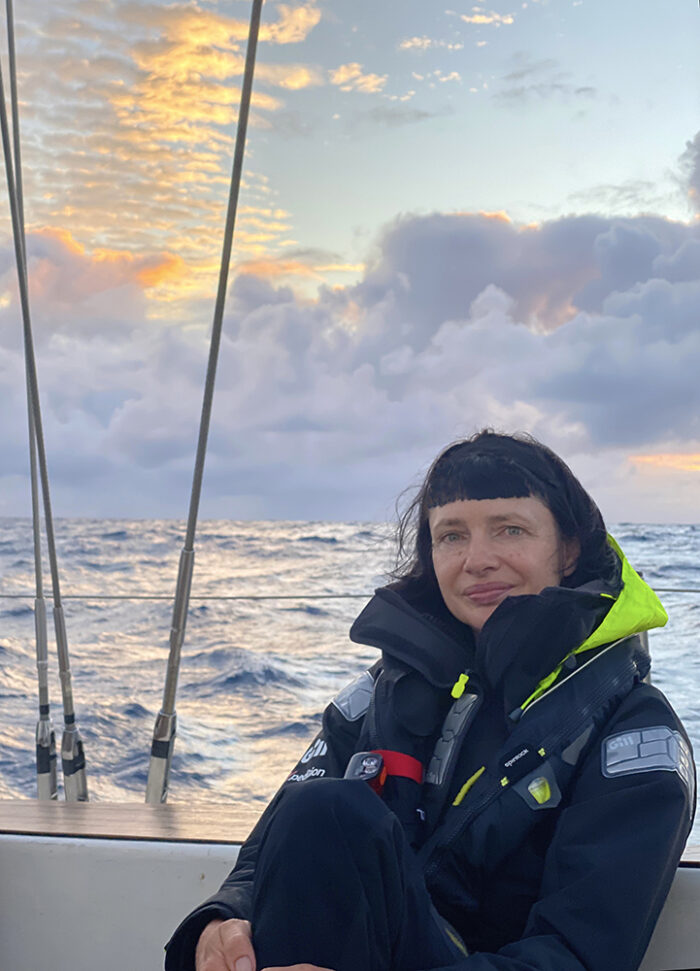
On the first night, the sea slooshed companionably against the hull and its undulating voice lulled us into the gentlest of womb-like sleeps until we are woken four hours later for our next watch. The midnight watch is my favourite. I walked up the companionway steps into a dark starscape. (No-one on board knows why a ship’s corridor is called a companionway as, on SV TravelEdge at least, it is barely wide enough for two people to pass) The moon sat like a luminous saffron saucer on the table of the horizon.
On the second night, the sea whispered conspiratorially and lured us with the glittering phosphorescence of a billion plankton. A shoal of flying fish were visible as white flashes of leaping light to starboard and the brightest of shooting stars illuminated the night sky.
On the third day we tangoed across the waves and eddies, our white ruffled line tracing a course across the deep blue dancefloor. Sea sickness set in amongst many of the crew as the sea roiled and seethed with a short swell and science was postponed in the hopes of a return to a kinder ocean tomorrow.
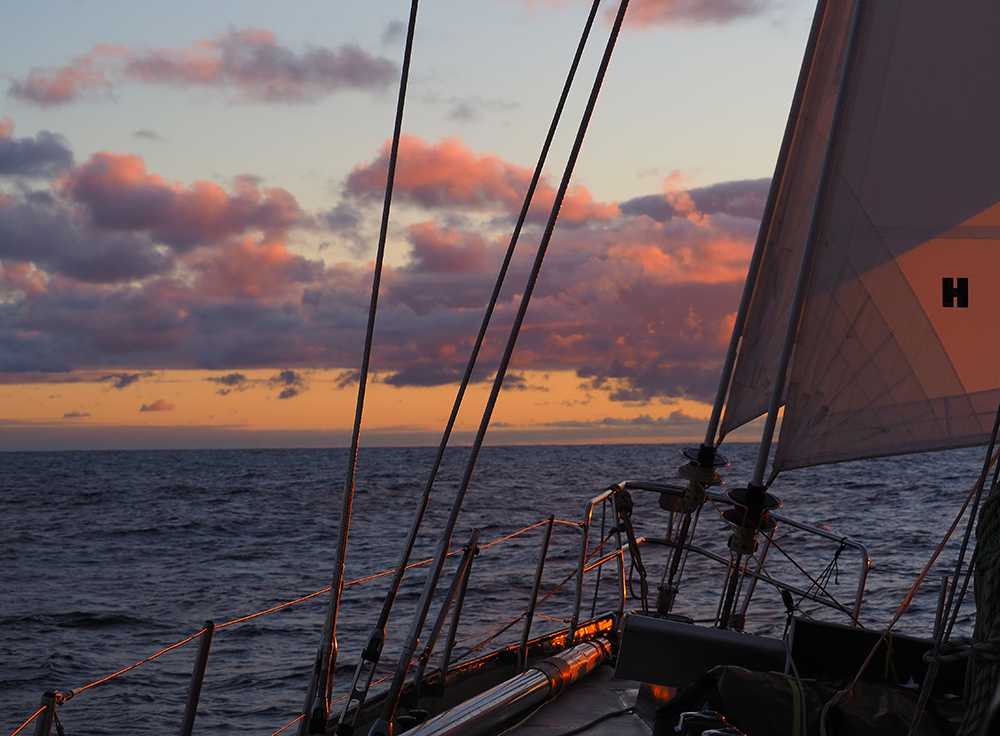
WAVE, a volume of water elevated by the action of the wind upon its surface, into a state of fluctuation. Definition from An Universal Dictionary of the Marine, 1769. We start asking ourselves, what are the actions we can take as a multidisciplinary crew to build momentum, to agitate, to sweep away resistance and create an unstoppable wave of change?
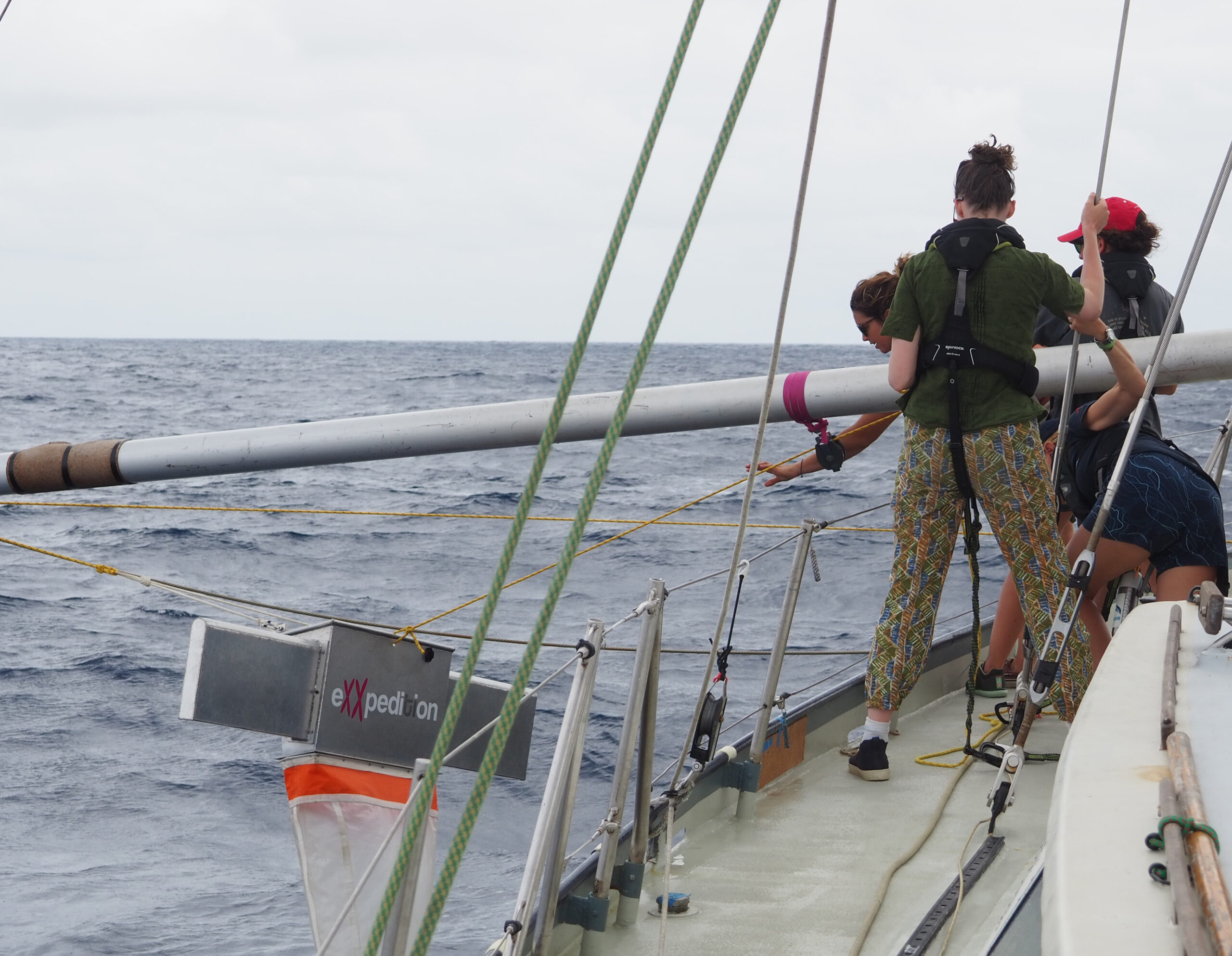
On the fourth day the swell lengthened, so we twice dropped the Manta Trawl off the spinnaker pole for half an hour each time. The contents of the trawl were passed through three sieves of increasingly fine mesh. Several Men o’ War but no visible plastic.
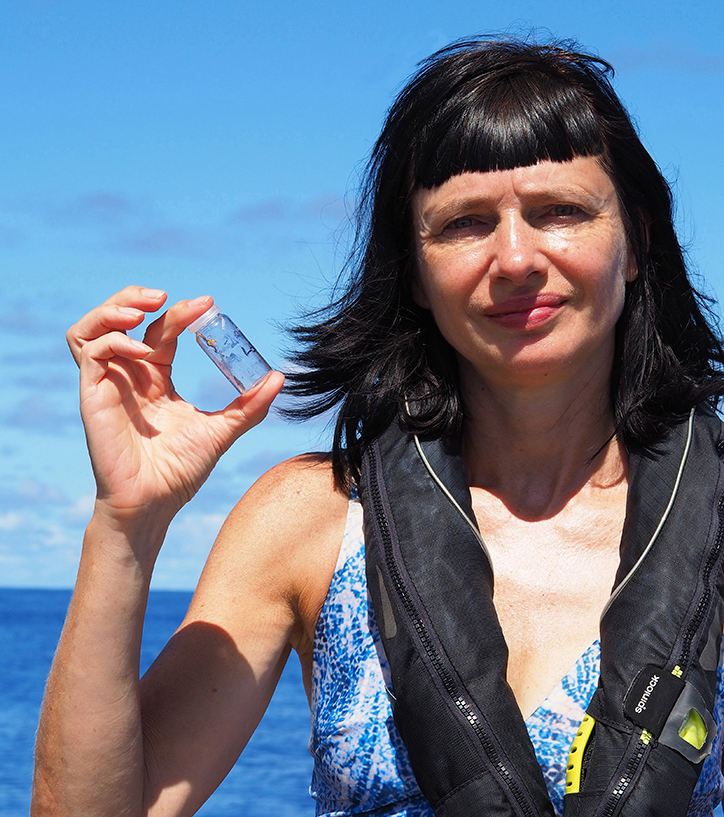
On the fifth day we made our first drop of the Niskin Bottle. I watched it plunge down into the unfathomable depths of the ocean, astonished by the clarity of the water as the rope extended to its full 25 feet. We whispered ‘Find the Niskin’ as we deployed the messenger weight, known on board as the golden snitch, which triggers the Niskin to close. These samples will be sent back to the lab in Plymouth to analyse how the types and quantities of microplastics in the subsurface compare to the surface water and will be the first global dataset of its kind.
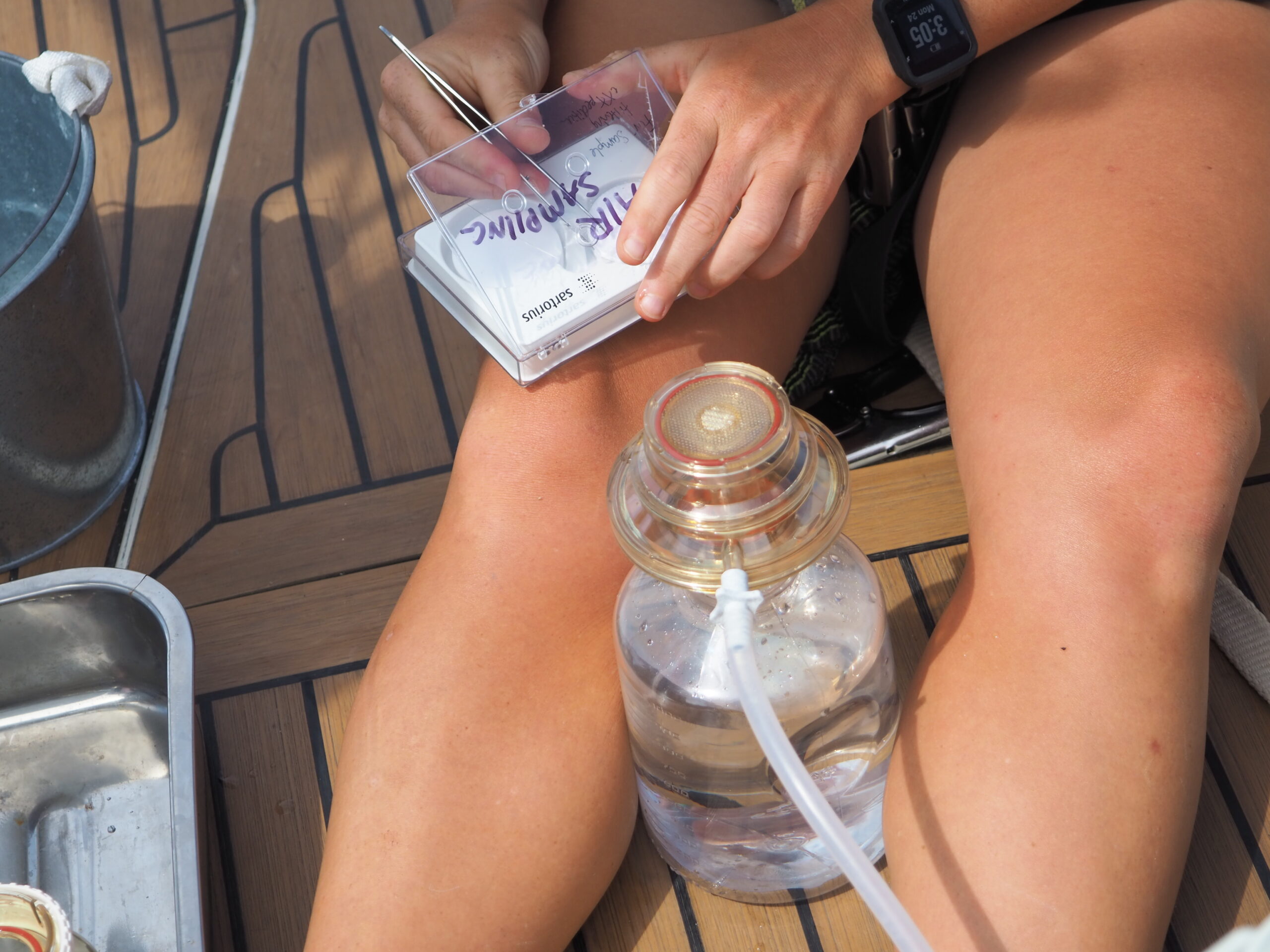
On the sixth day Maggie, our first mate, hoisted metal buckets up the Mizzen mast. These will be left there for 311 nautical miles to determine whether microplastics are being transported by winds.
As the voyage continues, the wind drove us on towards our destination, with scurrying clouds and a seething sea painted a hundred hues of blue, green, grey and white. We pitch and roll. Sleep is difficult as the sheets and rigging rattle overhead and we slide into the leecloth or hull, depending on whether our bunk is port or starboard. We pass the 1000 mile mark – halfway through our voyage. Our night watch is spent creating a humorous poem about our voyage and crew based on the Beaufort Scale, which rates wind force from 0 to 12, although we have only experienced up to Force 6 to date.
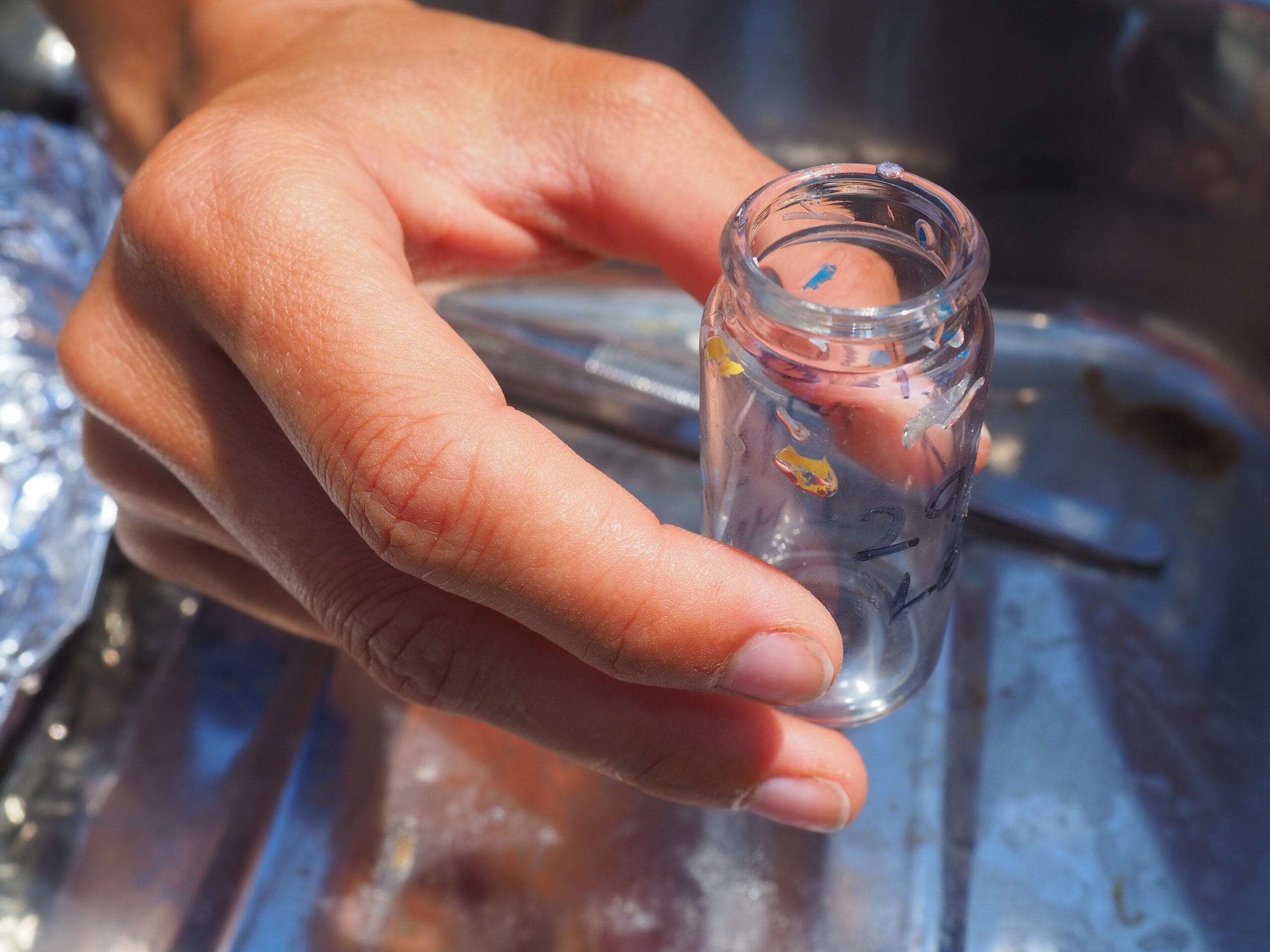
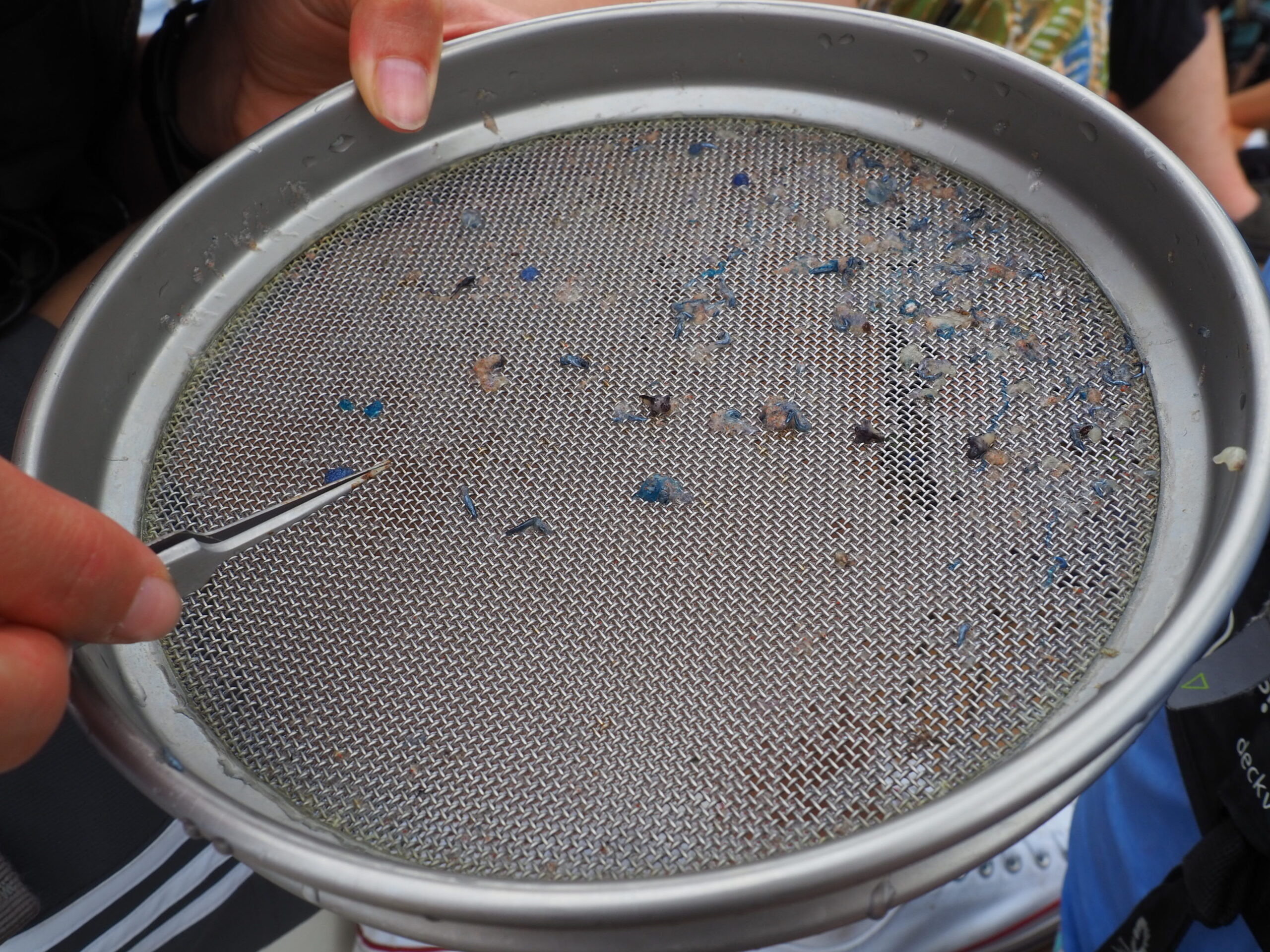
Ten days into our voyage. Every mile brings us nearer to the gyre and ever trawl brings up an increasing amount of plastic: translucent filaments which coil inside our sample bottles; flecks of blue, green, white, too small for the AFTR on board so these will need to be analysed back in the lab in Plymouth; a black mesh, still pending analysis.
Thirteen days into our voyage the sea gods smile on us and the sea is almost eerily calm as we enter the South Pacifiic Gyre. We have sailed over 1700 miles and are in one of the remotest areas of the Pacific Ocean, nearing the most remote inhabited island in the world. We spend the morning and afternoon dropping the manta trawl and Niskin and analysing the results. We are shocked at what we find: our trawls within the Gyre bring up five times more microplastic, microfibres, and film than the total of all the other trawls we have carried out outside the Gyre on this voyage.
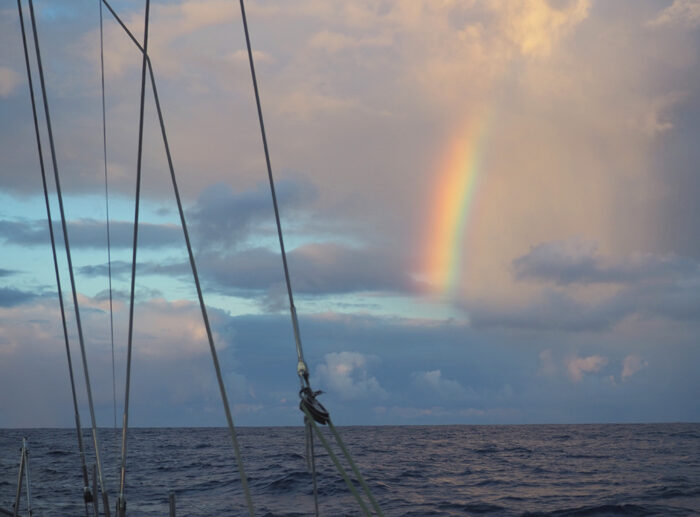
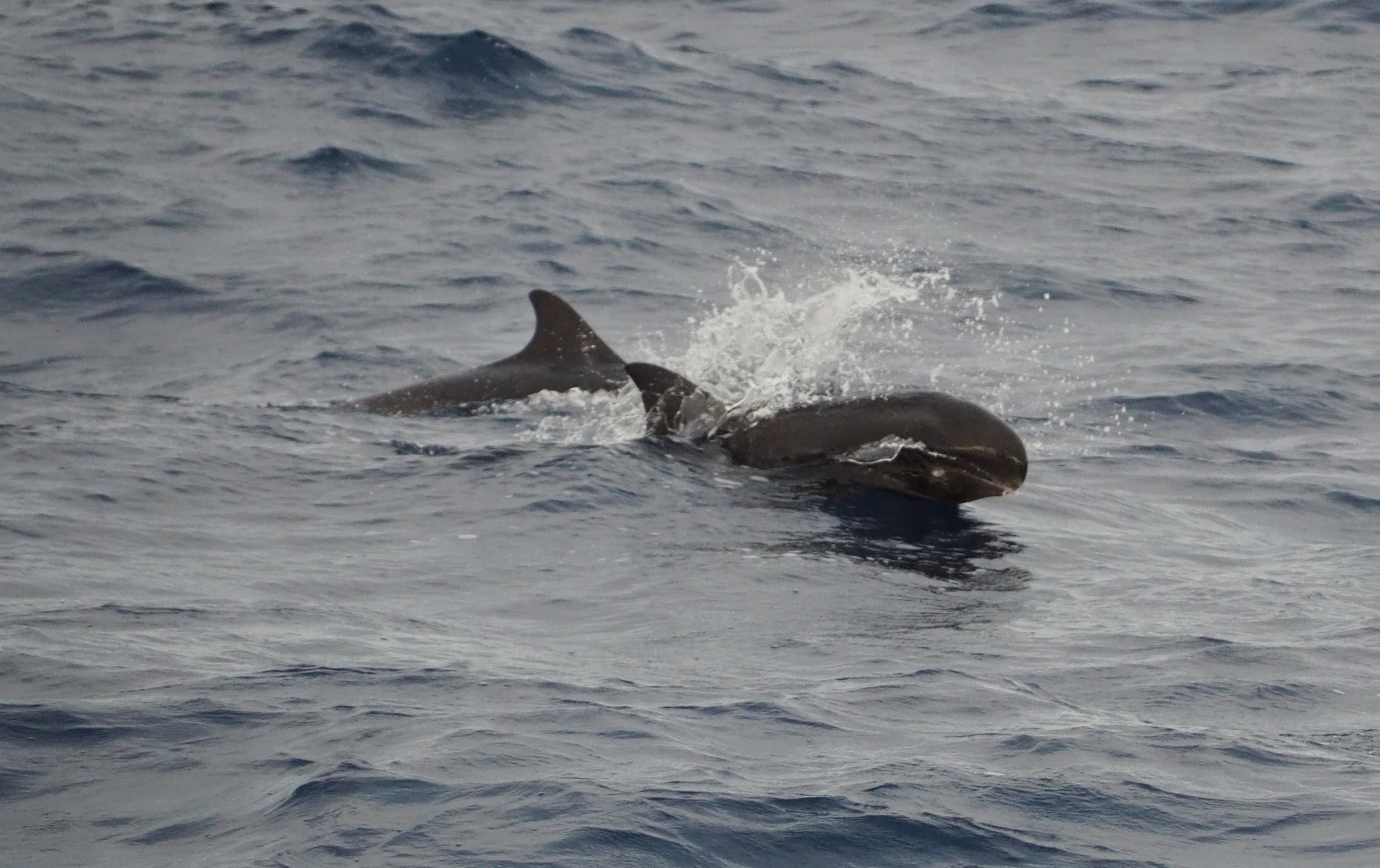
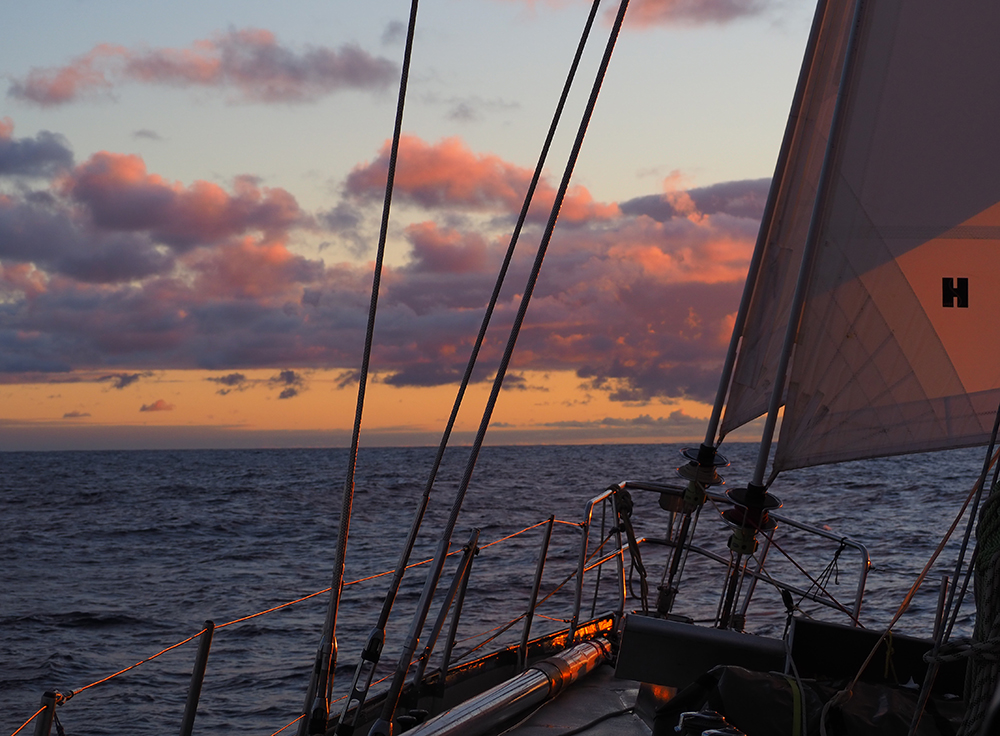
Almost every watch continues to bring its moments of awe at the sublime beauty surrounding us: the evening a school of pygmy killer whales played in our bow waves; the pinks, purples and oranges the sun paints the clouds as it sets a little later every evening on our journey south; and this morning when we saw a bright flash of rainbow suspended in a cloud at sunrise. The rainbow is a symbol of hope the world over which transcends the scientific explanation behind this regularly occurring phenomenon formed by the meeting of sunshine and water.
And herein, perhaps, lies the pathway towards finding an answer for our challenge. We need to engage people around the world in the fight to preserve the beauty and biodiversity of our oceans. We need to use the groundbreaking science we are collecting on board as a tool, but also engage people in an emotional response to the problems of plastic pollution.
A little over 200 years ago, the great explorer and scientist Alexander Von Humboldt travelled through Latin America. The Humboldt Current is named after him, an upwelling current bringing nutrients up from the deep but also bringing with it some of the tide of plastic which makes its way into the South Pacific Gyre. Humboldt’s scientific method encompassed art history, poetry and politics but in the intervening years scientists have pursued ever-narrowing areas of expertise.
The crew on board this eXXpedition voyage has been selected for our multidisciplinary set of skills and we need to work together to rediscover a multidisciplinary approach. In a world where we tend to draw a demarcation line between science and the arts, the subjective and objective, we need to reconnect science with our emotions, because we only protect what we love. I would like to think that this morning’s rainbow is nature’s way of telling us that there is hope for our oceans if we can find ways to make people around the world fall back in love with the science and poetry of this boundless deep blue sea.
Plastic is designed to last forever, but we are using it to design products, including clothing and its related packaging, that are only used once. Around two thirds of our clothes are made from synthetic fibres, such as polyester, acrylic and nylon, which are all plastics. The process of turning fossil fuels into textiles for our clothes releases significant amounts of Greenhouse Gases.
Fashion’s impact on the environment doesn’t stop once our clothes are made. Textiles are the largest source of both primary and secondary microplastics, accounting for 34.8% of global microplastic pollution1, with around 700,000 microfibres being released in every wash cycle2. These microfibres enter our sewage system and many are too small to be collected by the wastewater treatment plants. Even those microfibres which are captured can end up in our oceans as treatment plant sludge is frequently used as a fertiliser on fields, from which it enters waterways and, in the end, the sea.
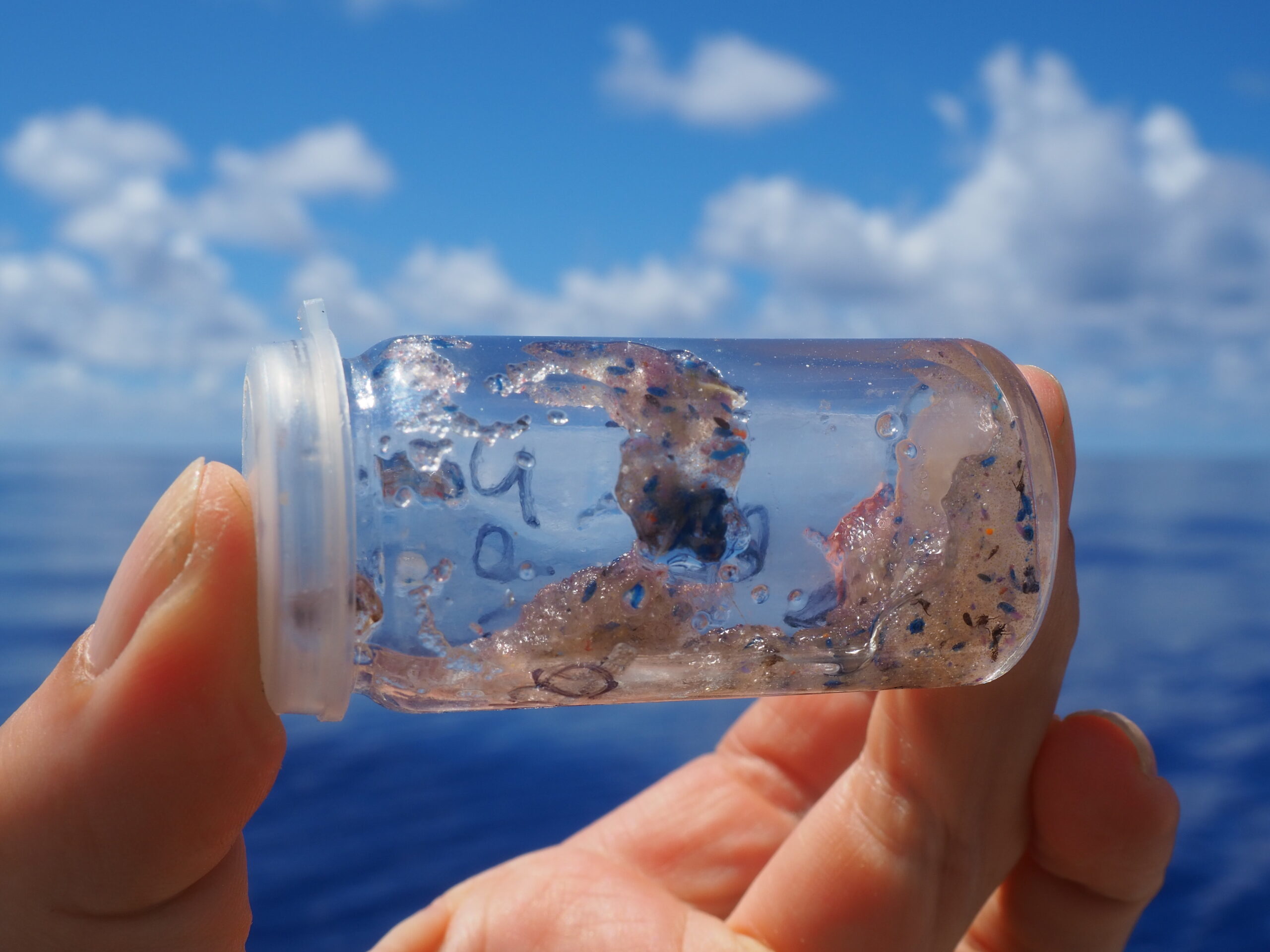
It has been estimated that 1.4 million trillion microfibres are currently in the oceans3 and if the fashion industry continues in a business-as-usual scenario, between 2015 and 2050, 22 million tonnes of microfibres will enter our oceans4. Recent research shows that plastics emit powerful greenhouse gases as they degrade and, over time, give off more and more gas, so the plastics accumulating in our oceans represent a vast, uncontrollable source of future emissions, as well as posing a danger to our marine ecosystems and to human health.
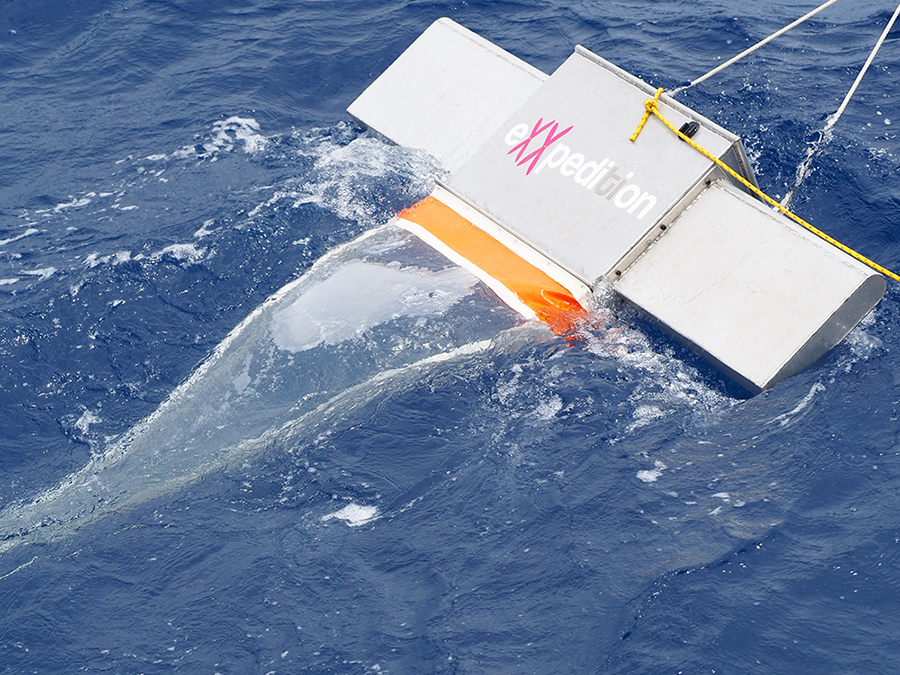
The fourth edition of Fashion Revolution’s Fashion Transparency Index, launched in April 2019, ranks 200 of the world’s largest fashion brands and retailers according to their level of transparency. It measures how much information brands disclose about their suppliers, supply chain policies and practices, and social and environmental impacts. In April 2020, the fifth edition will be published, covering 250 brands and retailers. Five key areas are assessed: Policy & Commitments, Governance, Traceability, Know, Show & Fix which looks at how brands assess their suppliers and how they work to fix any problems and Spotlight Issues, which in 2019 focused on the the SDGs, the Sustainable Development Goals.
In terms of SDG12 Responsible Production and Consumption, whilst 43% of brands are publishing a sustainable materials strategy or roadmap, only 29% are disclosing the percentage of their products that are made from sustainable materials and just 15% publish measurable, timebound targets for the reduction of virgin plastics. Only 26% of brands explain how they are investing in circular solutions to reduce textile waste. In our 2020 Index, one of our Spotlight Issues will be Composition, looking at how brands and retailers are reducing salient environmental risks through material selection, the elimination of hazardous chemicals and moving towards circularity. As part of this section, we will be looking for disclosure on what the brands are doing to minimise the impact of microfibres.
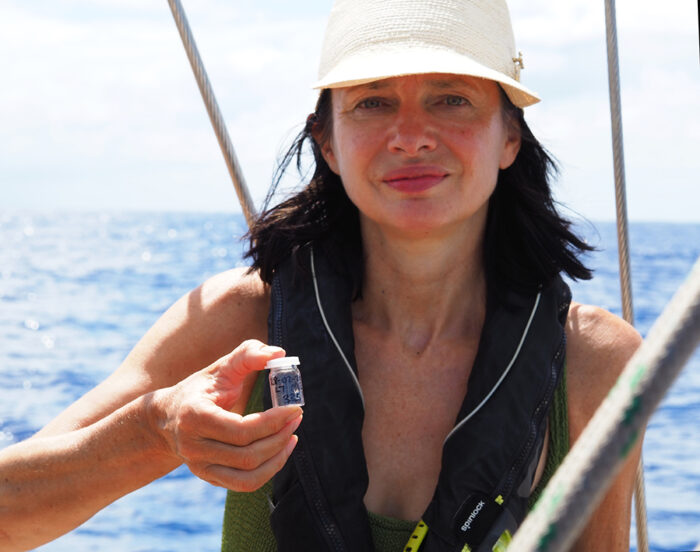
As we sail from Galápagos to Easter Island with eXXpedition, the analysis of polymer types from the plastics we collect will be invaluable for those brands who are committed to acting to reduce microfibre shedding and microplastics in our environment as they will be able to better understand the density and distribution in the oceans of the different plastic fibres found in our clothing so they can prioritise actions to reduce the areas of greatest impact.
However, there are no simple solutions when it comes to materials. A polyester shirt can have more than double the carbon footprint of a cotton shirt, but synthetic fibres generally have less impact on water and land than cotton5. Synthetic fibres made from recycled materials such as crushed plastic bottles or reclaimed fishing nets have around 50% lower emissions than using virgin fossil fuels6 but the microfibre release is likely to be the same.
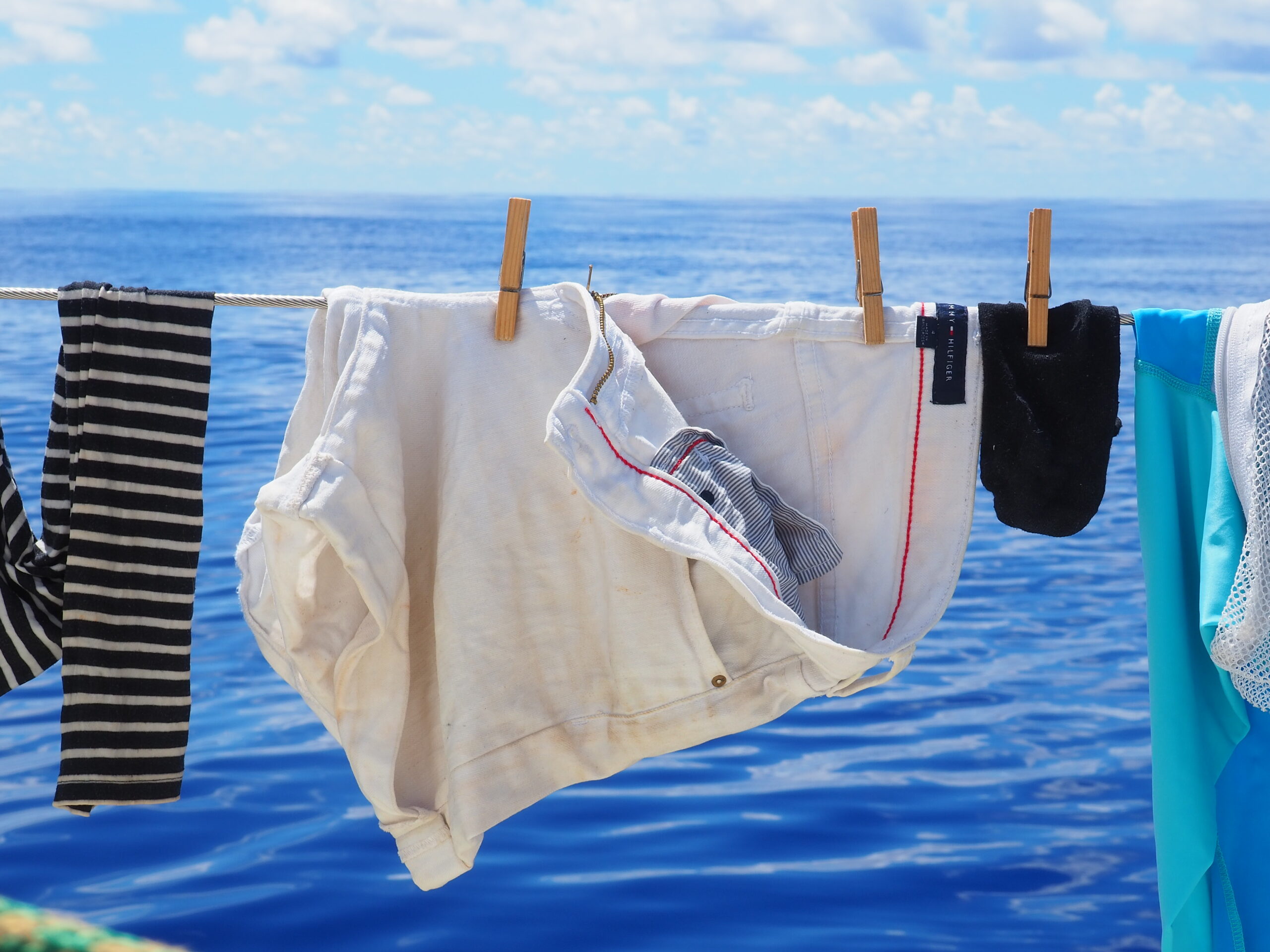
Building a more sustainable fashion industry and curbing its destructive impact on our oceans will entail governments, brands, retailers and citizens all taking action together to help bring about the systemic change needed to end the exploitation of our planet.
Governments must act urgently to deal with fashion’s escalating environmental problem and as these solutions will, in turn, help tackle climate change, this should be a win-win. We are currently allowing companies to evade responsibility for their environmental impacts, so we also need to see mandatory due diligence and reporting for all major brands and retailers. Legislation should also be passed requiring all new washing machines to be fitted with effective filters to ensure maximum capture of microfibres.
Brands and retailers must change their business models and create products with longevity and quality. They must understand the true value of materials, which should be mindfully designed, redesigned and recuperated as a valuable resource. Brands must set Science-Based Targets and report annually on their progress. And they must use sustainability to drive all aspects of their business.
It can be hard to know how best to care for our clothes as research on reducing microfibre shedding is limited and, at times, contradictory. Recent advice suggests short cycles, using liquid detergent and fabric softener and washing at a low temperature. What is certain is that the best way to reduce microfibre shedding is to wash our clothes less frequently. We can also rethink the fibres in our wardrobe and choose wisely when buying new clothes.
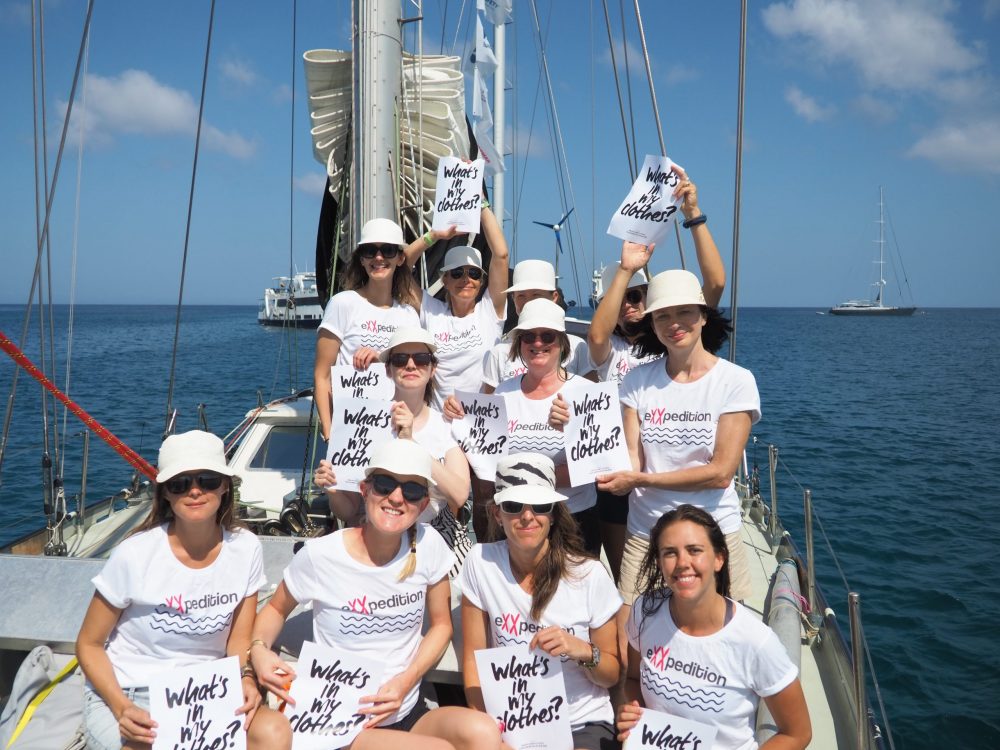
Finally, we can all use our voice and our power to demand that brands and legislators work to reduce the trillions of microfibres flooding into our waterways. That’s why Fashion Revolution has just launched a new hashtag #WhatsInMyClothes.
Fashion Revolution’s Manifesto states, “Fashion conserves and restores the environment. It does not deplete precious resources, degrade our soil, pollute our air and water, or harm our health. Fashion protects the welfare of all living things and safeguards our diverse ecosystems”. If we all work together, we can, and must, create a global fashion industry that conserves and restores the environment and values the wellbeing of everyone and everything living on this earth and in our oceans over growth and profit.
[1] Boucher and Friot, 2017
[2] Napper and Thompson, 2016
[3] Leonard, 2016
[4] Ellen MacArthur Foundation, 2017
[5] Olivetti et al., 2015
[6] Textile Exchange, 2017

This website was created and maintained with the financial support of the European Union. Its contents are the sole responsibility of Fashion Revolution and do not necessarily reflect the views of the European Union.