La tragedia del edificio Rana Plaza, puso de manifiesto las precarias condiciones de trabajo en los países en desarrollo como Bangladesh, donde se fabrican las prendas de muchas de las multinacionales occidentales. Las “sweatshops”, talleres donde se realizan trabajos fuera de las convenciones internacionales, o sea, talleres de explotación laboral o de “trabajo esclavo” se han vuelto más comunes en la cadena de producción de nuestras prendas.
Según la Wikipedia, el modelo conocido como “sweatshop” es frecuente y abundante en países en vías de desarrollo o del tercer mundo, y especialmente en Asia, donde el trabajador recibe sueldos muy bajos (el equivalente a 3 euros al día, unos pocos céntimos la hora), manufacturando ropa, juguetes, calzado y otros bienes de consumo.
Somos conscientes desde hace décadas que la producción textil ha sido trasladada casi por completo a Asia, donde las condiciones laborales son casi inexistentes e incluso el Parlamento Europeo tacha de esclavitud laboral la situación actual. Trabajadoras acostumbradas a realizar 14/16h diarias, sin ningún día de descanso semanal, en condiciones mentales agotadoras y con muchísimos problemas a la hora de recibir su salario.
Este modelo fomenta la deslocalización de la producción ya que las grandes empresas, de manera habitual, subcontratan a otras empresas que ofrecen el menor costo posible, tercerizando la producción, perdiendo así el rastro y control de quienes realizan las prendas y en qué condiciones se han fabricado.
Rana Plaza
Hace 8 años, el edificio Rana Plaza de Bangladesh se derrumbó cobrándose la vida de más de 1.000 personas y dejando heridas a otras 2.500. La mayoría de las víctimas eran mujeres jóvenes que trabajaban fabricando ropa para algunas de las mayores marcas de moda del mundo.
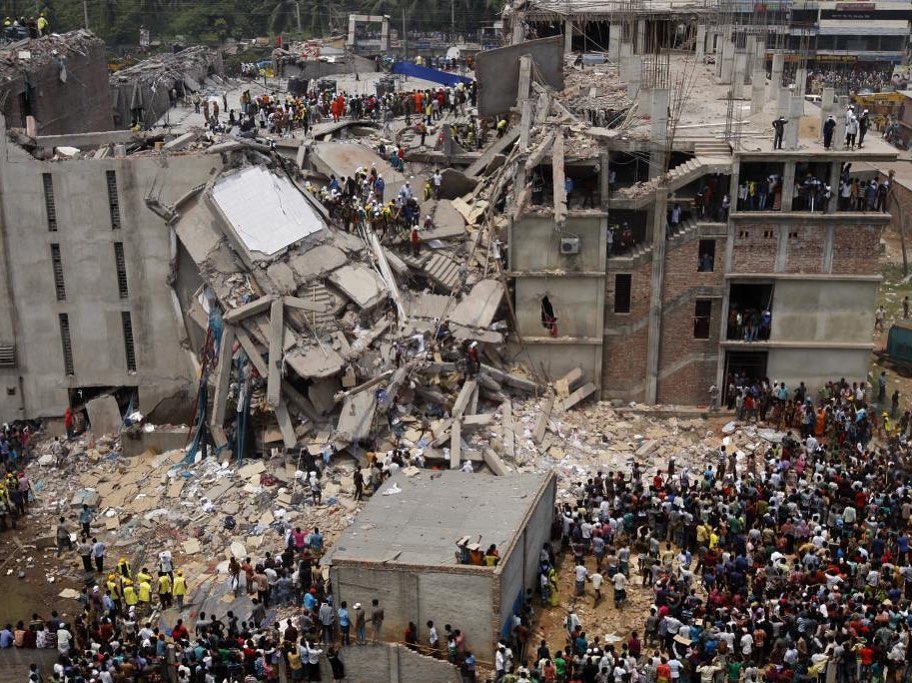
Foto de rijans vía flickr
Días antes de la tragedia, aparecieron grietas en las paredes del edificio y los trabajadores expresaron su temor. La dirección dijo a los trabajadores que volvieran al trabajo, incluso cuando las tiendas y bancos de la planta baja del mismo complejo habían cerrado. No fueron sólo los directivos, sino los plazos de entrega de pedidos y las cuotas de producción de las poderosas empresas los que hicieron que estos trabajadores tuvieran que volver al interior. Fue la insaciable industria de la moda la que obligó a estos trabajadores de la confección a seguir trabajando. Y fue la falta de representación sindical la que dejó a estos trabajadores impotentes para desafiar las órdenes.
Había 29 marcas identificadas entre los escombros. Algunas de ellas tardarían años en pagar las indemnizaciones. Para algunas familias, aportar pruebas de ADN para reclamar esa indemnización nunca será posible. A día de hoy, muchos de los supervivientes están desempleados y sufren graves traumas.
La trazabilidad en la cadena de la moda
La tragedia de Rana Plaza despertó el tema de la explotación de los trabajadores de la industria textil y también nos ha hecho pensar sobre la trazabilidad y lo importante que es conocer la historia, el Cuándo, Cómo y Dónde de cualquier producto en cualquier punto de la cadena de producto.
La trazabilidad es el conocimiento completo del conjunto de procesos de la producción de una prenda, incluidas las ubicaciones, los viajes y las personas que han trabajado para que ese producto llegue a nuestras manos.
Las grandes marcas producen una gran variedad de modelos a gran escala, así que cada pequeña parte proviene de una fábrica diferente, dificultando el control sobre la cadena de producción.
Si no sabemos de dónde vienen nuestros productos no podemos mejorar el modo en que han sido producidas. Este es uno de los rectos para garantizar una moda más sostenible y justa.
Entonces, ¿qué puedo hacer?
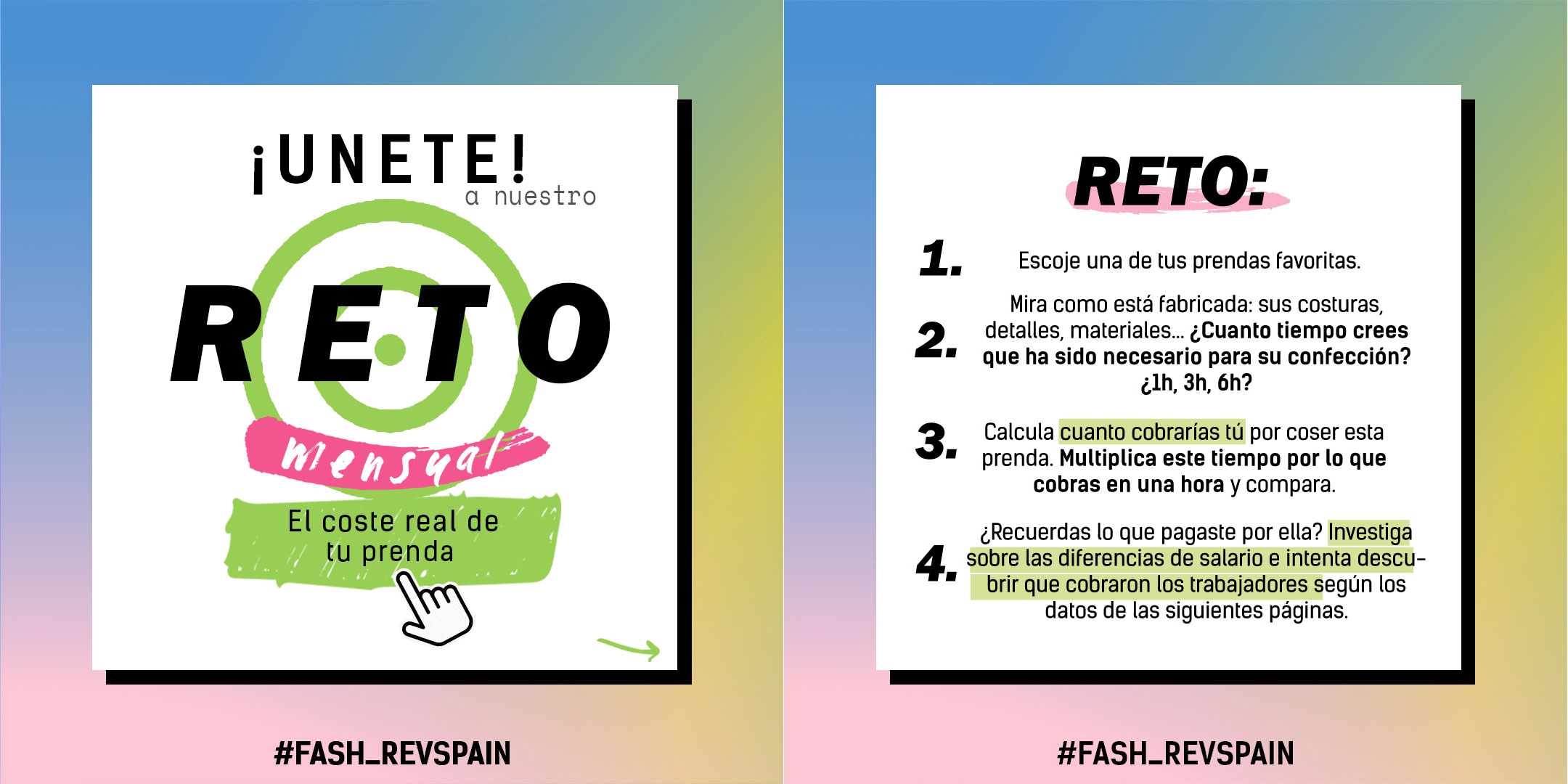
En este reto os proponemos conocer un poco más sobre vuestra prenda favorita, ¿cuánto creeis que cobraríais vosotras por diseñar, coser o teñir vuestra prenda?, ¿cuánto creeis que cobran realmente cada una de las trabajadoras que hay detrás de ella?, ¿qué opinais al respecto?
#QuienHizoMiRopa
En esta pregunta reside un gran problema, cada parte de tu prenda proviene de una fábrica diferente. Las grandes marcas tienen un gran número de proveedores para cada detalle, haciendo de cada prenda el trabajo de una cadena larguísima de personas. Fashion Revolution existe para garantizar que nunca más se produzca una tragedia de la magnitud de Rana Plaza, y no pararemos hasta que todas las prendas se fabriquen en condiciones en las que los trabajadores estén seguros, reciban un trato justo y estén libres de violencia de género o acoso.
Tú también puedes unirte a nuestra campaña en redes sociales compartiendo un selfie enseñando la etiqueta de tu prenda de ropa con el cartel ¿Quién hizo mi ropa?, compartirla en las redes sociales con los hashtags #QuienHizoMiRopa, y etiquetándonos: @fash_revspain.
Llegó el momento de empoderarnos a nosotros mismos. Empecemos a buscar alternativas que además de saciar nuestra necesidad de creatividad, no tengan repercusiones negativas en el entorno, ni apoyen a empresas que fomenten un mundo en el que miles de personas carecen de posibilidad para expresarse como individuos libres y únicos, ni poder aspirar a nada más que ser trabajadores en una ecuación heredada por nacimiento.
by Carry Somers and Orsola de Castro
On 8 May 2013, the two of us wrote an email which began ‘like many, we have seen the terrible tragedy in Bangladesh as a call to arms and feel that we should build on the momentum which has been generated. An annual Fashion Revolution Day would be a way to ensure that these deaths are not in vain, show the world that change is possible, and celebrate those involved in creating a more sustainable future for fashion’.
The responses to our request for involvement fell into two quite clear camps. Many responded with no hesitation; one email we received back just said yes, yes, yes! Some expressed a degree of hesitancy. Do we really want to call for a revolution in the fashion industry? How about calling it Fashion Evolution? Although the two of us are very different in very many ways, we are remarkably similar in others: we are both entrepreneurs, both pioneers in our respective fashion spheres, both risk-takers and both have a fundamental belief in the power of people to effect change given the right motivation. We had no doubt that a revolution was needed – a radical and pervasive transformation of the way in which the fashion industry operates.
We were right to push for revolutionary change. People were ready to listen.
Looking back at the minutes from our very first meeting, we had real clarity around how we would communicate our message in order to accelerate change: we need one big aim; make it as visible as possible; keep it strong; make it positive without ignoring the negatives; make it inclusive; talk about how the relationship with the people who make our clothes has broken down and connections need to be reestablished. Finally, we needed to give people a question they can all ask: who made my clothes?
This clarity of vision, coupled with the right channels of communication, has made Fashion Revolution the biggest fashion activism movement in the world. We have teams in over 100 countries and there are well over 1000 events happening all around the world this week.
Fashion Revolution is first and foremost about people; it is about making visible the connections between everyone in the fashion supply chain as a first step towards change. We’ve made citizens realise that their own wardrobe is in the fashion supply chain, about three-quarters of the way between the cotton seed and recycling the fibres. Everything we do has an impact on that supply chain. We reshape the fashion industry, the lives of its workers and its resources, every time we buy or dispose of an item of clothing.

Fashion Revolution was set up for the love of people, in memory of those who died at Rana Plaza, those who have died in countless other fires and building collapses in garment factories around the world, and those who are still losing their lives every week so we can wear beautiful clothes. That love of people continues to shine through. We are not about celebrities. We are not about power and success. We are about humanity. Fashion is about instant gratification. We are about the long term gratification that comes from knowing entire workshops, factories and communities are slowly becoming visible. We see empowerment not as a celebrity wearing a feminist slogan T-shirt on instagram, but as the workers who made that T-shirt being given a voice through the garment worker diaries project. When we inaugurated a new hashtag #Imadeyourclothes in 2016, someone commented on social media that it represented ‘the most joy I’ve ever had from a hashtag!’
 We’ve given everyone tools to take part – there are online packs for brands and retailers, producers, makers and factories and educators. For fashion-lovers, as well as a Get Involved pack, there is our How to be a Fashion Revolutionary booklet, our fanzines Money Fashion Power and Loved Clothes Last, our guides to the #Haulternative and Love Story challenges. There are endless ways in which everyone can take part from changing your attitude, to changing your wardrobe, to changing your world. We’ve encouraged millions of people to Be Curious, Find Out, and Do Something. We don’t have all the answers. We want to encourage everyone to ask questions of their favourite brands, to do their own research, to use their power as consumers to hold the industry to account for its actions and impacts.
We called for a revolution at the right time as the infrastructure of the industry, and the industry itself, have shifted in the past five years. We were right to call for a revolution because both ideas and practices had to be refashioned, a new paradigm was needed, and we can see this starting to happen. A revolution means change and change represents freedom. There is excitement around this change; it no longer feels dull nor scary, but represents a creative space in which to operate. Everyone within this space at this time can be considered a pioneer, and pioneers don’t have references – they make their own.
Five years on, a Fashion Revolution is taking place. Not fast enough, not enough engagement throughout the industry, but make no mistake it is happening. It’s bubbling up through the cracks and crevices, it can no longer be submerged. In another five years it will be a raging torrent, reshaping everything in its path. If you aren’t part of this movement, you will be swept along by it (or perhaps even swept away by it) as the structure of the fashion industry is revealed and revolutionised.
We are Fashion Revolution. Join us.
Five years after the deadly Rana Plaza building collapse in Bangladesh, workers and union activists say despite the massive demand from workers for union representation to achieve safe workplaces, worker-organizers must face down threats, harassment and violence to educate workers about their rights on the job.
Since the April 24, 2013, tragedy in which more than 1,130 garment workers died and thousands were injured, the government has approved a little more than half of the garment unions that have applied for official registration, according to Solidarity Center data. Confronted with employers and a government hostile to worker organizations, worker-organizers have sometimes risked their lives to help workers improve wages and working conditions.
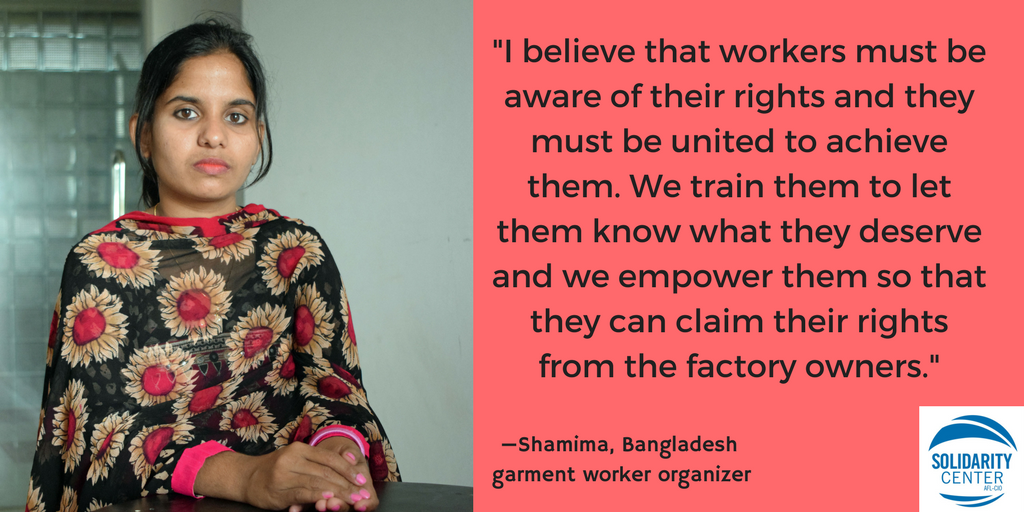
Shamima Aktar, a garment factory worker and organizer with Bangladesh Garment and Industrial Workers’ Federation (BGIWF), is one of them. During a meeting with management at a newly unionized factory, managers refused to grant a demand made by the factory union that salaries be paid on a timely basis. Instead, Shamima and the other union representatives were locked in the building and beaten, she says.
“But what moved me was that hearing about our abuse, 17 trade unions around the community immediately came to our aid and barricaded the whole factory which we were in. The workers needed us on their side to be able to live in peace and I wish to [keep organizing] no matter how difficult it is for me,” she says.
Through persistence and courage in the face of daunting odds, worker-organizers have helped garment workers form unions despite the severe obstacles. In Bangladesh, more than 200,000 garment workers at 445 factories are represented by unions that protect their rights on the job.
“I have worked day and night, went to gates of factories to talk to the workers, walked with them to their homes to earn their trust and to make them aware of how they are being exploited and deprived of their rights,” says Monira Akter, an organizer with the Bangladesh Independent Garment Workers Union Federation (BIGUF). “So far, we have united 2,250 workers into trade unions, and they say that we give them courage and hope. For me, these words are enough to encourage me to work on for them.”
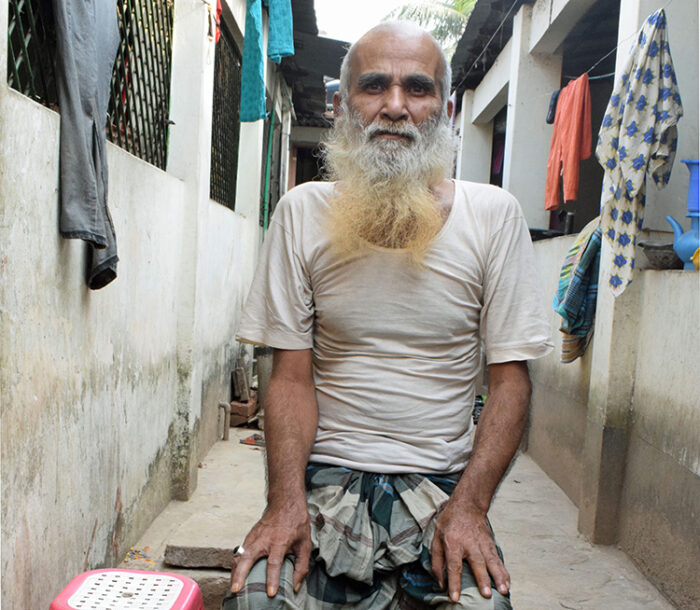
Abdul Hashem – father of worker killed at Rana Plaza
Poverty Wages, Safety Improvements
Wages in Bangladesh are the lowest among major garment-manufacturing nations, even though the cost of living in Dhaka is equivalent to that of Luxembourg and Montreal. The country’s labor law falls far short of international standards, and the Bangladesh government has failed to enact meaningful legal reforms, including addressing the arbitrary union registration process that is vulnerable to employer manipulation. Without a union, garment workers often are harassed or fired when they ask their employer to fix workplace safety and health conditions.
But due to international action after the Rana Plaza disaster, which occurred months after a deadly fire at Tazreen Fashions Ltd. factory killed 112 mostly female garment workers, a variety of efforts to prevent unnecessary deaths and injuries due to fire or structural failures—including the Bangladesh Accord on Building and Fire Safety—have remedied dangers at more than 1,600 factories.
Abul Hashem – father of worker killed at Rana Plaza
The Solidarity Center has trained more than 6,000 union leaders and workers in fire safety, helping to empower factory-floor–level workers to monitor for hazardous working conditions and demand safety violations be corrected.
Such international attention has opened up space for workers to collectively demand—and win—improvements on the job, says Monira.
“I am proud that we have been able to create leaders among the workers by organizing them into trade unions. In the past this would have been close to impossible.”
Iztiak, an intern in the Solidarity Center Bangladesh office, interviewed the worker-organizers in Dh

This website was created and maintained with the financial support of the European Union. Its contents are the sole responsibility of Fashion Revolution and do not necessarily reflect the views of the European Union.