80% of our fashion is made by women (mostly 18-24 years old) but we only hear about these millennial makers when they’re associated with a tragedy like Rana Plaza in Bangladesh in 2013 or the infamous Triangle Shirtwaist Factory in New York in 1913. Their stories are eclipsed by heartbreaking headlines that hound the fashion industry.
But there is another part of this story. It’s a story of hope. Remake has traveled to factories and dormitories throughout the world in search of the women who never make the headlines. Kashmiri who opens the yarn to make it into fabric. Maud and Rubina who stitch our blouses and jeans together. Anju who pulls out loose threads and inspects everything to ensure perfection. Each has a story and a hope for a very different future.
Meet the women behind fashion’s supply chain — we followed them from Haiti to Pakistan to China — and asked each of them to share a message to you, the end shopper. These are their stories:
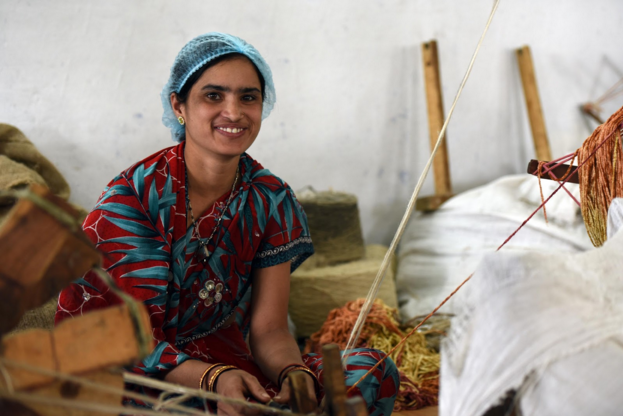
Kashimiri, Yarn opener, Panipat, India
I am 25 years old and already have 4 children. I sit crouched on the floor all day, opening spindles of yarn which go on to become fabric. Panipat has a lot of needs. Open sewers, flies and trash everywhere. Only recently my children starting going to school. I now hope that they will have a better future. Go on to be somebody. I hope you can see their faces in the threads of your fabric.”
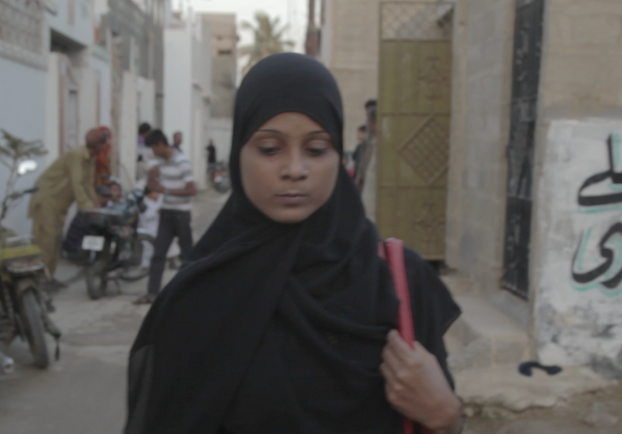
Rubina, Hoodie Sewer, Karachi, Pakistan
I am 22 years old and wanted to be a doctor. Then my father got sick, so here I am, many years later, still at a factory stitching college sweatpants and hoodies that go to America. I don’t want you to feel sorry for me. I used to be shy and scared in the factory environment. But after all the injustices I’ve seen happen here, I’ve become a labor organizer. I go to management to demand that we are not harassed, paid on time, given proper food to eat. You would not believe the things I have seen. Stitching all day long my mind wanders and I think about you often. You having fun, wearing these hoodie on campus. I wonder if you think about me ever? The woman who made that for you. I am taking English classes at night. So that one day I can at least get an office job.
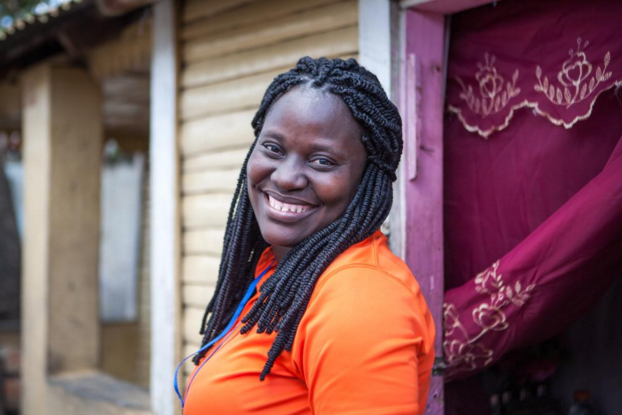
Maud, Jeans Sewer, Ouanaminthe, Haiti
The factory across from the Massacre river is like paradise, with its lush green trees and paved roads. I’ve been sitting down sewing your jeans here for five years. Recently my back and neck has been hurting a lot more. But without this job, I have no way to support myself or my six siblings. After a long day, I walked across the river into my community which is pitch dark at night. There is no electricity or running water, just human need everywhere. I want to save enough to go back to university and study computer science. I want you to think about your sister Maud in Haiti, when you put on your jeans. On dark sad nights I play on Facebook with my phone and dream of the day I can be just like you.
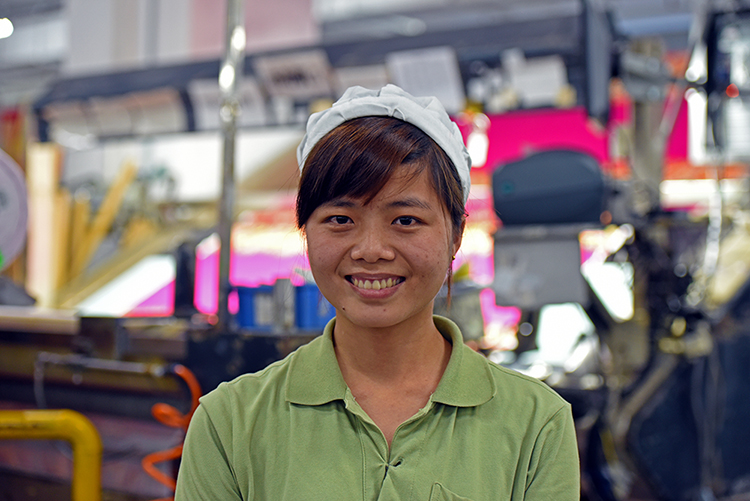
Zheng Ming Hui, Quality Assurance, Guangzhou, China
At 19 I left my village to experience the excitement of city life. Here I am three years later, still at the same factory. I work 12 hours a day, looking at beautiful, bright patterns to make sure that there are no defects. My mother wishes I would call her more. But mostly I miss my grandmother. I only get to see my family once a year for Chinese New Year and mom makes the biggest feast. My entire life is the factory. I live in the dorms with three roommates, work all day only stopping to eat at the cafeteria. On my one day off, I am too tired to do much so I play with my phone. At night I dream of bungee jumping. I want to find someone to fall in love with and travel the world for work, taking pictures and telling stories. But for now, I am here, making sure your clothes look nice. I picture you and I am sure you look BEAUTIFUL!
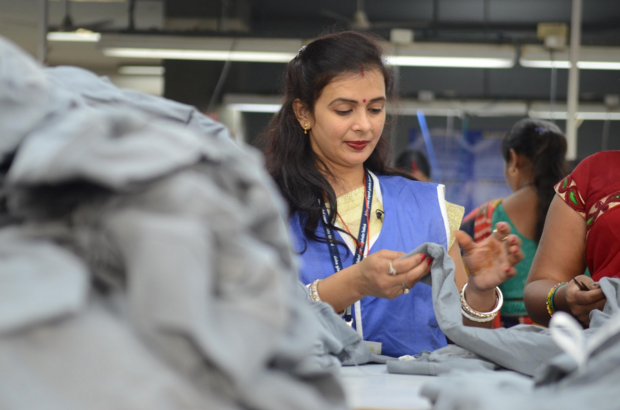
Anju, Fabric Inspection, Delhi, India
I once dreamed of a life that was very different. Where I could finish my education and become a teacher. Everything changed when I was 15 and married to a man with few means. For the last 10 years, I’ve been working in a factory instead. I am proud to be an equal bread winning partner with my husband and to know that my hard work allows my children to go to school. I stand on my feet all day, pulling loose threads out of finished blouses and tops. Making sure they are perfect for you. I want you to know that I recently took a health education course on making nutritious meals with little money. I now teach what I’ve learned at my children’s school on my day off. I guess my dream of becoming a teacher has come true after all.
A 100 pair of human hands touch our clothes before they get to us. Each one of these mothers, sisters, wives and daughters are fierce and hard-working. Dreaming like us to be healthy, happy and financially secure.
Share these stories on Twitter and Facebook with your favorite brands and say: I want to know the invisible people #whomademyclothes.
Together we can #remakeourworld
It still strikes me as profoundly wrong that even though cotton is the world’s oldest commercial crop and one of the most important fibre crops in the global textile industry, the industry generally fails to focus on the entire value chain to ensure that those who grow their cotton also receive a living income.
Up to 100 million smallholder farmers in more than 100 countries worldwide depend on cotton for their income. They are at the very end of the supply chain, largely invisible and without a voice, ignored by an industry that depends on their cotton.
When it comes to clothing, companies’ supply chain engagement was once limited to who their importer was. Now they are engaging with their supply chain more and have better awareness of the factories used to manufacture their end products. Even before the Rana Plaza disaster of 2013, there had been increased attention on improving the conditions experienced by textile factory workers thanks to campaigns such as the Clean Clothes Campaign.
Some companies also have awareness beyond the factories and these are all movements in the right direction. However, even those mindful of the difficulties faced by factory workers, tend to miss the first links in the supply chain.
Maybe this is because cotton farmers continue to somehow lose out in both the so-called ‘sustainable’ and ‘ethical’ fashion debates. When companies talk about ‘sustainability’ in their clothing supply chains, they are generally looking at the environmental impact of sourcing the raw materials. Meanwhile in ‘ethical’ conversations about the many livelihoods touched by the garment value chain, companies generally refer to factory workers, again overlooking the farmer who grows the seed cotton that goes into our clothing.

The reason we need to keep insisting that cotton farmers are an important part of the fashion supply chain is because cotton is failing to provide a sustainable and profitable livelihood for the millions of smallholders who grow the seed cotton the textile industry depends on. Just as it’s important for us to take home a living wage, to help bring a level of security for our families and the ability to plan for the future, I would argue that this is even more vital for people living in poorer countries where there is little provision for basic services such as health and education or the safety net of social security systems to fall back on.
As a global commodity, cotton plays a major role in the economic and social development of emerging economies and newly industrialised countries. It is an especially important source of employment and income within West and Central Africa, India and Pakistan.
Many cotton farmers live below the poverty line and are dependent on the middle men or ginners who buy their cotton, often at prices below the cost of production. And rising costs of production, fluctuating market prices, decreasing yields and climate change are daily challenges, along with food price inflation and food insecurity. These factors also affect farmers’ ability to provide decent wages and conditions to the casual workers they employ. In West Africa, a cotton farmer’s typical smallholding of 2-5 hectares provides the essential income for basic needs such as food, healthcare, school fees and tools. A small fall in cotton prices can have serious implications for a farmer’s ability to meet these needs. In India many farmers are seriously indebted because of the high interest loans needed to purchase fertilisers and other farm inputs. Unstable, inadequate incomes perpetuate the situation in which farmers lack the finances to invest in the infrastructure, training and tools needed to improve their livelihoods.
However research shows that a small increase in the seed cotton price would significantly improve the livelihood of cotton farmers but with little impact on retail prices. Depending on the amount of cotton used and the processing needed, the cost of raw cotton makes up a small share of the retail price, not exceeding 10 percent. This is because a textile product’s price includes added value in the various processing and manufacturing activities along the supply chain. So a 10 percent increase in the seed cotton price would only result in a one percent or less increase in the retail price – a negligible amount given that retailers often receive more than half of the final retail price of the cotton finished products.
Within sustainable cotton programmes, Fairtrade works with vulnerable producers in developing countries to secure market access and better terms of trade for farmers and workers so they can provide for themselves and their families.
Our belief is that people are increasingly concerned about where their clothes come from. This year we visited cotton farmers in Pratibha-Vasudha, India, a Fairtrade co-operative in Madhya Pradesh. We saw the safety net that Fairtrade brings; the promise of a minimum price that works in a global environment. The impact on prices of subsidised production in China and the US adds to unstable global cotton prices. These farmers democratically decide how the Fairtrade Premium is spent: on training to improve soil and productivity, strategies to mitigate the impacts of climate change and on the most important ways for their communities to benefit, such as building health centres and educating children.
Consumers want their clothes made well and ethically, without harmful agrochemicals and exploitation. We think about farmers when we talk about food. Let’s start thinking about farmers when we think about clothing too.
Image credits: Trevor Leighton.

This website was created and maintained with the financial support of the European Union. Its contents are the sole responsibility of Fashion Revolution and do not necessarily reflect the views of the European Union.