24 April is the most important day for fashion. But not because it’s Fashion Revolution Day. It’s because over 1000 men and women, with families, hopes and dreams just like us, lost their lives while making our clothes.
Did you know that 80% of our fashion is made by 18-24 year old young women around the world? Sadly the only time we hear about these millennial makers is when tragedies such as Rana Plaza occur.
When we ask more about them, we can change their lives. Let’s never forget Rana Plaza and keep asking our favourite brands #whomademyclothes?
Carol is the Quality Control Supervisor at SOKO Kenya in the Rukinga Wildlife Sanctuary. She manages a team of 5 people, and her daily responsibility is to make sure that all of the factory’s production is up to standard. “I guess you could say I’m a perfectionist, “ says Carol, “at the factory I like to make sure everything is checked with great care and detail.”
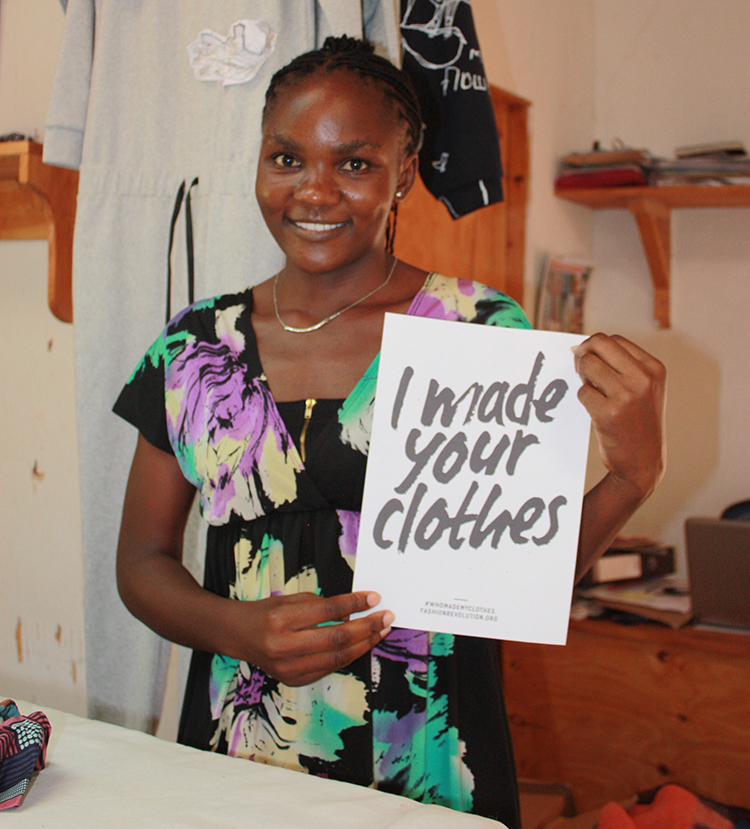
Carol is from the Vihiga county in Western Kenya. After completing primary school she moved to Mombasa on the other side of the country in the hope of getting a high school education. Unfortunately her mother passed away a few months after she left. Carol’s grandmother looked after her siblings and cousins, but she could not afford the school fees. Carol found work as a cleaner for a local coastal family and sent money back to support her grandmother. In 2002 she met her husband and became pregnant with her first child. She was 16 years old. Without family around her to help to look after her baby, she was forced to quit her job while her husband supported the family with his income as a bajaj driver.
It was in 2009 that Carol’s prospect’s changed. She heard about SOKO Kenya and she applied for a job as a helper. Over the past six years, through hard work and an eagerness to learn, she has been promoted to a supervisor role. “Employment has not only empowered me but also it has motivated me in so many ways,” Carol says. “My dream is to become a designer.”
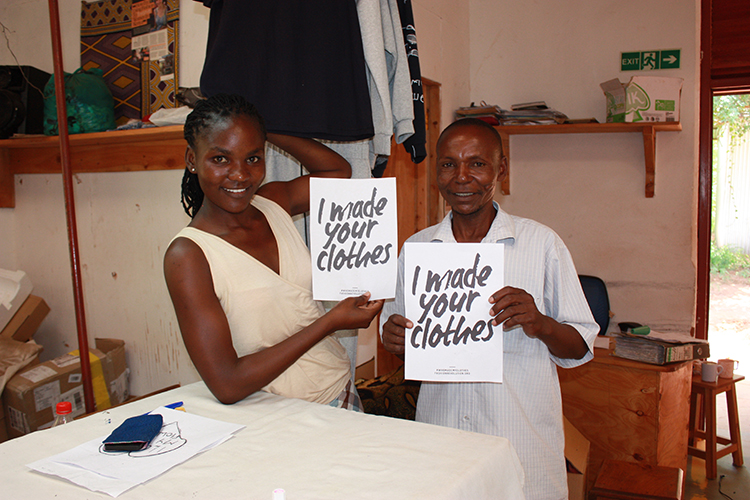
Last year Carol was awarded a scholarship to the UK, and she spent two months attending a pattern drafting and garment construction course. “I got to experience a life which is so different to what I am used to. I felt like the UK was a different world, and it made me wish that Kenya would one day be a developed country like that.”
“I attended other conferences, particularly about design, and it inspired me to start thinking out of the box. I found out that there are all different types of designers, even ones who design road signs! When I came back after two months I had so much knowledge to share with everyone, and endless stories to tell. My heart was filled with joy, my face full of smiles and a song of thanks to God for making this dream come true.”
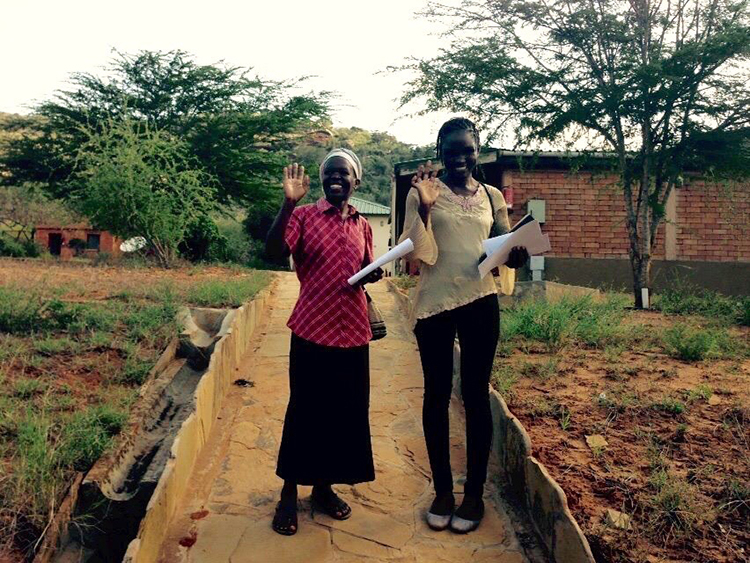
The SOKO factory is based in an area which suffers from the lowest employment rates in Kenya. There are high rates of prostitution, HIV/AIDs and wildlife poaching. SOKO aims to empower women by providing employment and training in a safe and fair environment. Through this we hope to establish an ethical and sustainable workplace which will benefit the local people and the wildlife both now and for future generations.
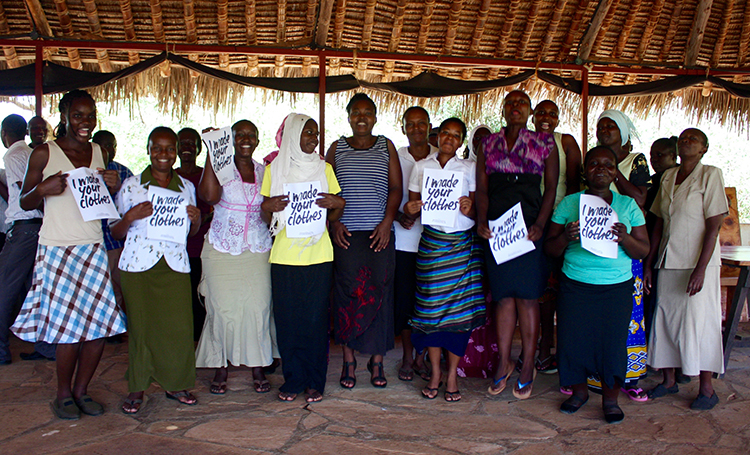
80% of our fashion is made by women who are only 18 – 24 years old. Sadly we only hear about these women when terrible tragedies occur, be it the Rana Plaza disaster in Bangladesh in 2013, the horrific fire at Ali Enterprises in Pakistan in 2012, or Triangle Shirtwaist Factory in New York in 1913. The hopes and dreams of the women behind our fashion are eclipsed by heartbreaking headlines that hound the fast fashion industry.
Made in Pakistan is the story of two incredibly resilient women who make our clothes. They don’t want our pity. They want us to know them. We hope this short will move you to care about them and ask #whomademyclothes.
Rubina: I am 22 years old and wanted to be a doctor. Then my father got sick, so here I am, many years later, still at a factory stitching college sweatpants and hoodies that go to America. I don’t want you to feel sorry for me. I used to be shy and scared in the factory environment. But after all the injustices I’ve seen happen here, I’ve become a labor organizer. I go to management to demand that we are not harassed, paid on time, given proper food to eat. You would not believe the things I have seen. Stitching all day long my mind wanders and I think about you often. You having fun, wearing these hoodie on campus. I wonder if you think about me ever? The woman who made that for you. I am taking English classes at night. So that one day I can at least get an office job.
Lubna: After my husband left me and my infant daughter, I had to find ways to care for her and my aging parents. So here I am, many years later working at a garment factory. As I pull threads out of hoodies and do the final inspection, I sneak glances at the clock. My days are long and I miss my daughter so much. The other women on the line help me get through my days. We share secrets and the grief that is buried deep in our hearts. When the sun starts to set, its my favorite part of the day because I get to go home to my daughter. I don’t have very many dreams of my own anymore. I just hope for a better life for my daughter. I often imagine university students hanging out, wearing the hoodies that I helped make. I hope you know that my daughter and my life are woven into the threads of your hoodie.
Making of the film: Made in Pakistan is a part of Remake’s Meet the Maker series. We traveled and visited fabric mills, factories, dormitories and homes throughout the world in search of the women who make up fashion’s supply chain. So far we’ve been to Haiti, India, Pakistan and China, to sit down and eat meals, listen and learn about the triumphs and the heartaches of the women who make our clothes.
This film is personally very meaningful to me. I was born and raised in Karachi, Pakistan. I have for the last decade worked across brands, factory managers, government and unions leaders to invest in the lives of the people who made our clothes. We were fortunate to have partnered with an amazing Pakistani film crew. Our cinematographer Asad Faruqi and producer on the ground Haya Iqbal were thoughtful and persistent in capturing this story (and their recent documentary A Girl in a River has just won an Oscar!).
We hope you enjoy a glimpse into Lubna and Rubina’s life and think about them the next time you put on a hoodie or a pair of sweatpants.
Fashion Revolution is here to connect makers and producers to consumers. In the Philippines, we have teamed up with Risqué Designs to demonstrate to the fashion industry that this is possible. Risqué Designs make fabulous made-to-order shoes from various local materials and supports weaving and artisan communities through sourcing everything locally.
Their shoemakers may also appear at their shop where shoppers can get detailed information on the products they made. Which is impressive! Not many brands do this! We encourage more companies to give their makers the opportunity to meet customers and connect with them. This is a great way to establish brand reputation.
Below are the stories of the shoemakers of Risqué Designs.
JOSEPHINE (NENETTE)
Role: Sample Maker
52 years old
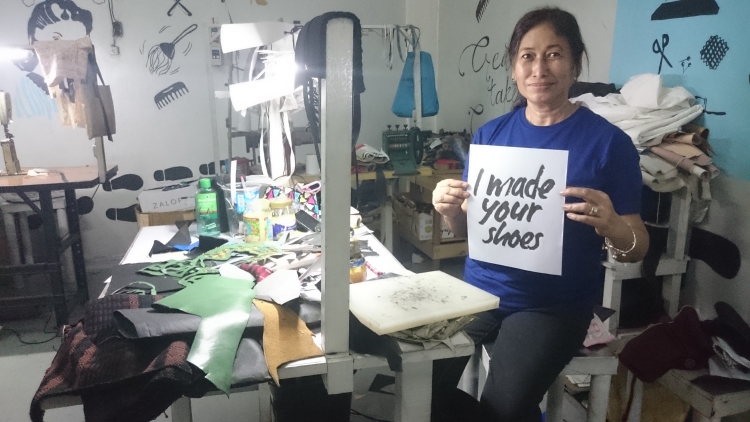
When did you start making shoes?
In the year 2000 until present
Tells us how you progressed into the role you have now.
When I first started, I was stitching shoes, I was a seamstress for Puma. But as I observed my colleagues who had other roles I wanted to take on bigger tasks in the assembling process.
What are your hopes and dreams in the future?
I hope to have a shoe factory of my own and be able to designs shoes like Tal does.
How long have you been working with Risqué Designs?
Just over a year
What makes working with Risqué Designs unique from your previous work places?
I am able to help Tal in the decision process of choosing appropriate materials and Tal’s designs are uncommon and are different from mainstream shoes these days. It’s also nice to work in a place that has a friendly atmosphere, where we could be a family to each other and help each other develop skills and expertise. I am enjoying my work here!
What is the hardest part of your job?
When a design has intricate details
What is your favorite part of the job?
When I am making sandals and flat shoes
Rudolfo (Rudy)
Role: Pattern Maker
44 years old
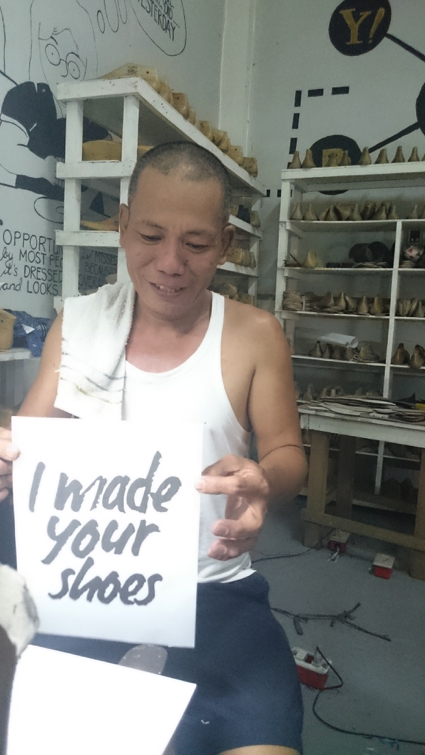
When did you start making shoes?
When I was 14 years old until now.
How did you start?
I started stitching shoes in 1983 and connecting the soles to the body of the shoes by 1984. From 1996 until today, I do everything.
What is the hardest part of your job?
When there are complicated parts to assemble. You need a lot of patience!
Do you like working with Risqué Designs?
Yes, I like it here.
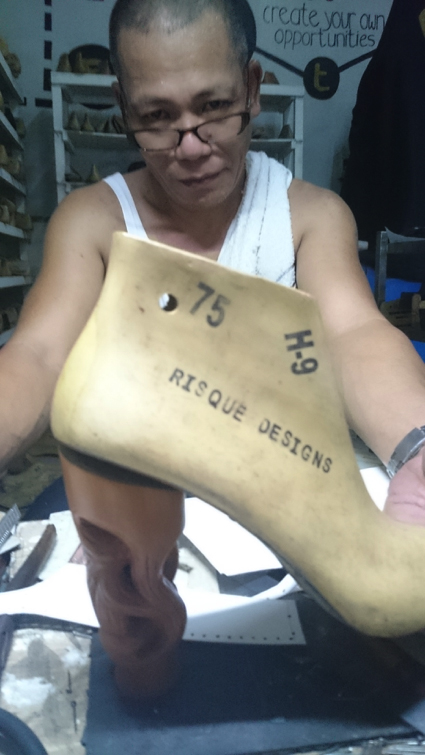
ROMY
50 years old
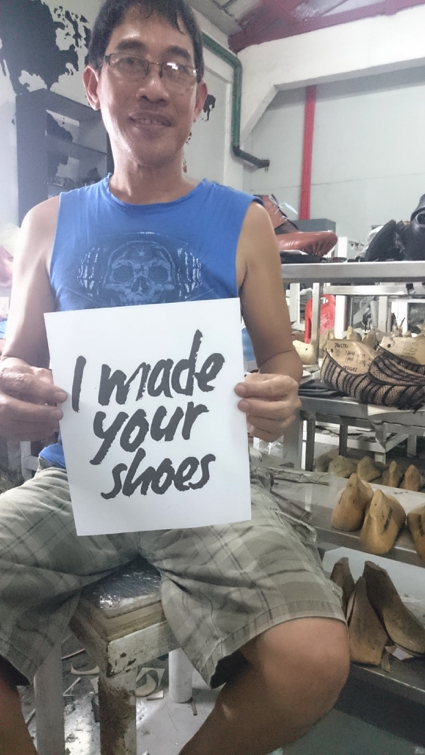
How did you start making shoes?
I started when I was 18 years old, like others I was also stitching parts of the shoes together.
What are your hopes and dreams for the future?
I want to be better in making shoes and to master the process.
What do you like doing in your job?
I like making men’s shoes and casual shoes.
If you are in Manila, Philippines and want to explore the city, why not drop by at Risqué Designs’ shop at the ground floor of Glorietta 3. The team is more than happy to meet you! Opening times are from 10am-9pm from Sundays to Thursdays and 10am-10am on Fridays-Saturdays.
The team of Fashion Revolution Macedonia visited the production premises of Di Biaggio NY in Kriva Palanka, Macedonia.
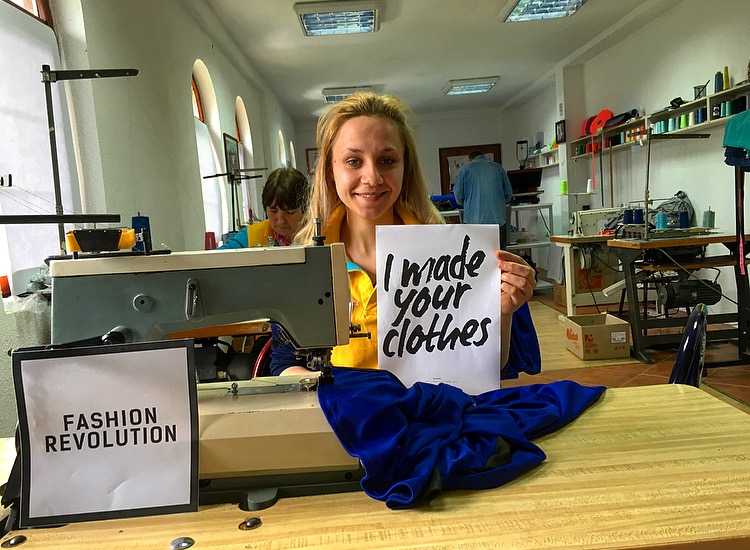
Maria is founder of sports brand Di Biaggio NY. She has lived in New York for years, where she worked as a Personal Trainer, but her interest in combining sport and fashion led her to set up a sportswear brand. She decided to set up the Di Biaggio production premises in her birthplace, Macedonia.
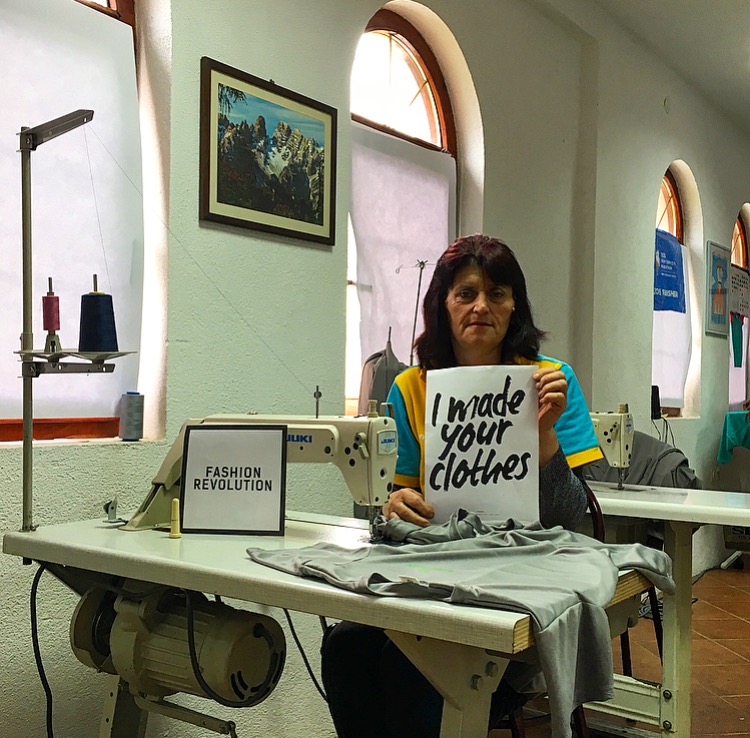
This brand has only been established for one year, but the team of seamstresses, pattern-makers and pattern cutters, who have been together for just three months, already share an amazing energy between them. Conditions are very good and the working environment is inspiring: the team is being paid fair wages, their working conditions are safe and most importantly, they are being treated very well. As we have seen the brand is respectful and kind not just to its employees, but also to the community in general.
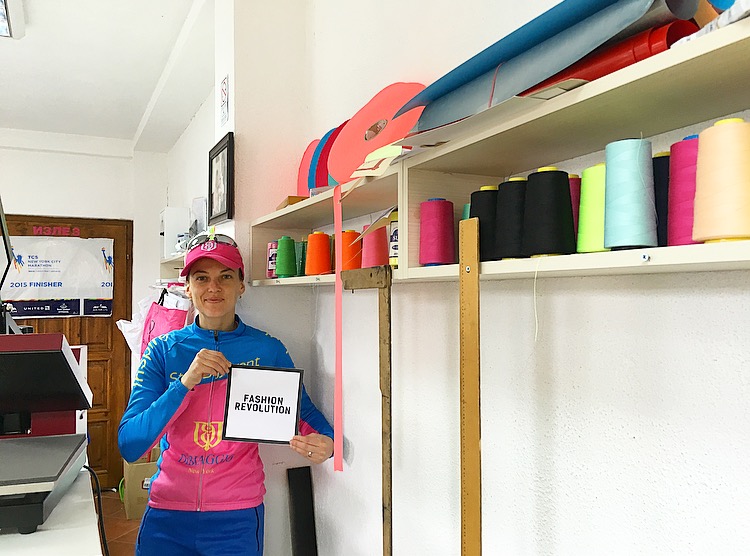
Slagjana Stojkovska, Valentina Aleksovska, Vaska Ivanovska, Blaga Jovanovska and Lidija Ilievska are part of this team of valued and well-treated people, who made Di Biaggio NY sportswear.
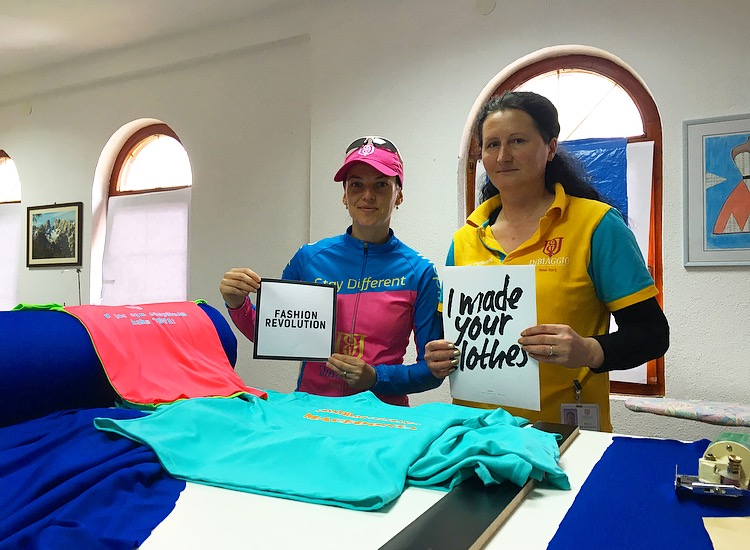
Here are some photographs taken at their workplace.
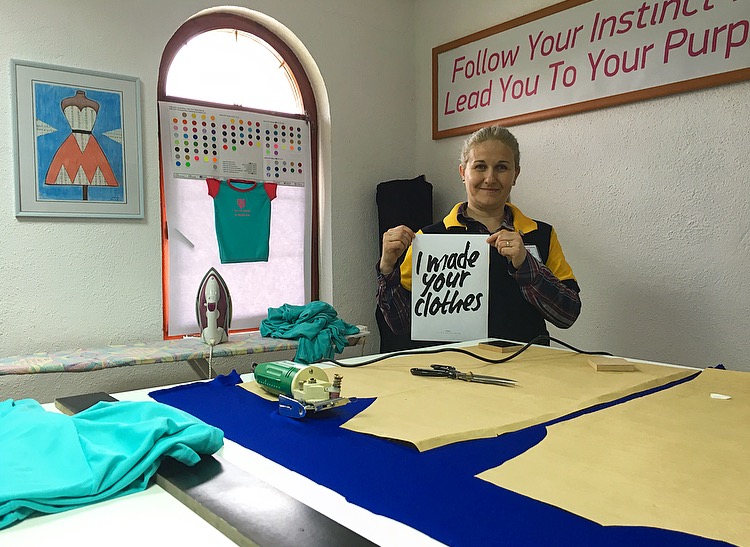
Written by Ana Jakimovska, Country Coordinator for Fashion Revolution Macedonia
Meet Beatrice. At 27, Beatrice is a mother to a 14-year-old daughter, an Ebola widow, and she is learning to write the alphabet in her spare time. Now that she works at The Bombchel Factory, she is able to support herself and her family for the first time in her life.
Before she became a Bombchel, Beatrice sold fish in the market sometimes, but in her own words at our first meeting, ‘whole day I not doing nothing at home.’
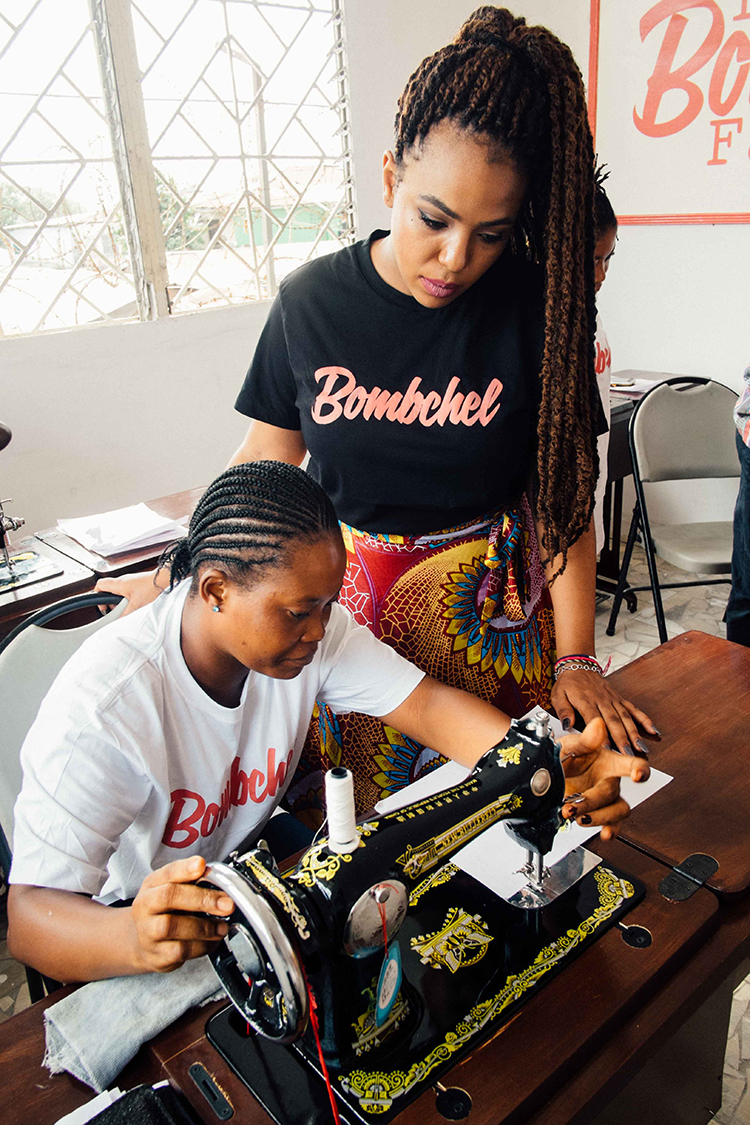
The Bombchel Factory is an ethical African fashion wonderland based in the heart of Monrovia, Liberia that trains disadvantaged women like Beatrice how to sew contemporary garments for sale.
When I started The Bombchel Factory, I just needed a place where women would make clothes for sale in my store, Mango Rags, or for the occasional US festival. I knew I wanted to help women as much as I could, being that I am a proud woman and most of the tailors in Liberia are men. In a country where most of the women are uneducated and unskilled workers, I couldn’t have imagined that we would get to teach women how to one day write their name, like Beatrice. I didn’t expect we would find a team mama, Sis Emma, who keeps the women in line but also builds their confidence. I didn’t think we would have a future Baby Bombchel on the way from our expecting manager, T Girl. I definitely didn’t expect that we could raise $60,000 on a crowdfunding campaign all the way in little Liberia!
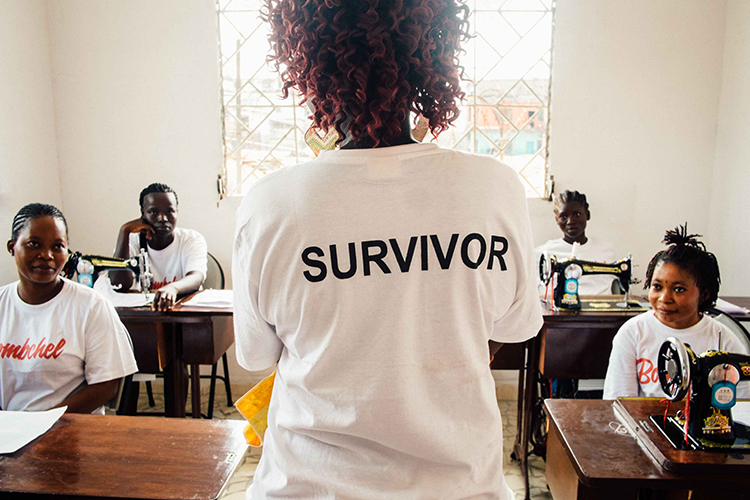
Through The Bombchel Factory, I learned that fashion can do more than just transform the way a woman looks, but it can revolutionize the way she lives. The most exciting things I’ve learned from our wonderland have to do with the people who have helped to build it.
In a country that has seen civil unrest, Ebola, and everything in between, we’re excited to be ethically stitching together a silver lining for Liberia.
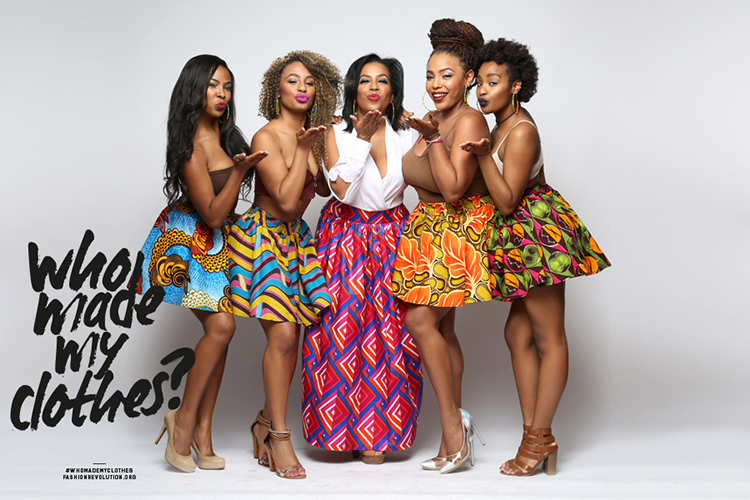
by Archel Bernard
If there’s one item of clothing that deserves to be branded “wearable art,” it’s these exquisitely carved heels which Mr Van Do Thanh makes for Saigon Socialite.
Melding French leatherwork with the ancient Vietnamese art of pagoda carving, the shoes are the brainchild of Lan Vy Nguyen, the Vietnam-born, California-raised founder of Fashion4Freedom. Lan Vy founded the social enterprise with the goal of alleviating poverty through ethical manufacturing and the preservation of ancestral craftsmanship. Despite their modern context, the so-called “reincarnated soles” abide by cultural mores.
Fashion 4 Freedom puts work of Vietnamese artisans into the light. This is a beautiful way to maintain traditional skills and cultural heritage by showing us the people #whomademyclothes.
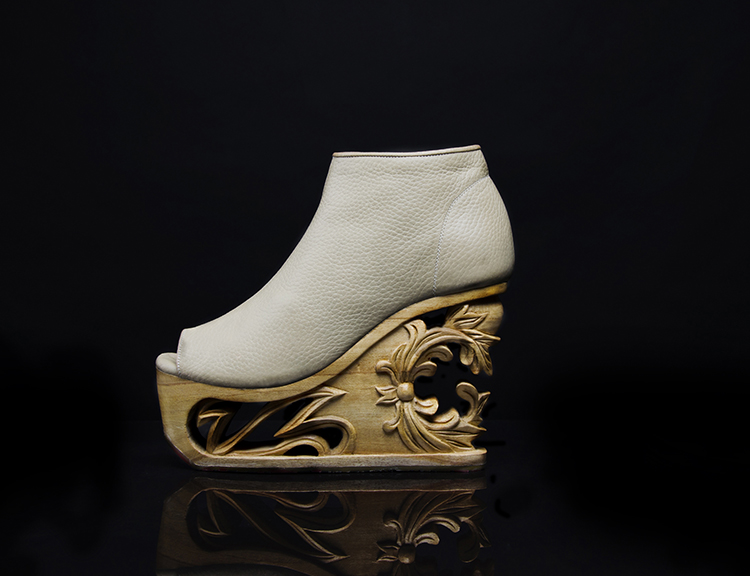
Post by Florence Bacin.
The whole story started with a need and an idea, but someone needed to make it happen.
Once you make a decision, the universe conspires to make it happen –Ralph Waldo Emerson
As we’re working on the next generation of L&E’s, I thought it was time for you to meet Atnan Z. – the master craftsman behind the 2B, Felt and Anirija collections who works at L&E London handcrafting studio in Skopje, Macedonia.
We met 2 years ago, as I was scouting for a master craftsman who will share my vision.
During our first sit-down, he told me his story – as a little boy he always played “making bags” as he waited for his father (a master craftsman) to finish work.
Naturally his first job was as a craftsman apprentice, I can’t get enough of his story about his hand shaking under the supervision of his first employer.
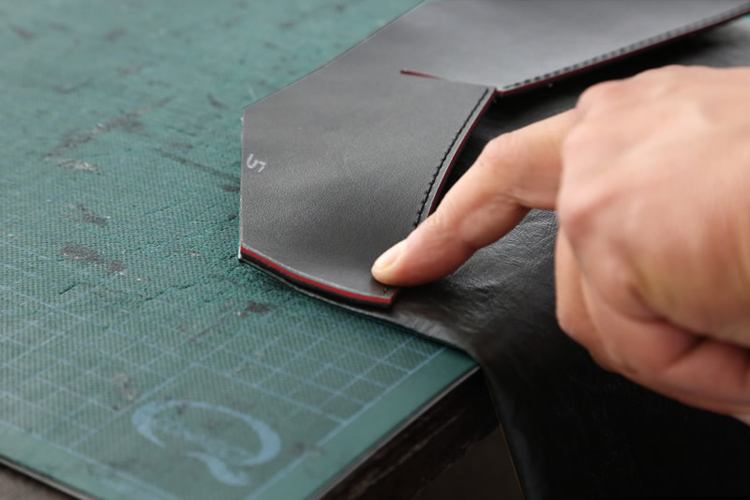
Hearing him talk transports me to another time, when all the master craftsman had open shops and you could see them crafting away, from pottery to handbags, (you could feast your eyes on crafts). But times have changed, now craftsmanship is a rarity around the world, so much so that he has had to make due with construction work at some point of his life.
He says working in construction has helped him think in an alternate way, which in turn, made him a better craftsman.
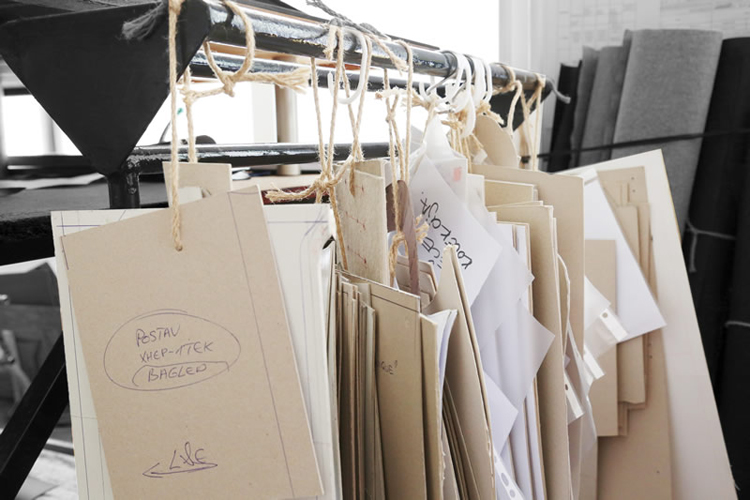
True to form, having worked with him for 2years now, I can say he comes up with creative ideas and thinks out of the box that enables us to push the boundaries on design.
It is in collaboration that the nature of art is revealed – Steve Lacy
Atnan and I work very closely, I come up with the ideas and he comes up with the solutions, lately he’s gotten to grips with the product so well, that he comes up with ideas and I with solutions! After which we have a testing and adjusting period before running small series.
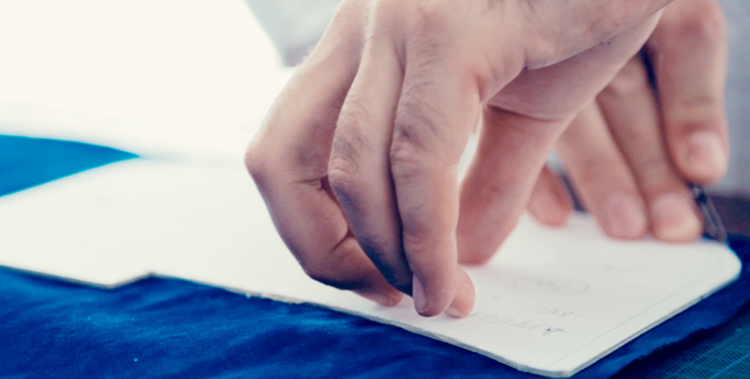
He is a very shy and reserved man but I did manage to get him to tell us at least – what he found to be most the challenging thing about making an L&E?
“The most challenging thing was to let go of everything I knew. Working with cellulose materials requires adjusting tools and we have introduced new details in making and finishing which also required a bit of getting used to. But once you understand the purpose of every detail you understand that unlike other bags, here nothing is left to chance. “
I couldn’t have said it better! Now you know a little bit more about more about the man behind the bag.
For more info and to see Atnan’s masterpieces visit: www.lnelondon.com
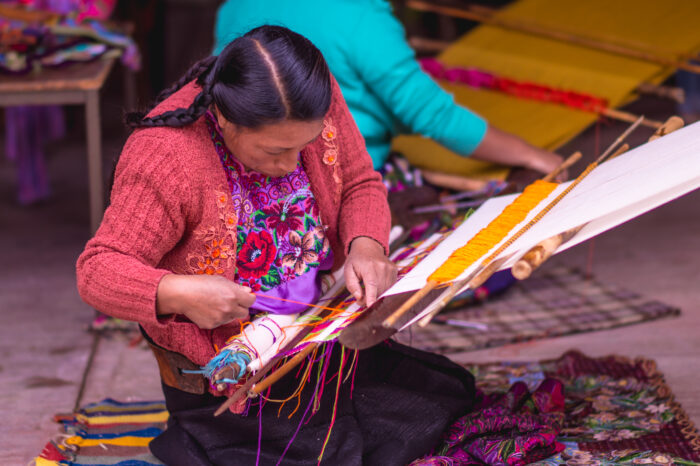
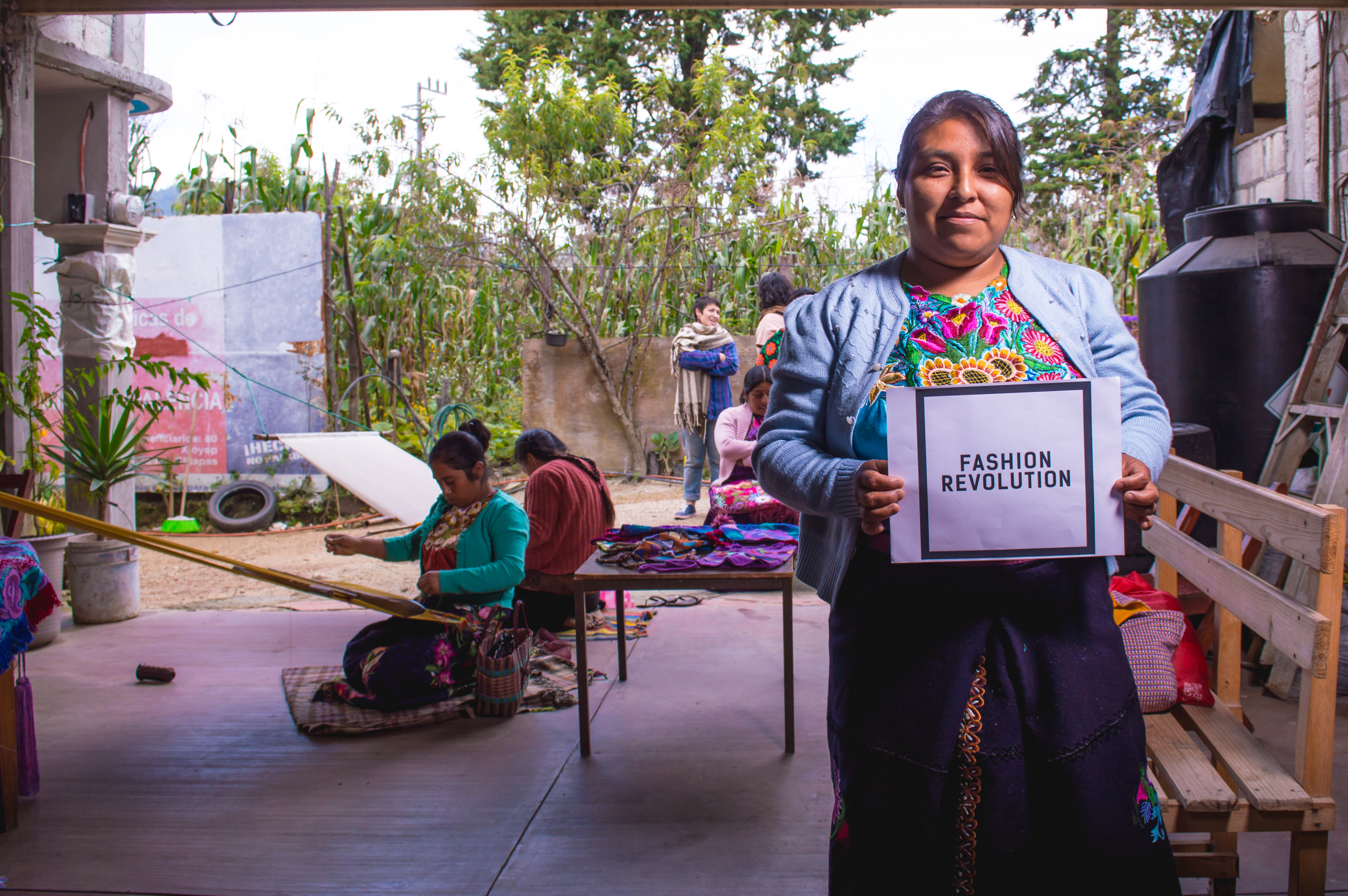 Malacate Taller Experimental Textil comparte el enfoque de Fashion Revolution sobre la salvaguarda de los derechos de las y los trabajadores tanto como de los consumidores, por ello nos gustaría compartir con ustedes algunas de las acciones que realizamos dentro de nuestro proyecto autónomo e independiente, donde las tejedoras y bordadoras que formamos parte de dicho proyecto trabajamos en colectivo, ya sea en nuestras propias casas para poder atender las actividades y necesidades cotidianas en nuestros hogares y de nuestras familias, pero también nos reunimos a trabajar en casa de una de las compañeras para apoyarnos y fortalecer nuestra amistad y poder ayudarnos a aprender unas de otras, con ello sabemos que no estamos solas.
La manera en que producimos nuestras piezas textiles es de acuerdo a nuestro tiempo y capacidad de producción real, sin embargo tomamos en cuenta las necesidades de nuestros clientes, con ello hemos aprendido a crear un equilibrio entre nuestros límites de producción y las necesidades de las personas que usan nuestras prendas, haciéndoles saber el tiempo y procesos de las piezas creadas, con ello comunicamos el valor de nuestras piezas textiles y nuestros clientes se mantienen la trazavilidad de lo que consumen.
Algunas de nuestras creaciones las hemos resignificado desde nuestra propia cultura, pensando en los diferentes contextos culturales de los que provienen nuestros clientes, sabemos que la manera de portar una pieza textil en sus lugares de origen es distinta a la manera en que acostumbramos en nuestras comunidades, por ello hemos creado una línea de indumentaria en la cual plasmamos nuestra cosmovisión y al mismo tiempo sumamos patrones y diseños con los cuales otras personas se identifican, de esta manera nuestros clientes pueden portar en cualquier contexto cultural nuestras creaciones.
Actualmente debido a el fenómeno del fast fashion las personas desconocen el valor real de las cosas que consumen y los procesos que existen detrás, lo que ha ocasionado también que los creadores de la ropa que portan queden ocultos, en el anonimato y no tengan rostro.
Por tal razón una de las acciones que estamos aplicando para romper con este fenómeno es difundir la información en las etiquetas que llevan nuestras piezas textiles, como nuestro lugar de origen, nuestro nombre, la manera o técnica en que se elabora cada prenda para visibilizarnos y visibilizar el valor de nuestros conocimientos tradicionales y la importancia de protegerlos, referente a lo anterior hemos sumado una frase en la parte trasera de nuestra etiqueta que versa:
– Los diseños de los bordados y tejidos contenidos en esta prenda corresponden a los derechos de los pueblos y comunidades indígenas de los Altos de Chiapas. –
Por último en nuestra región de Los Altos en el estado de Chiapas. México en la década de 1980 llegan por primera vez las máquinas de bordar y los hilos industriales, lo cual fue un fenómeno nuevo y atractivo para las artesanas de la región, nos apropiamos de dichos elementos culturales y comenzamos a resignificar nuestra práctica artesanal.
Los hilos sintéticos de diversos colores vinieron a sustituir en parte los materiales que utilizábamos en las prendas que elaborábamos habitualmente con algodón natural o lana y que teñíamos naturalmente con plantas, maderas, frutos y tierra de nuestro entorno natural, sin embargo, al ver tanta diversidad en los colores de los hilos nuevos nos resultó atractivo e implicaba menos horas de trabajo en el proceso de teñido.
Ya han pasado varias décadas de ello y si bien hemos tenido posibilidades diversas para innovar y crear nuevas piezas textiles utilizando dichos materiales hoy estamos reflexionando y replanteándonos nuestra manera de producir de manera consciente haciendo un ejercicio de memoria textil. Esto ha implicado recordar la forma en que nuestras abuelas hacían su indumentaria y los materiales que utilizaban incluso nuestras madres y hemos decidido comenzar paulatinamente a retomar aquellas formas de producción.
La manera en como hemos comenzado a hacerlo por una parte es comprar a otras mujeres artesanas de otros estados como Guerrero y Oaxaca materias primas que hoy ya no se producen en nuestra región como es el algodón natural que en alguna época se cultivo localmente, esto con el fin de apoyarlas y que en sus regiones no deje de producirse. El resultado de ello y que estamos haciendo es la creación de una nueva línea de piezas tejidas en telar de cintura con dicho algodón, reactivando al mismo tiempo diseños propios de nuestras comunidades que se están dejando de hacer o que solo se hacen para ocasiones especiales.
Creemos firmemente en la importancia de seguir utilizando materias primas de origen natural, replicando nuestras técnicas y diseños tradicionales ya que estos son la herencia cultural que las mujeres y hombres podemos dejar a nuestras generaciones para sembrar la semilla que explique a nuestros hijos el origen y la riqueza nuestra cultura, en este caso el tejido en telar de cintura y sus diversas técnicas, el bordado y la confección de piezas textiles elaboradas artesanalmente.
 www.facebook.com/MalacateTallerExperimentalTextil
Fotógrafo Mag Servan
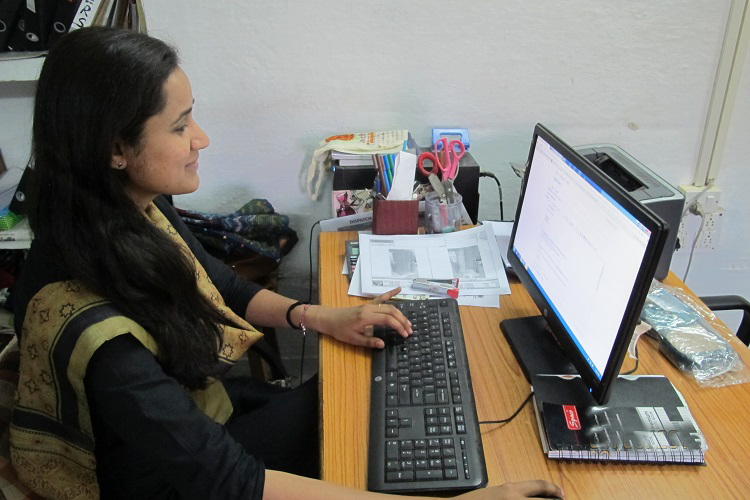
Shubhangi Singh Rathore works as a Production Merchandiser at Sadhna Handicrafts in Udaipur, India.
As a Production Merchandiser at Sadhna, I follow up with suppliers and coordinate the organisation’s internal production related work. I love my work. I studied my masters in Fashion Management and took this particular work as a profession. I am now implementing and executing the theory and knowledge that I have gained from studying.
Before working at Sadhna, I was working in Delhi as a Buyer in the ladies ethnic department with Texas Pacific Group (TPG) Wholesale Pvt. ltd-Vishal Mega Mart. They’re the biggest private equity firm, owning Visual Mega Mart, one of the biggest retail chains in India. It’s huge. That was my first job.
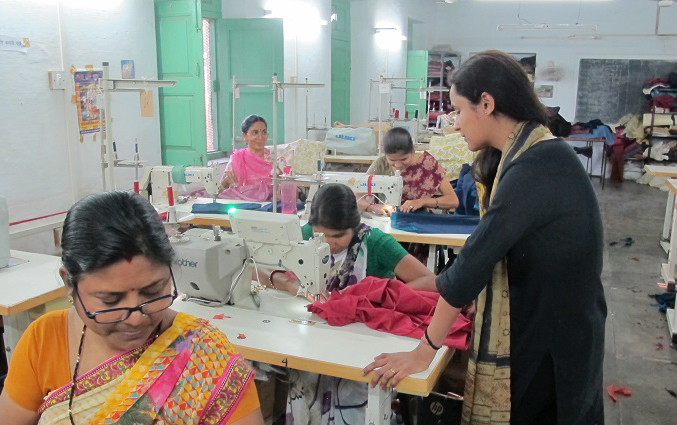
When I was a child, I thought I would become a naval officer! I used to watch a television program that used to play on Doordarshan and the name was Abhiman, which was based on the navy. My career aspirations changed every now and then, but that was the very first initial idea in my mind.
Soon after my graduation I got more inclined towards brands. This is because my friends were very brand savvy. Until the time of graduation, I was not a very brand savvy person. After meeting my friends who were quirky, I started hearing words like Zara, H&M and Abercrombie and Fitch. It sounded to me like there was a big brand garment industry out there.
My mum always used to compliment my eye. She would say I have a great taste in colour combinations and styling. Even if not always in regards to my own styling! So I thought fashion industry was a good choice for me to pursue a career with.
When I started my career in fashion I worked as a Buyer, now I am on the flip side, I am a vendor. When I was a buyer I was dealing with the vendors and regularly facing some challenges, such as with vendor management, timely deliveries and sales at better mark ups. On the other side, I know what the challenges are. Now with the blend of both jobs, I am able to bridge that gap. It’s not ethnic, western, whole, woven or knits, it’s about the knowledge that you acquire and gain and using this to get better designs. I will stay in production and upgrade my skills.
I decided to come back to my home town as it had been quite a long time away with my studies, internships, working and everything. I found some work in my own home town within the fashion industry. I was so lucky to get associated with Sadhna.
Five years down the line I see myself as a Category Head. This could be either with Sadhna, if it grows and thinks of having Category Heads in the future, or maybe with another brand.
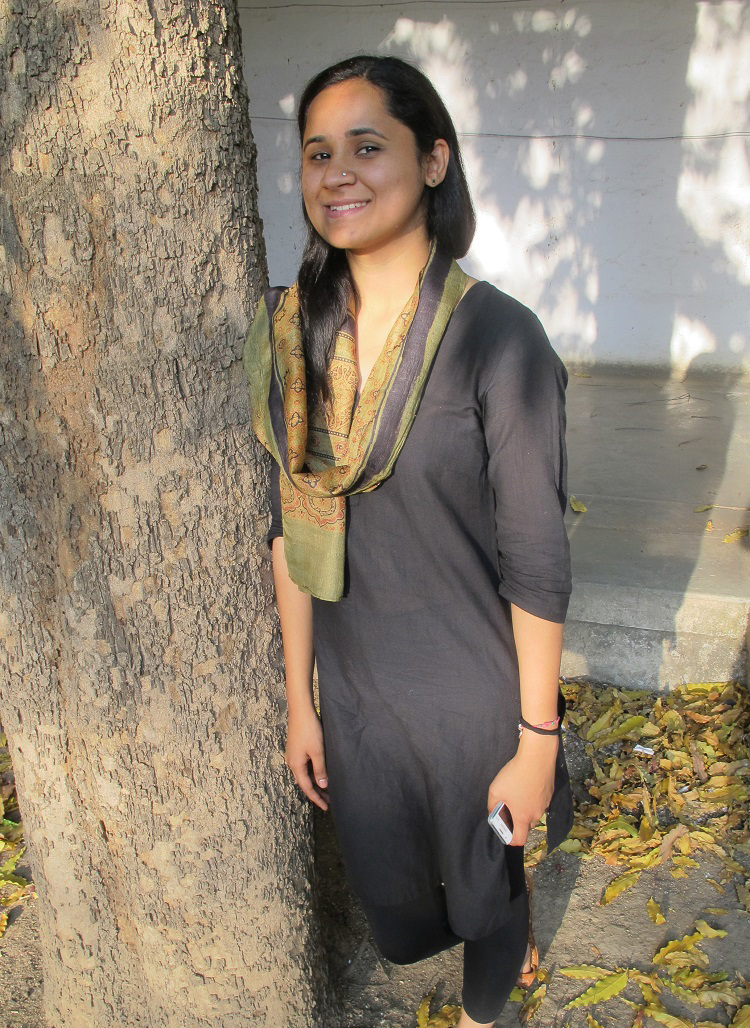
As a Buyer, I have been to places where there are women operators and male operators. In other factories and setups I have been to people are more confined. They enter work and go. At Sadhna it’s more of a family. I feel whatever thoughts you have in mind when walking into the factory you can share it easily with another person. Here through chatting people can shed off their office and home load and when they exit, they take happy memories. I always notice that with the tone when the pitch is high everything is normal. Sometimes I witness quarrels, but it’s when people speak in whispers, “I think something fishy is going on!” When the buyers visit they hear shrieks and are like “my god, what is all the noise?” and I say “chill, we are laughy, chatty and noisy like a family!” Still, people work very hard. Sadhna keeps the balance between the corporate and social sector. We completely do not want to operate a corporate factory with no emotions. In terms of output and systems we are trained and documents are recorded. All the teams have documents, instead of documentation being in a person’s mind. We give more and more training on this. Even the work that I do, the coordination and follow ups, I always tell people this file contains these items, if I am not here you know how to document it.”
My previous boss, Mr Bharat Bhatia, was my role model. He had 16 years’ experience with knits and was a person who used to see a garment from the distance and be able to tell the price of the garment. In Sadhna, I admire Swati for her overall production handling expertise and Manjula for skills in handwork. Every now and then I make somebody new my role model. In the movies, I like Ahmed Kahn. I really like Sushmita Sen who was an ex Miss Universe. She is beautiful and independent and she is a single mother, very known. She is doing very big things for society but not that many people know about it.
There are so many challenges for working women in India today. Firstly, the society is the biggest challenge, then the family is the second one and the inner consciousness, which has been made stubborn, is the third one.
In Indian culture everything is a blend with the society. Society pesters every now and comes up with thoughts and with facts, which pressurizes a woman to change her decisions. I will give you an example, suppose if girl is aged 22 or 23 and further wants to work, the society will keep pestering the parents saying “this is her marriageable age, you should marry her off, why aren’t you marrying her?” or they will say “that girl got married, this girl got married, why isn’t your daughter married?” The society is always pressurizing parents and then families are pressurizing girls and women.
Inner conscience is meant in the sense that some girls know what they really want to do. But they then limit themselves and they create boundaries, therefore they never do what they really want to. If women really want to travel they should! But women won’t do it because the inner consciousness keeps telling them “you are an Indian girl, you don’t have to travel, you just have to be at home and if you want to travel it should be just 20kms to-and-fro, not more than that”. Women who do travel on their own in India are great. But generally, they are at home but travelling to fetch the wood to cook at night, they get water from the pumps, which is actually more travelling than men. But not enough in the outside world and women really want to travel more.
Personally, I would love to travel more, I have been doing it quietly, and especially when I was away from home I would travel to find out more about different cultures, meet people, learn songs in local languages and take lots of pictures! Now I am home, again you see it’s the inner consciousness that tells me: “how do I tell my parents I want to go out? I have to come up with reasons that I have planned a party or I have planned a vacation”. When I was living outside of my hometown in hostel, I didn’t need to explain. When you are at home, you are in front of the eyes of your parents and they keep a note of everything.
The main challenges for women in India are to work as per their choice, to marry as per their choice, to decide whether to stay in a family or to stay all by themselves, and studies, choosing disciplines as per their choice. There are more women studying now in India but difficulties still remain.
For International Women’s Day, Sadhna is planning an event on 8th March. We will play some games, to make the women feel special. Before I started working with Sadhna, I was not familiar with the views of “for the women, of the women, by the women,” I’d heard them in a democratic sense. We need to expand these prepositions with women. I want everyone to feel proud to be a woman that would be my message for International Women’s Day.
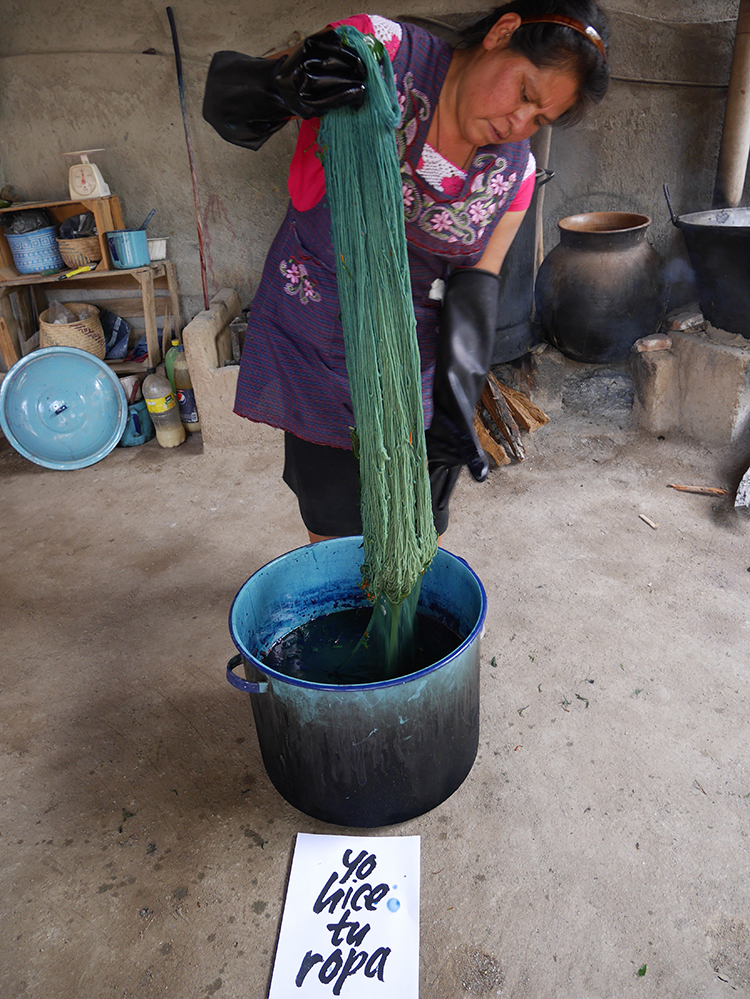
Juana learnt how to use natural dyes when she was 8 years old. She now works with her brother Porfirio in the Zapotec community of Teotitlan del Valle, dyeing wool with natural dyes and passing on her knowledge and skills to the next generation.
Before starting to dye, Juana has to prepare the wool for spinning. She cards the sheep’s wool to remove any small twigs or thorns which have got caught in the wool and then starts to twist the wool between her hands.
She will then spin the wool by hand on a spinning wheel before winding the wool into skeins in preparation for dyeing.
All of the dyestuffs she collects and uses are sustainably harvested. Dyestuffs used by Juana include musgo, an invasive species of moss which grows on trees in the region; granada or pomegranate; zapote negro, a delicious fruit local to the Oaxaca region; pericone or wild marigold (often used as a base colour with indigo or cochineal overdyed to create green or orange); marush, a local plant with no scientific name on record, añil or indigo and cochinilla or cochineal.
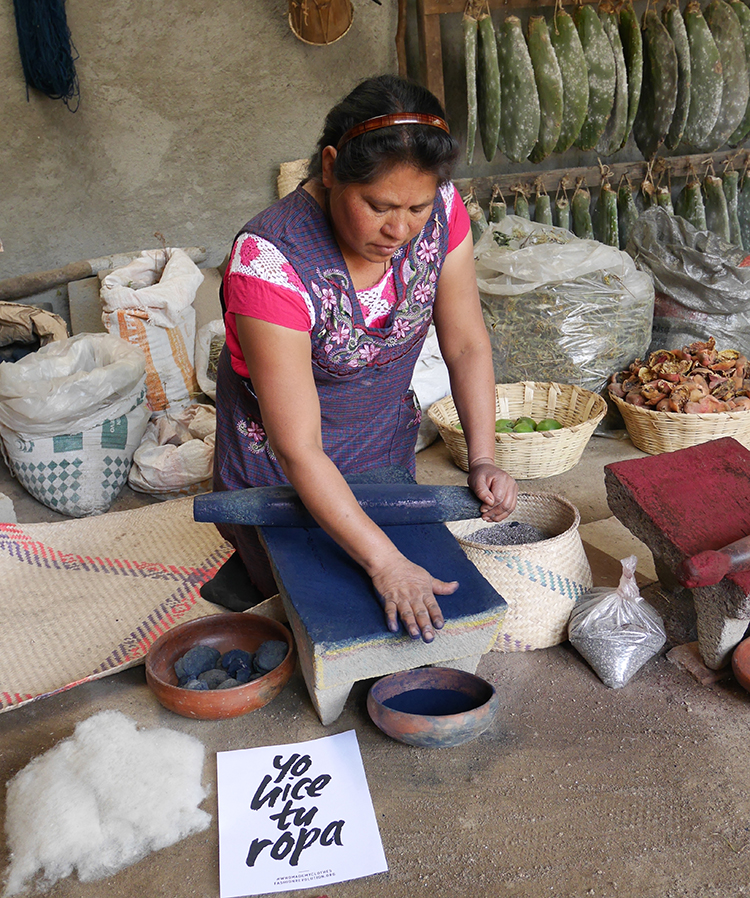
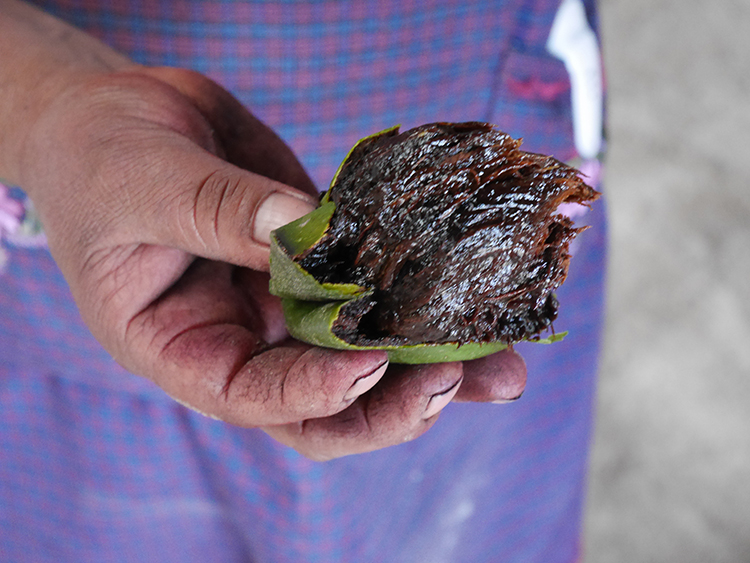
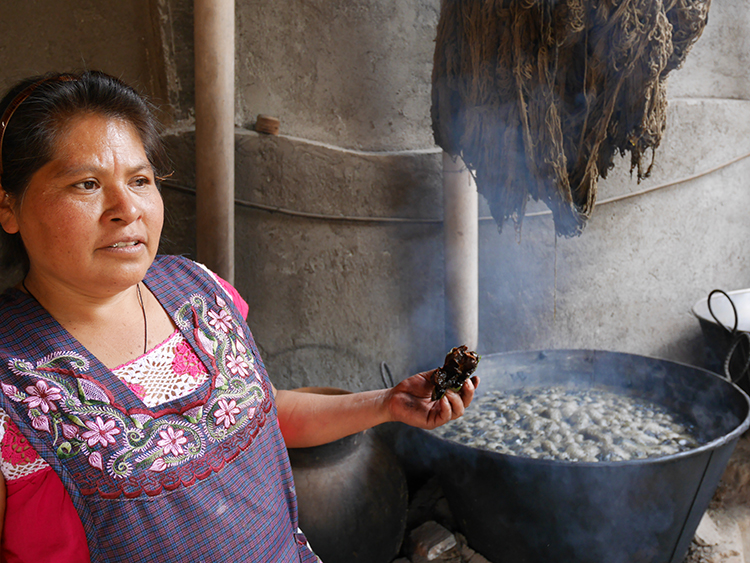
Juana mostly uses alumbre de potassio as a mordant and prepares the wool the day before. The mordant opens up the wool to absorb more colour and fixes it so it doesn’t fade.
The container used to dye wool is very important. You need to use enamel or stainless steel for red tones. If you use an iron pot you will get purple and in an aluminium pot you will get pink.
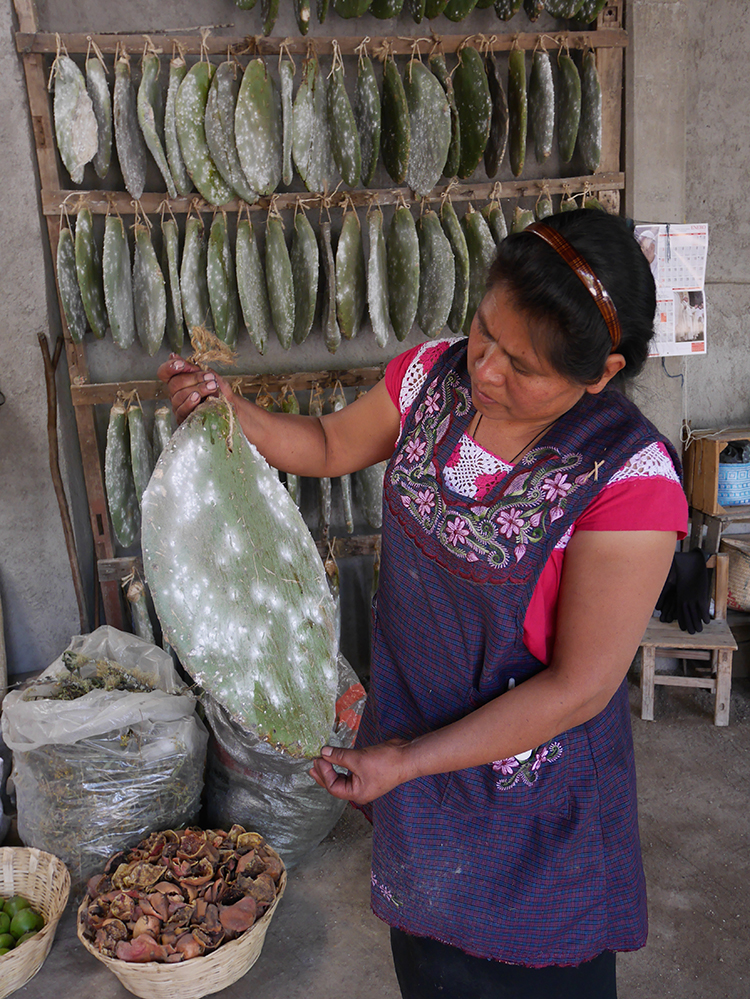
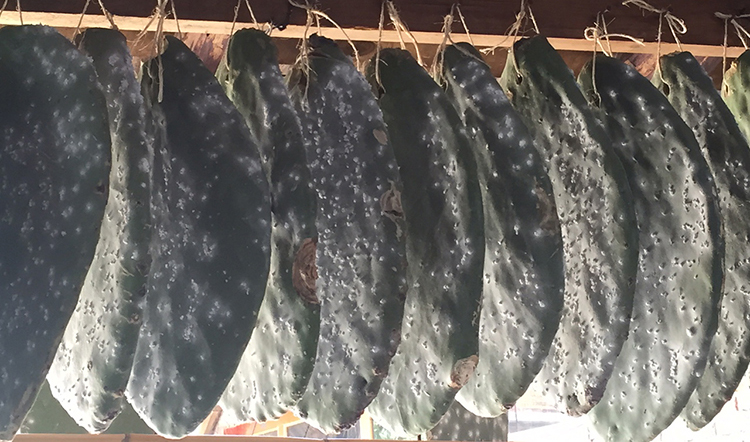
Cochineal is a parasitic insect which lives on the leaves of the nopal cactus, commonly known as the prickly pear. The insects produce carminic acid to deter predation by other insects.
The indigenous peope of the Oaxaca region domesticated cochineal, just as they domesticated and hybridised corn, evidence of which has been found in the caves of Yagul dating back some 8000 years. Cochineal was so important in Mexico that Montezuma I levied a tribute on all dependent states during the 15th Century, demanding the annual payment of 2000 handwoven, decorated cotton blankets and 40 bags of cochineal.
After colonisation, cochineal was Mexico’s second most valuable export after silver as it produced a deeper red than the madder which was used in Europe. The Spaniards kept the source of cochineal a secret; for over 200 years it was widely believed to be a seed.
Cochineal is widely available in the Oaxaca area, with a cochineal farm and research centre just out of town. Most dyers have nopal cactus leaves hanging in their workshops, ready for the cochineal to be harvested. Cochineal is an adaptable dye – you can add lemon to make orange or add baking soda to make purple.
[youtube v=”je_nibJlwak”]
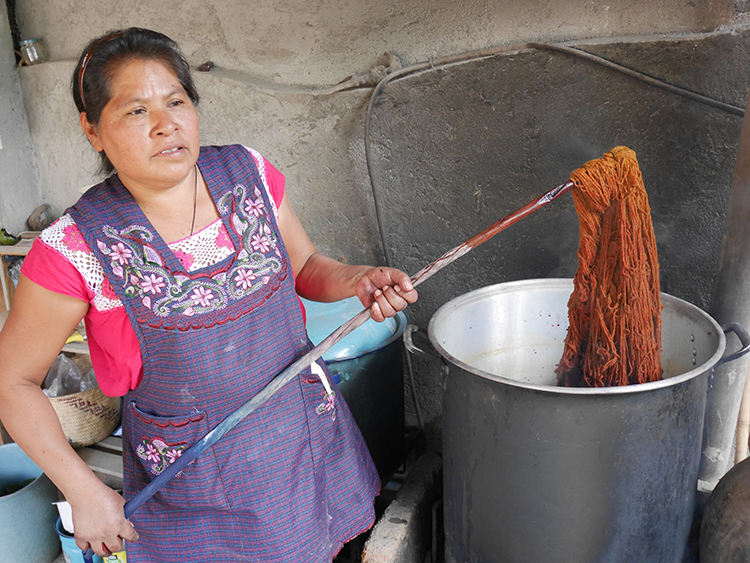
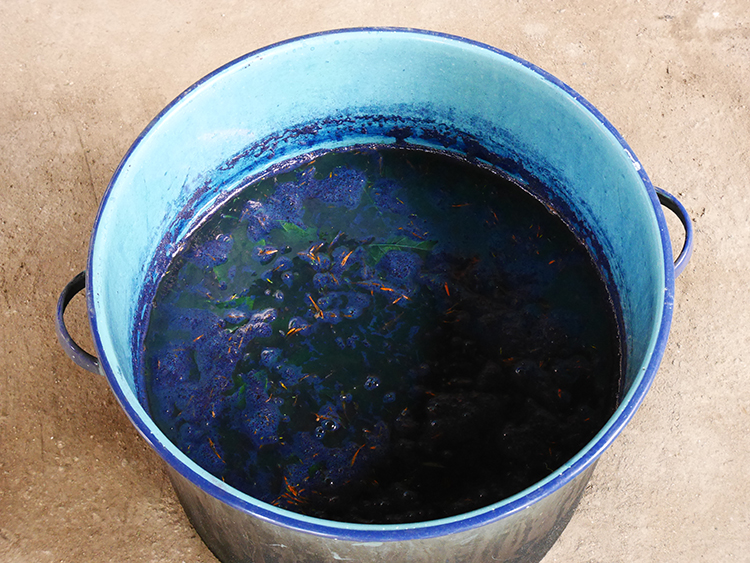
Indigo comes in a hard paste form and is made from fermenting plants. Juana buys indigo at 1800 pesos a kilo (around $100) from Miltepec, about 4 hours away. For dyeing a deep indigo, the wool will be dyed at the beginning of the dyebath for 5 minutes, left to dry and oxidise in the sun for 3 minutes and then put back in the dyebath for a further 5 minutes. Manush leaves can be used to create a deeper blue. The dyebath gets lighter the more it is used as the oxygen takes the colour out, so a range of shades of blue can be obtained.
Teotitlan del Valle is famous for its wool weavings on the two pedal harness loom, but only about 10% of people now use natural dyes. Juana’s son Javier works with his parents. He weaves contemporary abstract rugs, interspersing straw into the wool to create the design and her nephew José Lopez is also weaving with the family.
When I met Juana, her main concern was for the survival of this ancient skill; she has taught not just her family, but the children of the community how to use natural dyes. Juana is planning to run dye workshops throughout the school holidays as a way to keep young people out of trouble and away from drugs and alcohol which are causing problems amongst the youth of the Zapotec community.
Juana says
“I am proud of my family as they are helping to continue the culture”
Concerns over artificial additives have seen a growing demand for cochineal to colour food and lipstick as some analine red dyes were found to have carcinogenic properties. Maybe we will soon realise that the skin is the body’s largest organ; the clothes we wear, the coatings used on them (formaldehyde, teflon, flame retardants) and the dyes which are used to colour them, can all affect our health.
By encouraging the next generation to see the value in natural dyes, Juana is playing her part in keeping alive the rich textile heritage of the Oaxaca region. Hopefully an increasing awareness that what we put on our bodies, not just in our bodies, affects our health will lead to increased demand for Juana’s natural dyes.
Visiting Mexico? Find out more about natural dyes with Norma Schafer’s one day natural dye study tour
Just before the onset of New York Fashion Week, Burberry announced a radical shift in how their collections will be shown and sold: no longer following the usual fashion schedule of two menswear and two womenswear seasonal shows, but instead amalgamating them into two gargantuan annual shows and, crucially, making the collections available to buy immediately, eliminating the concept of ‘previewing’ to buyers before the clothes are made available to the customer.
Within a few days, Tom Ford and Michael Kors quickly followed with similar announcements.
Why did it take big brands no time at all to adapt to such a revolutionary and seemingly innovative change? How could it be that a tried and tested system can so suddenly be switched to accommodate immediate retailing instead of operating on wholesale orders?
It is partly a symptom of a fashion industry looking for a new identity, influenced as it is by social networks and the public’s increasing interest at being included in the conversation, but it also underlines that fact that, for such big fashion houses, switching from wholesale to retail is actually quite easy, and it won’t change much in terms of their overall operations.
The truth is that their supply chain is ready for it; their structure can manage any speed at this point. Their gigantic, well-oiled but profoundly inefficient machine is already geared to speed – time to market is getting faster and faster and reaching consumers directly is now seen as the way forward.
On one level, it fits with the trend for seasonless collections as it reiterates the point that we have too many seasons in the fashion calendar (couture, ready to wear, men’s, women’s, autumn/winter, spring/summer, pre-collections, resort…), and as such it was quickly labelled as triumphantly ‘innovative’, ‘game-changing’, even ‘genius’.
The reality is a bit more sinister, and what it actually means, or implies, is supremacy of the big over the small. Because for a small brand, for an emerging designer, or anyone who isn’t supported by an enormous, invisible supply chain, this change will be almost impossible to follow.
There is no way that a small brand or unknown young designer can predict the amount of orders they will receive, or what will be the best seller of the season; a small brand relies on their buyers viewing the collection and giving potentially useful feedback. A buyer will take time to consider what will and won’t work in their boutique, thus influencing a flux of minimal changes that can still occur between orders being placed and production, becoming part of a conversation that leads to better understanding and further development.
I have seen young designers’ collections being finished only minutes before the show: a final adjustment to the length of a sleeve, adding an embellishment, re-introducing a piece that is more experimental and somewhat unfinished and wasn’t part of the original merchandising but looks good in the final line-up.
And after a collection is exhibited (and the young designer will often travel around several fashion weeks to showcase it) comes another process, that of producing it according to how many orders have been received.
The production process is an integral and vital aspect of learning, as it means working with other people. The pattern cutter will still be tweaking; the designer will visit the production studio, often meeting the seamstresses (or skyping with them if they are abroad). While waiting for fabrics to be delivered in full, they are in contact with the industry that supplies them – it’s when they know for sure that blue sold better than brown, or the tweed was more popular than the twill.
It is the moment when everybody across the supply chain holds hands. It’s a time of union, where triumphs and losses are shared. If the collection sold well, it’s an honour as well as guaranteed employment for the people who make the clothes, and they will be a part of the designer’s pride and success. It’s when one really understands what it is like to be a fashion designer – what the industry behind their collections looks like. It’s getting to know the people to whom they are linked by the thread that is clothes-making, and the techniques that make those makers unique.
It takes time.
Which is precisely what has now been almost eradicated from the fashion language, in one carefully orchestrated statement.
From fast to faster.
It is as if the concept of time in fashion can only be about narrative references to the past, like the ‘70s look, or the ‘90s throwback and no longer about the precious time it actually takes to make great clothes that are considerate and well made.
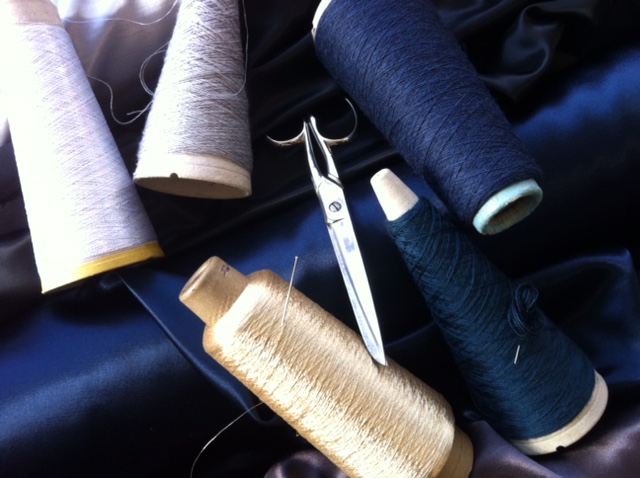
Interestingly, Raf Simons cited speed and lack of time for the creative process as one of his main reasons for leaving Dior, and Alber Elbaz echoed that sentiment when leaving Lanvin.
The only genius thing about the murder of time is in its irony: this is the high end imitating the high street, making Topshop and H&M look like the visionaries that they actually were.
Because, make no mistake, this move confirms that fast fashion and fast luxury have won the battle, at least temporarily.
But there is hope.
The fact is that the fashion industry as we know it now is relatively new, and it’s still finding its feet: which is why the movement to make it sustainable at its core is so important. If we act now to make it right while it’s in its infancy, we stand a real chance to grow it into a positive force, all things considered.
To continue to grow Fashion Revolution as a global movement for change, we need your financial support. Even the smallest donation will help us to continue delivering the resources we need to run our revolution. Please donate, be a part of this movement and help us keep going from strength to strength. We can, if you help.

This website was created and maintained with the financial support of the European Union. Its contents are the sole responsibility of Fashion Revolution and do not necessarily reflect the views of the European Union.