Matt is a 28-year-old garment worker in Phnom Penh, Cambodia. Photo by Sok Chanrado
I’ve been working in garment factories since 2004. It’s been ten years. During those years, a lot in my life has changed. I used to live with my aunt before I started working so I would do all of the chores around her house. Now that I earn my own income I can afford to buy whatever I want and I can help my younger siblings go to school. I have two sisters and one brother. I am 28, my brother is 26, the third is 24, and the last one is 19 years old. My two younger sisters also work in garment factories but our brother goes to university.
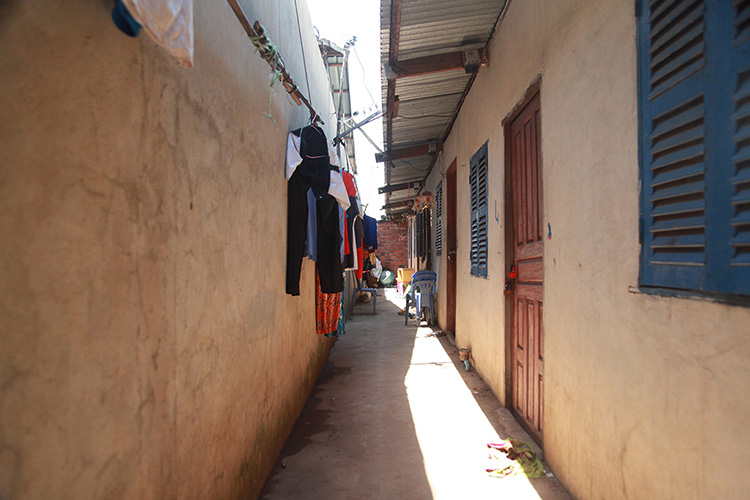
I had a rough childhood so I want to forget about it. When I was young I sold things in the market like fish and meat. I sold anything I could. I would sell things for other people, too, in order to save for my siblings and me to go to school. We lived in Sihanoukville then and my family was poor. All of my siblings had to work to earn money for school at the age of seven or eight. In 2004, my mom passed away. That’s when I quit school.
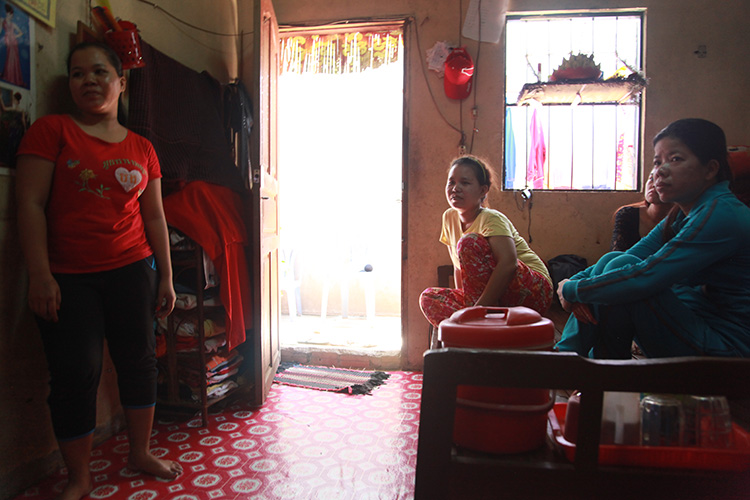
My father was a drunk. He always caused problems – swore at us or threw things around the house or kicked us out. Because of his abuse I decided to bring my siblings to Phnom Penh to live with our aunt. After living with her for about 4 months we had to rent our own house. The financial burden was too much for her.
When I was a child I dreamt that I would finish school and get a good job that could support my family and me. When my mother died I had to quit school to work because I am the oldest sibling. I was only in fifth grade. I felt such pity for myself after quitting school. Ultimately, I had no choice. Time wouldn’t stop. I had to look forward and take care of my siblings.
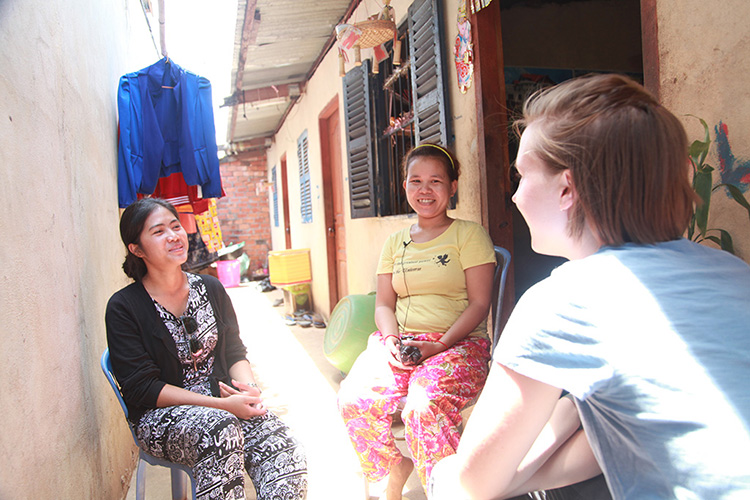
I must sacrifice myself for their sake. It hasn’t been easy. At times I feel really irritated and stressed but when my siblings behave themselves, and don’t give me a hard time, I feel my capabilities are limitless. Even if we don’t have parents, we still have each other. As the eldest sibling I feel a great responsibility to be a good role model for my brother and sisters.
Financially, we can only depend on ourselves. Unlike others whose parents are still alive, we can’t survive without working. I don’t have the luxury of living that way. If it were up to me I would not work in a garment factory. I want to open a small shop where I have the potential to earn income daily. With my current job, I have to wait until the end of the month to get a paycheck from the factory. By that time, I need to pay rent and it seems I have nothing left. Unfortunately, I don’t have the ability to realize this dream for myself right now because I need to support my brother who is in university. Once he graduates I could probably quit my job at the garment factory and open my own shop. I’m optimistic about my future. When my siblings were young, I worried they wouldn’t listen to me. But it turns out my siblings are good kids. I hope the future will be easier. Since I am having a hard time for their sake now, I believe they will think about me when they have jobs.
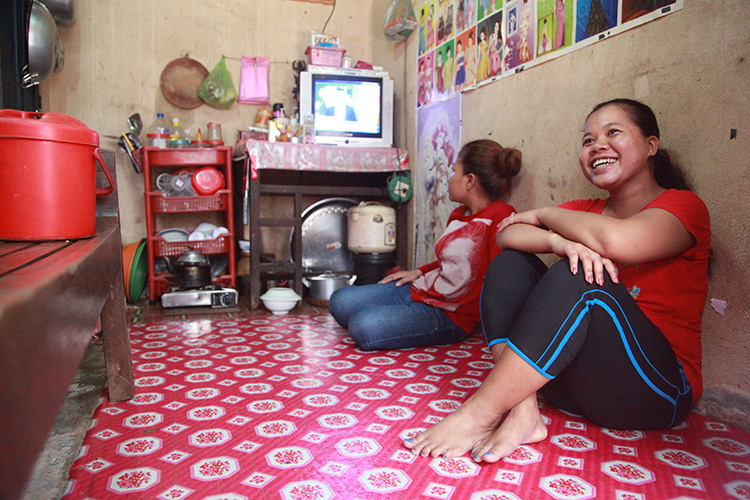
This interview has been edited. It was conducted on August 10, 2014, outside Matt’s room in Phnom Penh, Cambodia. You can read the original interview here
Primary Voice is a collection of primary source interviews dedicated to documenting the living stories of garment factory workers worldwide. It was created by urbanist Mikaela Kvan. To read more interviews and to get in touch visit www.primaryvoice.org
“You have forgotten the Tazreen fire incident but our actual suffering has just started,”
says Anju, who experienced severe head, eye and other bodily injuries during the fatal Tazreen Fashions Ltd. fire in Bangladesh in November 2012 that killed 112 garment workers.
Survivors of the Tazreen fire who recently talked with Solidarity Center staff in Bangladesh say they endure daily physical and emotional pain and in many cases, have little or no means of financial support because they cannot work. Some, like Anju, who is unable to work, have never received compensation for their injuries.
Bangladesh’s $25 billion garment industry fuels the country’s economy, with ready-made garments accounting for nearly four-fifths of exports. Yet many of the country’s 4 million garment workers, most of whom are women, still work in dangerous, often deadly conditions. Since the Tazreen fire, some 34 garment workers have died and 985 have been injured in 91 fire incidents, according to data collected by Solidarity Center staff in Dhaka, the capital.
Some 80 percent of export-oriented ready made garment (RMG) factories in Bangladesh need improvement in fire and electrical safety standards, despite a government finding most were safe, according to a recent International Labor Organization (ILO) report.
The Solidarity Center has had an on-the-ground presence in Bangladesh for more than a decade. Through Solidarity Center fire safety trainings for union leaders and workers, garment workers learn to identify and correct problems at their worksites. But fewer than 3 percent of the 5,000 garment factories in Bangladesh have a union. ” Despite workers’ efforts to form unions, in 2015 alone the Bangladeshi government has rejected more than 50 registration applications—many for unfair or arbitrary reasons—while only 61 have been successful. The rejections have jumped significantly from 2014, when 273 unions applied and 66 were rejected.
So that the world does not forget, here is the story of Anju and others who survived the Tazreen fire.
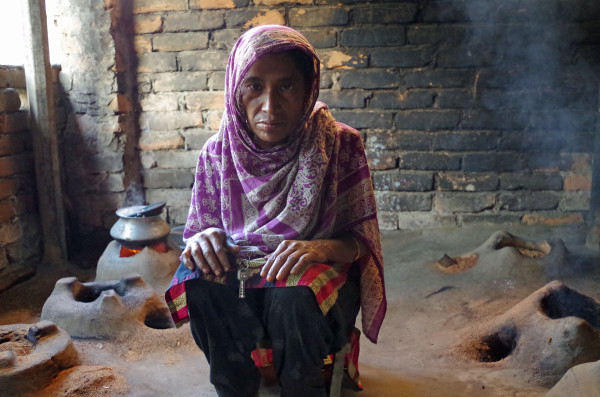
Anju, 45, suffers from neurological and other complications resulting from the injuries suffered during her escape from the Tazreen fire. She says the income her husband earns pulling a rickshaw cannot support their four children and pay for her medicine.
“The treatment cost is high and we cannot bear it,” she says. “Everyday life is difficult.”
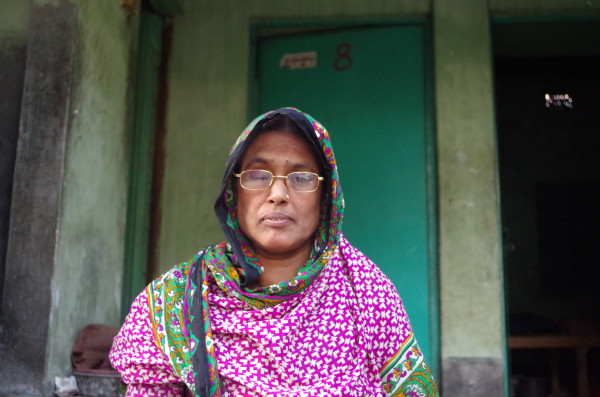
Shahnaj Begum, 48, and her daughter Tahera Begum, 30, both survived the Tazreen factory fire. Shahnaj was severely injured, including the loss of her right eye. Shahnaj received some compensation, but it was not enough to pay medical bills and ongoing support.
“Many lives could have been saved if the factory was not locked. The biggest tragedy for us is the culprits have not been punished.”
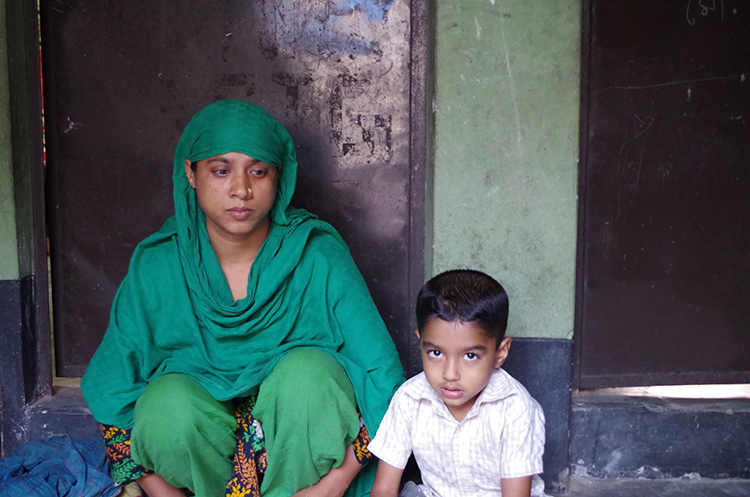
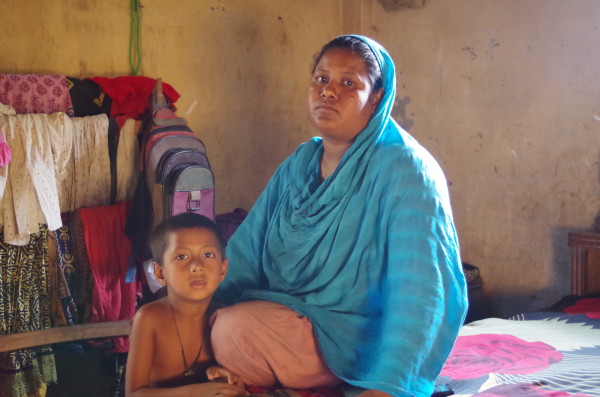
Jorina Begum, 25, cannot afford medical treatment for the injuries to her spine and body she sustained at Tazreen, and her physical condition is worsening. Jorina’s sister, also injured when the factory burned, died recently. Now there is no one left to support the family. She says two things will give her peace of mind:
“I want compensation so that I can manage the support of my family members and I want to see that the person who is responsible for it is punished.”
Bilkish Begum says she and other workers at a garment factory in Bangladesh could not discuss implementing fire safety measures with their employer – even after the deadly blaze at Tazreen Fashions factory killed 112 workers three years ago. Only when they formed a union, which provides workers with protection against retaliation for seeking to improve their workplace conditions, could they take steps to help ensure their safety.
“Things have improved a lot regarding fire safety once we formed union as now we have the power to raise our voice,” she says.
Bilkish, 30, now a leader of a factory union affiliated with the Sommilito Garments Sramik Federation (SGSF), is among hundreds of garment workers who have taken part in Solidarity Center fire safety trainings this year. The Solidarity Center works with garment workers, union leaders and factory management to improve fire safety conditions in Bangladesh’s ready-made garment industry through such hands-on courses as the 10-week Fire and Building Safety Resource Person Certification Training.
“I used to be afraid about fire eruption in my factory,” Bilkish says. “But after attending trainings, I feel that if we work together, we can reduce risk of fire in our factory.”
Fire remains a significant hazard in Bangladesh factories. Since the Tazreen fire, some 34 workers have died and at least 985 workers have been injured in 91 fire incidents, according to data collected by Solidarity Center staff in Dhaka, the capital. Incidents resulting in injuries include at least eight false alarms.
In January, after a short-circuit caused a generator to explode at one garment factory, Osman, president of the factory union and Popi Akter, another union leader, quickly addressed the fire and calmed panicked workers using the skills they learned through the Solidarity Center fire training. They also worked with factory management to correct other safety issues, like blocked aisles and stairwells cramped with flammable material.
Many workers who have taken part in the trainings say they are equipped to handle fire accidents.
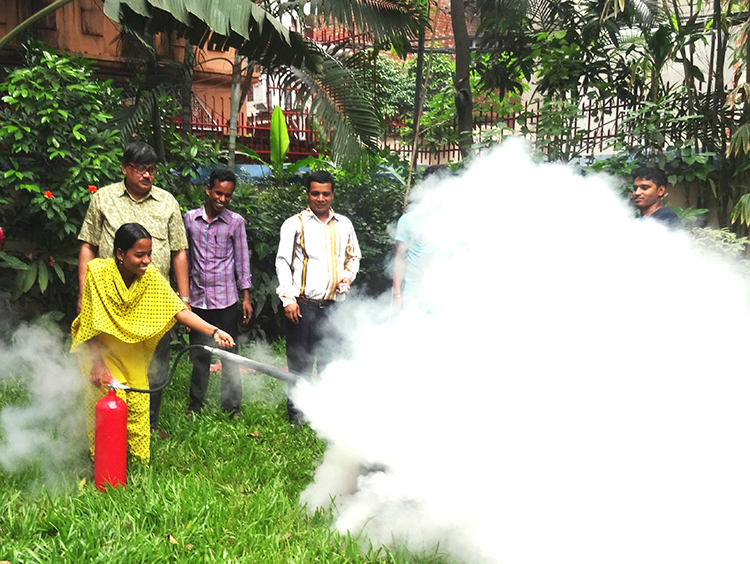
“We are now confident after the training that we can help factory management and other workers if there is any incident of fire in our factory,” says Mosammat Doli, 35, a leader of a union affiliated with the Bangladesh Garment and Industrial Workers’ Federation (BGIWF). “From my experience at my factory, I have seen that an effective trade union can ensure fire safety in the factory as it can raise safety concerns,” he said.
Fewer than 3 percent of the 5,000 garment factories in Bangladesh have a union. And according to the International Labor Organization, 80 percent of Bangladeshi garment factories need to address fire and electrical safety standards. Yet, despite workers’ efforts to form organizations to represent them this year, the Bangladeshi government rejected more than 50 registration applications—many for unfair or arbitrary reasons—while only 61 were successful. This is in stark contrast to only two years ago, when 135 unions applied for registration and the government rejected 25 applications, and to 2014, when 273 unions applied and 66 were rejected.
Without a union, workers often are harassed or fired when they ask their employer to fix workplace safety and health conditions.
Because his workplace has a union, which enabled Doli to participate in fire safety training, he—like Osman and Popi Aktee—already has potentially saved lives. Together with other union leaders, he helped evacuate workers and extinguish a fire in their garment factory.
Shahabuddin, 25, an executive member of his factory union, which is affiliated with SGSF, is among Bangladesh garment workers who see firsthand how unions help ensure safe and healthy working conditions. He says his workplace had no fire safety equipment—until workers formed a union and collectively raised the issue of job safety.
“Now management conducts fire evacuation drills almost regularly. We did not imagine it just a few years back. As we formed union, many things started changing,” he says.
Mushfique Wadud is Solidarity Center communications officer in Bangladesh.
The three-year anniversary of the November 24, 2012, fire that killed 112 Bangladesh garment workers at the Tazreen Fashions Ltd., factory offers a time to reflect on garment workers’ ongoing struggle for workplaces where they will not be killed or injured and for jobs that will support their families.
The Tazreen fire was preventable, as was the collapse of the multistory Rana Plaza factory five months later in which more than 1,130 garments workers died and thousands more were severely injured.
Workers at Tazreen and Rana Plaza did not have a union or other organization to represent them and help them fight for a safe workplace. Without a union, garment workers say they are harassed and even fired when they raise safety issues with their employer. They are not trained in basic fire safety measures and often their factories, like Tazreen, have locked emergency doors and stairwells packed with flammable material.
Despite the many obstacles to forming organizations and achieving a voice at work, garment workers are at the forefront of pushing for change at their factories. With our strong and long-term grassroots connections in Bangladesh, the Solidarity Center allies with garment workers to provide ongoing training for factory-level union leaders on topics such as gender equality, workers’ legal rights and fire safety.
This photo essay gives voice to the sorrow, but also the hope, of the 4 million workers who toil in Bangladesh garment factories.
1. Bangladesh’s 4 million garment workers, mostly women, toil in 5,000 factories across the country, making the $25 billion garment industry the world’s second largest, after China. Yet many risk their lives to make a living. In the three years since the fatal Tazreen Fashions Ltd. factory fire, some 31 workers have died and at least 935 people have been injured in garment factory fire incidents in Bangladesh. Credit: Law at the Margins
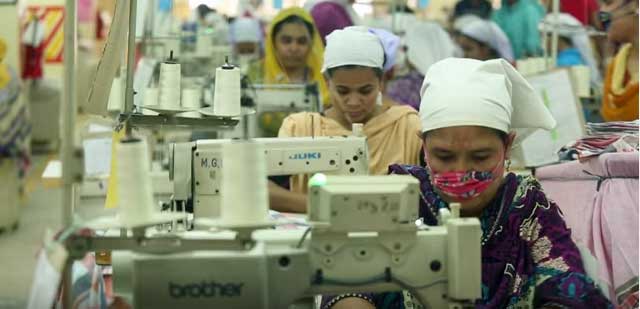
2. Some 112 garment workers were killed in a blaze that swept through the Tazreen factory on November 24, 2012. Hundreds more were injured and like Tahera (above), will never be able to work again. Survivors say they endure daily physical and emotional pain, and often cannot support their families because they cannot work and have received little or no compensation. Solidarity Center/Mushfique Wadud
3. Tens of thousands of Bangladesh garment workers held rallies on May Day this year to highlight the need for the freedom to form worker organizations to ensure safe and healthy workplaces. Credit: Solidarity Center/Balmi Chisim
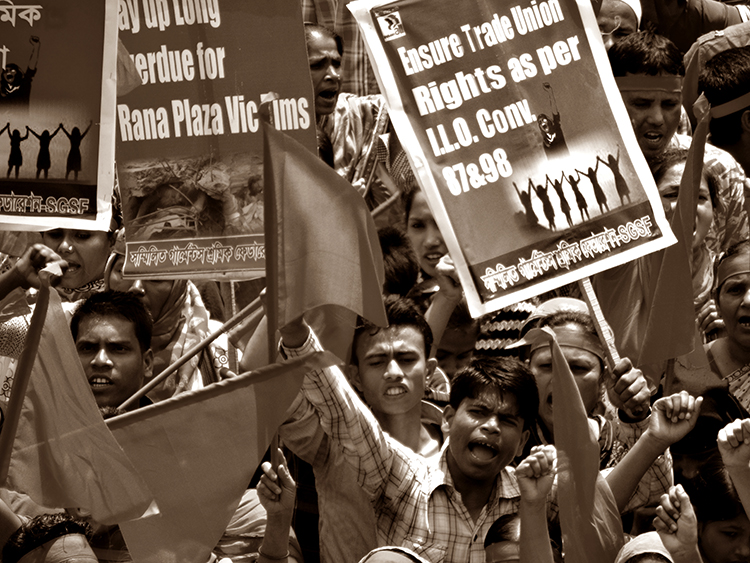
4. With few jobs available that pay a living wage, more than 600,000 Bangladeshi workers migrate each year. Yet, “after two years, after three years, they are not getting their salary,” says Sumaiya Islam, director of the Bangladesh Migrant Women’s Organization (BOMSA). “After spending $1,000 (to labor recruiters), they are not getting paid.” Credit: Shahjadi Zaman
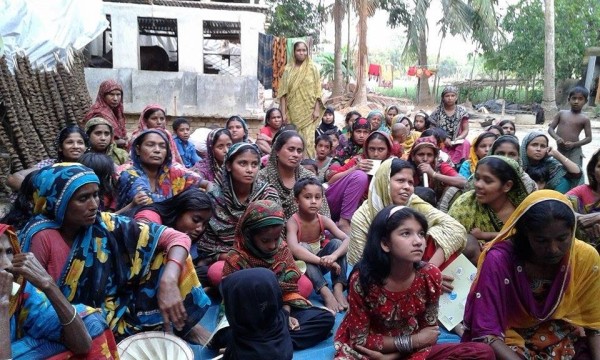
5. Migrants from Bangladesh also risk their lives when going overseas for jobs. In June, Bangladesh families rallied to demand the government punish traffickers after many Bangladesh workers were among migrants stranded on abandoned boats by unscrupulous labor traffickers. “I did not get anything to eat for 22 days and just survived by eating tree leaves,” Abdur said, describing his journey to Malaysia. Credit: Solidarity Center/Mushfique Wadud
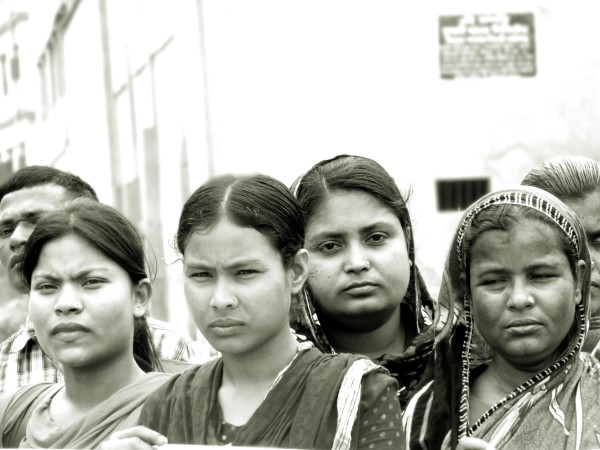
6. On April 24, 2013, the multistory Rana Plaza factory collapsed, a preventable tragedy that killed more than 1,100 garment workers and injured thousands more. On the two year anniversary in April, family members and friends gathered at the site of the building to commemorate their loss. Credit: Solidarity Center/Balmi Chisim
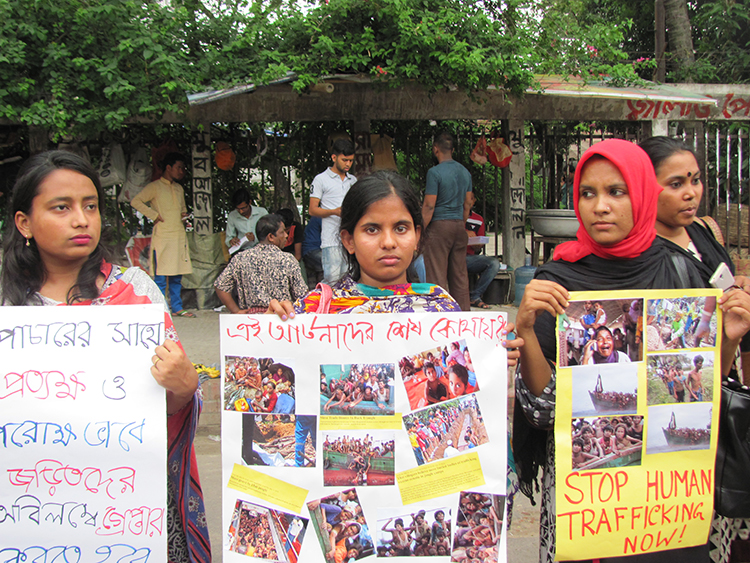
7. Thousands of garment workers, like Mosammat Mukti Khatun (above, looking at the Rana Plaza rubble) who survived the Rana Plaza disaster, remain too injured or ill to work and support their families. Survivors and the families of those who lost loved ones in the collapse say they are struggling to make ends meet, unable to pay rent, send their children to school or provide for other basic needs. Solidarity Center/Balmi Chisim
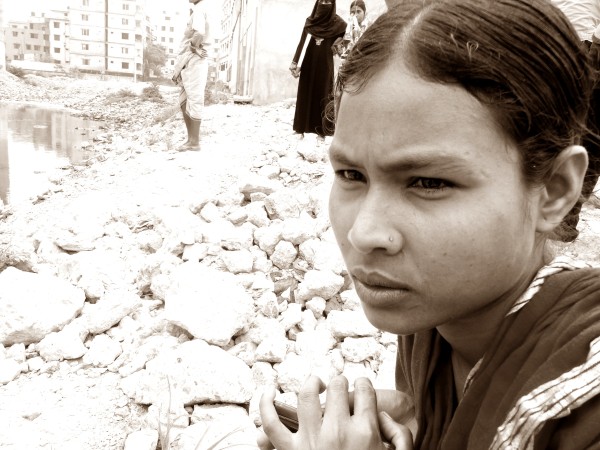
8. Days before tens of thousands of Bangladesh garment workers rallied on the two-year anniversary of the Rana Plaza collapse, the ITUC released a report that found “a severe climate of anti-union violence and impunity prevails in Bangladesh’s garment industry. The violence is frequently directed by factory management. The government of Bangladesh has made no serious effort to bring anyone involved to account for these crimes.” Solidarity Center/Balmi Chisim
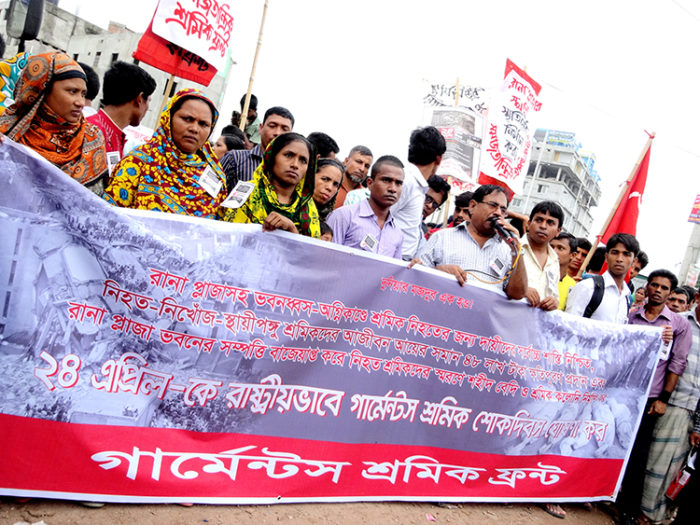
9. The Solidarity Center launched the Bangladesh Worker Rights Defense Fund in April 2014, following an increase in violence and harassment against workers who were seeking to form unions to protect their health and rights on the job. Donations of more than $15,500 helped to provide costly medical treatment for organizers beaten or attacked while speaking to workers about their rights, and temporary food and shelter for workers fired for trying to improve their workplace. Credit: Solidarity Center/Shawna Bader-Blau
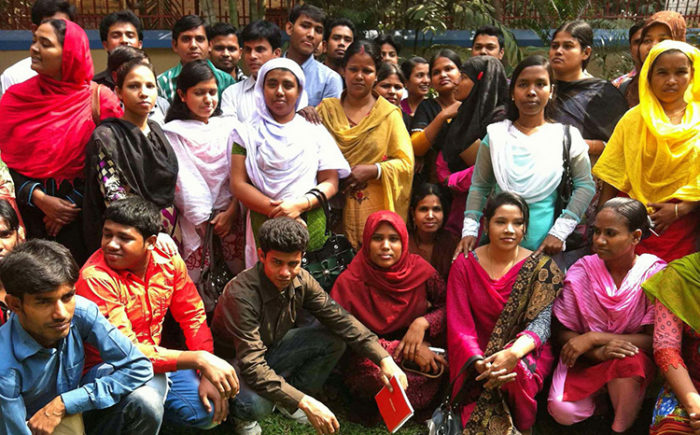
10. Despite employer and government resistance to workers’ efforts to form organizations to improve job safety, in the Dhaka export processing zone alone, 40 of the 103 factories include workers’ welfare associations, which are similar to unions. Credit: Solidarity Center/Mushfique Wadud
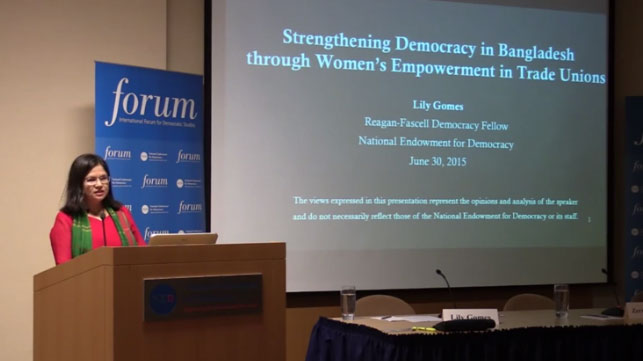
11. Women garment workers primarily fuel Bangladesh’s $25 billion a year garment industry, yet women are “still viewed as basically cheap labor,” says Lily Gomes, Solidarity Center senior program officer for Bangladesh. “There is a strong need for functioning factory-level unions led by women,” says Gomes, who is leading efforts to help empower women workers to take on leadership roles at factories and in unions throughout Bangladesh. Credit: Solidarity Center/Kate Conradt
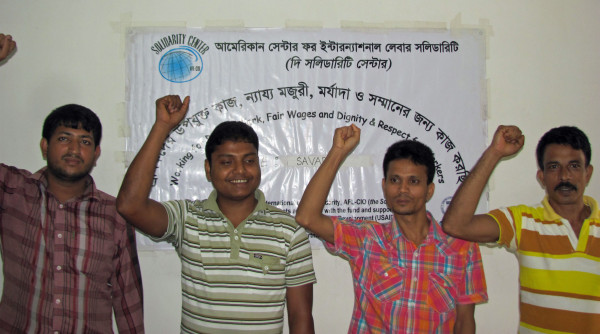
12. With strong and long-term grassroots connections in Bangladesh, the Solidarity Center provides ongoing training for garment worker union leaders on topics such as gender equality, workers’ legal rights and job safety. Credit: Solidarity Center/Balmi Chisim
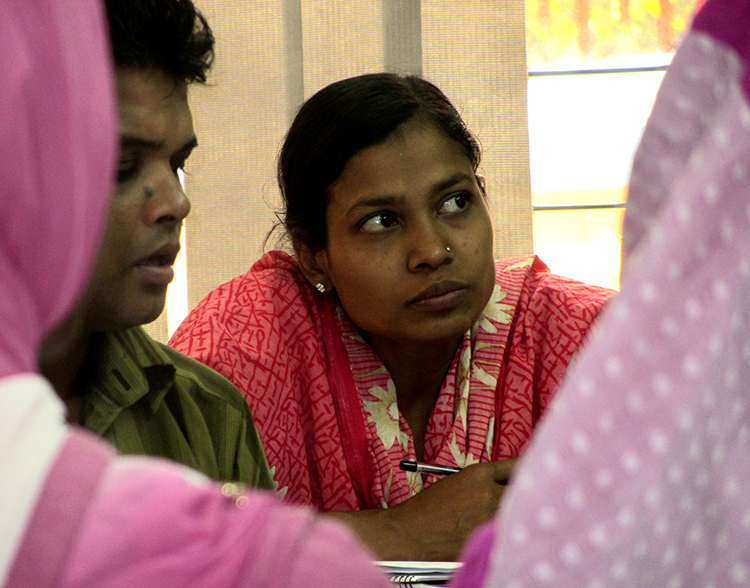
13. Garment worker union leaders sharpen their skills through regular Solidarity Center workshops, such as this one on financial management. Credit: Solidarity Center/Balmi Chisim
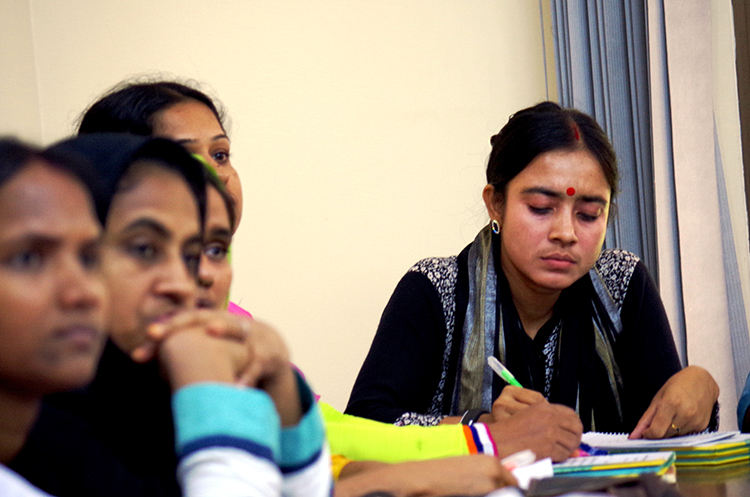
14. Hundreds of garment worker union leaders have participated in this year in the Solidarity Center’s 10-week fire safety certification course. “People who worked at Tazreen and Rana Plaza had no training and had no union,” says Saiful, who took part in a recent fire training. “This training is about making sure those things never happen again.” Credit: Solidarity Center/Rakibul Hasan
For three years the victims of the worst factory fire to hit the fashion industry in recent times have been waiting for compensation. Now, finally, hope is on the horizon.
Around 120 garment workers burnt to death and hundreds more were injured when flames engulfed the multi-floor Tazreen garment factory in Bangladesh on 24 November 2012.
Trapped behind locked exists, workers jumped for their lives from the upper floors of the building, with more than a hundred sustaining permanent, life-changing injuries.
Like thousands of garment factories in Bangladesh, the workers at Tazreen fashions were making clothes for global retailers destined for Western wardrobes.
IndustriALL Global Union, together with the Clean Clothes Campaign, C&A and the C&A Foundation have set up the Tazreen Claims Administration Trust to compensate victims for losing loved ones, loss of income and to pay for much-needed medical treatment. Claims are already being processed and victims can expect to receive payments in the coming months.
Brands and retailers with revenue over US$1 billion are being asked to pay a minimum of US$100,000 into the fund for victims.
Certain brands that sourced from Tazreen, including C&A, Li & Fung (which sourced for Sean John’s Enyce brand) and German discount retailer KiK have now paid into the fund.
But more brands must face up to their responsibilities and pay.

That includes Walmart, Tazreen’s biggest customer. The anniversary falls just as the retail powerhouse stands to profit from US$50 billion of consumer spending on Black Friday this week.
Other brands that sourced from Tazreen and have not paid are U.S. brands Disney, Sears, Dickies and Delta Apparel; Edinburgh Woolen Mill (UK); Karl Rieker (Germany); Piazza Italia (Italy); and Teddy Smith (France).
Three years have passed but we cannot let brands forget the victims of Tazreen. Now it is time for a measure of justice.
by Christina Hajagos-Clausen, Textile and Garment Industry Director at IndustriALL Global Union. IndustriALL Global Union represents garment workers around the world. It is one of the key drivers of the Bangladesh Accord on Fire and Building Safety signed by more than 200 global fashion retailers and covering more than two million garment workers in 1,500 factories.
Photo credit: IndustriALL Global Union
‘Black Friday’ 2015 is just around the corner. Traditionally it is the day after Thanksgiving in the US when shops do an all-out sale giving the customers a chance to stock up for Christmas. Well that’s what it used to be about. Be it the US or UK, in recent years, ‘Black Friday’ has come to symbolise something more interesting, our insatiable appetite to consume. We all remember seeing the images on TV, hearing the news update on radio and saw the news headlines of the incidences which marred this day. So much so that this year leading UK superstore have announced that they will not be participating in this year’s event even though all other major super stores are[i].
One may well ask, what Black Friday has to do with ‘sustainable development’? One word………..everything! Research after research has found that our demand for goods will soon out strips the natural resources available to make them. We know that in the UK garment workers are earning as little as £3 per hour for their work (University of Leicester Feb 2015[ii]). And those in faraway lands like Bangladesh, Vietnam, Myanmar and even Ethiopia are getting paid approximately £25-30 per month[iii]. But as consumers, we close off part of our thinking mind and all queue up, physically and on-line, waiting for that deal on Black Friday.
Sustainability in the fashion industry has been addressed right through its value and supply chain. In the manufacturing sector of garments, there are all kinds of machinery that optimises water usage for washing and drying of textile and therefore has a knock on effect on the level and amount of electricity and gas used. Buildings are more ‘green’ by using solar power or alternative sources of energy and reuse and recycle rain water amongst other things. More and more manufacturers are also looking more intently on how they engage with their labour force and the provisions that are available for them. Manufacturing factories in Bangladesh are actively pursuing ‘green manufacturing’ starting with the factory space and also the environment and support for their workers[iv].
Worn Again is working with H&M and Kerring[v] to not just recycle or upcycle but create new textile based on a ‘circular resource model’ from old or ‘end of use’ clothes. New materials are also being produced from natural fibers like pineapples or banana and from seed to harvesting all aspects of the plant/ fruit is reused. M&S’s ‘SHWOP’[vi] or Patagonia’s ‘Worn Wear’[vii] are two high profile schemes which promotes and advocates ‘longer-life’ for our clothes. There are workshops on knitting in groups bit like ‘Book Clubs’. Critiques of the schemes say that these schemes are destined for the wardrobes of the rich and middle-classes. Not for the mass public. Also that dropping of our ‘worn’ clothes to the ‘poor’ of the developing nations can actually cause problems for local brands, retailers and manufacturers[viii].
In a recent BBC documentary programme, ‘Hugh’s War on Waste’, the host looks to engage with individuals who do not believe that waste is truly recycled. They are taken to a local recycling processing plant and the sceptic recyclers are still not convinced by the argument for recycling waste. It is only when they are shown actual everyday products made from recycled material that we see the recycling sceptics change their outlook.

But if it is facts we are looking for there is plenty out there in the form of research, films, images, case studies and much more. For instance the recent film ‘The True Cost’[ix] has given a very detailed breakdown of how the fashion supply chain is set up and is costing. It has been distributed in cinemas, is available online and through social media platforms. So very easily available and accessible and we still have the situation of people not following through and buying less or not queuing for ‘Black Friday’.
So far I have concentrated only on the consumption habits of developed countries. However it is the with consumers of China, India and elsewhere that brands and retailers are trying to establish a relationship with. And that is because in emerging countries material consumption lead the way as more people have disposable income and also want to have the opportunity consume or at least aspire to consume as their counter parts in developed countries[x].
So what we see now is brands, luxury brands and every day retailers positioning themselves in these new markets. It is quite normal to see nappies for babies being sold in main cities and towns of these new territories. Long gone are the days when people would use ‘terry cloth’ nappies for their babies not only because they are time consuming to maintain but also they are seen as being ‘traditional’ and not representative of the ‘modern life’ that they now live.
So attitudes are changing everywhere. It’s cyclic. In that the developed world have started thinking about ‘sustainable development’ in all walks of life. They are exploring how corporations, supply chains and individuals can make a difference. The emerging and developing countries with a growing number of people with spending power and disposable income now aspire to consume and become active participants in this global consumer market. Internet has increasingly made everything accessible within a click of a button. Social media shows you trends on a daily, hourly, minute by minute basis to satisfy ones desire.
So the notion of ‘sustainable development’ is admirable but seemingly unachievable. Unless of course as in the case of fashion you have groups like Fashion Revolution Day and their mission to connect consumer to their clothes through the ‘#who made my clothes?’ FRD asks the consumer to do the following:
- Be curious – Look at your clothes with different eyes. Ask more than “does this look great on me?”. Ask “#who made my clothes?”.
- Find out – Get to know your clothes even better.
- Do something – tweaking the way your shop, use and dispose of your clothing
Be curious is the start point of looking at our personal shopping habits. Before we go get the latest design at a cut price from the shop, the question we must ask is ‘do I really need to buy this?’, ‘Will I wear it more than once?’, ‘do I know how to take care of it?’ and what will I do when I have had enough of it?’. These questions are alongside asking the brand ‘#who made my clothes?’ Fashion Revolution has run a very successful global campaign in 2014 and 2015 with consumers, celebrities turning their clothes ‘insideout’ taking a selfie of it and asking the brand ‘#who made my clothes?’
This new curiosity will lead us to the next step ‘Find Out’. If we do not know exactly what is happening then it is difficult to change our behaviours and attitudes. There are various organisations who work on specific issues like living wage, organic cotton or on themes ‘Fair Trade’. They are a good start point for any search[xi]. There are also apps available which will assist you whilst you are shopping to find out more about the social and environmental impact of the item[xii]. New apps are coming are being developed and trialled and aims to provide more detailed information on the item of clothing origin.
‘Do something’ is personally my favourite. It can be you ask the brand, #who made my clothes? Or look at projects like http://loveyourclothes.org.uk/ set up by WRAP which gives you tips on how to manage your clothes, revamp it and much more. As mentioned earlier, high street stores like M&S or brands like Kerring have also tried to inspire their customers with alternatives to just throwing our clothes away. What is possible is sometimes difficult to choose, so a helpful list is available from Fashion Revolution’s booklet, ‘How to be a Fashion Revolutionary’[xiii]
As discussed earlier, the consumer at present is detached from what they consume be it the clothes we wear or other products. We have seen that it is only when they come face to face with evidence, is it that they start to explore further the issues on hand. So that we can move away from the future of diminishing natural resources and an un-sustainable environment we need to change attitudes through curiosity, finding out and doing something.
Author – Maher Anjum – Sustainable Sourcing and Supply Chain (Garments, Textiles and Fashion) Consultant, Operational Director Oitji-jo Collective (Part-Time), Associate Lecturer, London College of Fashion and Member, Global Advisory Committee, Fashion Revolution.
References
[i] http://www.belfasttelegraph.co.uk/news/northern-ireland/asda-axes-black-friday-but-rivals-tesco-sainsburys-amazon-argos-currys-pc-world-halfords-and-john-lewis-banking-on-bonanza-34188894.html
[ii] http://www.theguardian.com/sustainable-business/sustainable-fashion-blog/2015/feb/27/made-in-britain-uk-textile-workers-earning-3-per-hour
[iii] http://www.waronwant.org/sweatshops-bangladesh
[iv] http://www.nytimes.com/2013/03/22/business/energy-environment/conservation-pays-off-for-bangladeshi-factories.html
[v] http://www.kering.com/en/press-releases/hm_kering_and_innovation_company_worn_again_join_forces_to_make_the_continual
[vi] http://www.marksandspencer.com/s/plan-a-shwopping
[vii] http://www.kering.com/en/press-releases/hm_kering_and_innovation_company_worn_again_join_forces_to_make_the_continual
[viii] http://edition.cnn.com/2013/04/12/business/second-hand-clothes-africa/
[ix] http://truecostmovie.com/about/
[x] http://www.worldwatch.org/node/810
[xi] https://www.fashionrevolution.org/wp-content/uploads/2015/11/Website_HTBAFR_Booklet_BCxFR_Print.pdf
[xii] https://www.fashionrevolution.org/wp-content/uploads/2015/11/Website_HTBAFR_Booklet_BCxFR_Print.pdf
[xiii] https://www.fashionrevolution.org/wp-content/uploads/2015/11/Website_HTBAFR_Booklet_BCxFR_Print.pdf
I woke up at 5, just like every morning. It is getting light by then and the birds have been singing for a while. I put some water on the fire, a bigger pot for washing, and a smaller pot for cooking nsima, our local breakfast, for my youngest children. Aged 6 and 13, their appetite is the only thing that gets them out of bed! Within the next hour, everyone is washed and fed and ready for the day. The little one is off to primary school, a mile walk away, and the older one goes to secondary school a little further on. I have 4 other children, so 6 in total and I look after my elderly mother who lives with us.
School fees and life expenses are high and I would not be able to pay them if it wasn’t for my job.

What do I do?
I am the main cutter at Mayamiko, a fashion workshop which also has a training centre for the local community. It is still tough to get by, but what a change from two years ago!
I had learned from a friend that the Mayamiko project had moved in the area. I had no skills, but I was in real need for some money to pay school fees. My seasonal work selling beans was not enough and we were skipping meals. The younger children were falling asleep at school because of hunger. Their teacher told me.
So I trusted in God and I knocked on the door and asked if they had any casual work. And the answer was yes. For a few months I helped the team keep the workshop tidy and wash and iron fabric, and I observed the tailors, cutters and production managers. Every time training was on I would listen in as much as I could. I could hand sew and I was allowed to bring in the kids clothes and fix them using the machines, and I could also collect the very small pieces of scraps.

When the application for the new training round opened 6 months later, I asked if I was allowed to apply. To show how keen I was, I brought in a teddy bear and a door mat I had hand sewn with the small bits of fabrics I had been collecting. I could not believe it when after a few weeks I was offered a place in the Mayamiko training programme. I studied for 6 months with a small group of 5 women, we each had our sewing machine and a wonderful teacher, Charity. We got to eat together with the professional tailors every day, exchanging stories, experiences and tips. We got additional training on how to manage money, budget and plan to help us prepare for life after training. I had not learnt this before, so this was very helpful.
At the end of the course, we got an option to save some money and get a grant to buy a sewing machine. I had started making kids dresses to sell to help me save through our saving scheme organised by Mayamiko, and one day I went to the workshop to bring in some of my savings, and the best thing happened.

Paola, our founder was there, and I was asked to join an apprenticeship to become a professional cutter. Charity, who had been my trainer, had been promoted to main cutter, but was due to go on maternity leave in 5 months time and I had the chance to work towards covering for her while she was away. This meant I was to learn how to cut fabric in different sizes and shapes from a paper pattern. Cutting is very important because if you don’t cut well, it is very hard for tailors to sew well, and you can ruin a garment so easily. You have to be very careful and I have a big responsibility to my team when I cut.

I was so excited and worried at the same time. The workshop produces clothes and accessories for the Mayamiko brand which is sent out of Malawi and women all over the world buy and wear, so everything has to be perfect! I worked hard every day, for 8 hours. Having lunch together with everyone else really helped, so I could have a chat and a laugh and relax a little. And not worry about going hungry all day for it is hard to work on an empty stomach. I also got a chance to ask questions and understand more about how it all worked. It was the first time in my life I had a salary at the end of the month, and I knew exactly how much I was going to earn, and thanks to the financial training I could budget and prioritize.
After my apprenticeship I was told I was successful and Mayamiko offered me a full time job.

I now have a higher salary, paid sick leave, paid holidays and Mayamiko alsopays into the government pension scheme as well as a gratuity scheme, which is another way of helping us save.
It is more than a dream that I now have the safety of a monthly income and if I do my job well, I can keep growing and maybe I can also train to become a tailor. That would give me more skills for the future. I would also like to learn English better.
What makes me the happiest is that I can ensure my children and grandchildren have an education, and never have to go hungry. Because with an education they can choose what they want to become in life, all doors are open, and if they fail they only have themselves to blame.

So now it is time for my daily walk to the Mayamiko workshop. It takes me about 45 minutes and I use the time to pray and give thanks, and think about the day ahead. We are in between collections so today I am cutting some lounge shorts to go with our organic cotton T-shirts. They are a bit like pyjamas but you can also wear them for other things like relaxing and walking around the house or the garden, and reading.
And I have been given a challenge to be creative and cut some small animal shapes with our scraps, we don’t like wasting anything. We’ll use them to decorate wash bags and shoppers. We call ourselves a ‘Zero Waste’ workshop and believe me, we find a use for everything!

Every day is a bit different at Mayamiko, and we are all like a family. Sometimes we don’t get on, but we really care for each other.
Do I like the clothes we make for women all over the world? Some of them I love, some of them are a bit unusual for me.
But I love the fabrics that we choose. The dress I am wearing in this picture is made using some left over fabrics at the workshop. I made it myself. Do you like it?

You can also watch this short video about the making of of some of our pieces.
Find out more about Mayamiko, and the vision of our founder, Paola Masperi, of #changinglives and #nurturingtalents and browse our pieces here: www.mayamiko.com
Information about our charity, The Mayamiko Trust can be found here: http://www.mayamiko.org/ For more information please contact: info@mayamiko.com
Our social media handles are:
https://www.instagram.com/mayamikodesigned/
https://twitter.com/Mayamiko_
https://twitter.com/MayamikoTrust
https://www.facebook.com/MayamikoTheLabel
https://www.facebook.com/MayamikoTrust/
Sunday is the only day off for garment workers in Myanmar. Almost ninety per cent of garment workers in Myanmar are women. Sunday Café takes place every Sunday at Thone Pan Hla in Hlaing Thar Yar distric in Yangon. Thone Pan Hla is the first association for women garment workers in Myanmar, established in 2014 by Business Kind Myanmar.
Hlaing Thar Yar distric is the area where most of garment factories are.

Thone Pan Hla offers an opportunity for women garment workers to meet, share their experiences, get vocational training and participate in workshops. It is also a place where garment workers can relax, laugh and enjoy their free time. They can have access to magazines, books and different services, like kitchen and laundry, that otherwise wouldn’t be able to reach due to their low salaries. Swiss House is Thone Pan Hla headquarter and hosts also a hostel. Often garment workers come to work in Yangon from different areas all over the country and finding accommodation is not taken for granted.

The name Thone Pan Hla came from the name of a traditional Myanmar flower that unfortunately now is becoming rarer and rarer. It is a flower that changes colour three times a day. The name has been chosen to recall the three faces the working women have to wear: one intimate-private, one at work and one for her family.

I got the chance to participate two times at Sundays Café this summer during my internship at Business Kind Myanmar. In order to celebrate the Myanmar national holiday 19th July, Thone Pan Hla members prepared a fashion show with dresses designed by themselves and a theatrical performance narrating the story of women that have come from the countryside, arrive in Yangon in order to find a job. She finds a job in a garment factory where she is not well treated, but while discouraged she is going back to her family, she met an other woman that helps her…
The pictures were taken during the show, the preparation and the celebrations.

To learn more about Thone Pan Hla follow them on Facebook
To learn more about Business Kind Myanma
Pictures by Chiara Tommencioni Pisapia
It still strikes me as profoundly wrong that even though cotton is the world’s oldest commercial crop and one of the most important fibre crops in the global textile industry, the industry generally fails to focus on the entire value chain to ensure that those who grow their cotton also receive a living income.
Up to 100 million smallholder farmers in more than 100 countries worldwide depend on cotton for their income. They are at the very end of the supply chain, largely invisible and without a voice, ignored by an industry that depends on their cotton.
When it comes to clothing, companies’ supply chain engagement was once limited to who their importer was. Now they are engaging with their supply chain more and have better awareness of the factories used to manufacture their end products. Even before the Rana Plaza disaster of 2013, there had been increased attention on improving the conditions experienced by textile factory workers thanks to campaigns such as the Clean Clothes Campaign.
Some companies also have awareness beyond the factories and these are all movements in the right direction. However, even those mindful of the difficulties faced by factory workers, tend to miss the first links in the supply chain.
Maybe this is because cotton farmers continue to somehow lose out in both the so-called ‘sustainable’ and ‘ethical’ fashion debates. When companies talk about ‘sustainability’ in their clothing supply chains, they are generally looking at the environmental impact of sourcing the raw materials. Meanwhile in ‘ethical’ conversations about the many livelihoods touched by the garment value chain, companies generally refer to factory workers, again overlooking the farmer who grows the seed cotton that goes into our clothing.

The reason we need to keep insisting that cotton farmers are an important part of the fashion supply chain is because cotton is failing to provide a sustainable and profitable livelihood for the millions of smallholders who grow the seed cotton the textile industry depends on. Just as it’s important for us to take home a living wage, to help bring a level of security for our families and the ability to plan for the future, I would argue that this is even more vital for people living in poorer countries where there is little provision for basic services such as health and education or the safety net of social security systems to fall back on.
As a global commodity, cotton plays a major role in the economic and social development of emerging economies and newly industrialised countries. It is an especially important source of employment and income within West and Central Africa, India and Pakistan.
Many cotton farmers live below the poverty line and are dependent on the middle men or ginners who buy their cotton, often at prices below the cost of production. And rising costs of production, fluctuating market prices, decreasing yields and climate change are daily challenges, along with food price inflation and food insecurity. These factors also affect farmers’ ability to provide decent wages and conditions to the casual workers they employ. In West Africa, a cotton farmer’s typical smallholding of 2-5 hectares provides the essential income for basic needs such as food, healthcare, school fees and tools. A small fall in cotton prices can have serious implications for a farmer’s ability to meet these needs. In India many farmers are seriously indebted because of the high interest loans needed to purchase fertilisers and other farm inputs. Unstable, inadequate incomes perpetuate the situation in which farmers lack the finances to invest in the infrastructure, training and tools needed to improve their livelihoods.
However research shows that a small increase in the seed cotton price would significantly improve the livelihood of cotton farmers but with little impact on retail prices. Depending on the amount of cotton used and the processing needed, the cost of raw cotton makes up a small share of the retail price, not exceeding 10 percent. This is because a textile product’s price includes added value in the various processing and manufacturing activities along the supply chain. So a 10 percent increase in the seed cotton price would only result in a one percent or less increase in the retail price – a negligible amount given that retailers often receive more than half of the final retail price of the cotton finished products.
Within sustainable cotton programmes, Fairtrade works with vulnerable producers in developing countries to secure market access and better terms of trade for farmers and workers so they can provide for themselves and their families.
Our belief is that people are increasingly concerned about where their clothes come from. This year we visited cotton farmers in Pratibha-Vasudha, India, a Fairtrade co-operative in Madhya Pradesh. We saw the safety net that Fairtrade brings; the promise of a minimum price that works in a global environment. The impact on prices of subsidised production in China and the US adds to unstable global cotton prices. These farmers democratically decide how the Fairtrade Premium is spent: on training to improve soil and productivity, strategies to mitigate the impacts of climate change and on the most important ways for their communities to benefit, such as building health centres and educating children.
Consumers want their clothes made well and ethically, without harmful agrochemicals and exploitation. We think about farmers when we talk about food. Let’s start thinking about farmers when we think about clothing too.
Image credits: Trevor Leighton.
To separate her passion for natural dyeing from hand weaving, or designing from teaching, isn’t possible for Olga Reiche. All she touches is intricately woven together within her home country of Guatemala and shared far beyond. This spirited woman with a quick smile has been working with indigenous artisans on product development and marketing for over thirty years, producing her own line of naturally-dyed and recycled products, and teaching locally and internationally. Her concern for environmental and artisanal sustainability is a driving force.


Artisan to Artisan
After the devastating earthquake in 1976, Olga worked with Oxfam, an international confederation of countries working together in partnership to alleviate poverty. Olga traveled throughout the country, interviewing artisans and making recommendations for their sustainability. A decade later, she began working with women weavers in the remote Ixil Triangle, the women widowed during the violent 1980-1996 civil war. She opened a shop in Antigua (now closed), to sell their woven goods and helped the weavers with product development, but also discovered local and international markets to sell their wares.
One of the primary groups Olga now works closely with is the weaving cooperative of Ixbalem Ke, based in Samac de Cobán in Alta Verapaz, a remote area in the cloud forest. The women weave a type of intricate brocaded gauze weave, in both white on white pattern as well as natural brown cotton, and naturally dyed threads too. This Mayan weaving style was rapidly disappearing and, with Olga’s assistance, the women weavers are dedicated to preserving this traditional textile.


Learning, Teaching and Sharing
In the late 1980s, Olga met Ana Roquero who had been studying the natural dyes of Latin America and their preservation. It didn’t take long before Olga too was focused on this and over the years she researched and collected data from all over Guatemala culminating in her recent book, Dyeing Plants of Guatemala, (Spanish only), a solid resource on the use of dyes and pigments.


Olga worked with cooperatives in the Lake Atitlán area, mentoring the weavers, developing new designs and products, teaching them how to manage a business, and how to competitively market products in the international arena. In 1995, she started to teach natural dyeing techniques to artisans in this area. She returns here often, especially in the village of San Juan La Laguna where they grow and dye with local plants.


In 2008, she co-founded Artes Textiles y Populares in Antigua, an educational center which hosted programs in the textile arts for national and international groups. After the center closed, Olga ended up with some of the equipment, especially looms, so she set up a home studio. She started backstrap weaving classes complete with a manual so when you’re back home with these warped sticks and threads, you can have the continued guidance of Olga.
She also teaches natural dyeing on a small scale in her studio, growing indigo plants outside her door and working with many regionally sustainable plants. She has recently made pigments for painting by drying the plants and converting them into powder. She calls them The Natural Palette and offers classes on this as well. The next time you’re in Antigua, sign up for a class or bring your group to her studio–she’ll be more than pleased to host you.
The Upside to Recycling
Olga’s work in the field of recycling is inspiring. When Olga first started thinking about recycling, she asked herself two things: What would have a positive impact on the environment, and what would provide work for the weavers? Recycling of things that were already plentiful, too plentiful, met one of her goals. Her design aesthetic is beyond the ordinary—she’s really upcycling. Using discarded corn husks, plastic bags, cassette tapes, and jeans, she designed products that have traction in the market plus they added another line to her own organic cotton and naturally-dyed handwovens, sold under the label Indigo. Who else can mimic ikat weaving using plastic bags? And when an experienced weaver grabbed one of her jeans rag rugs at a recent ClothRoads event and bought it without hesitation, it was a thumbs-up for quality and design.


The net result has provided income to women who are the sole support of the family, allowing them to stay in their village and work. Plus the products provide work to seamstresses and leather workers. It’s a good thing.
Find out more about Fashion Revolution Guatemala
About ClothRoads
Travel with ClothRoads to a world of authentic textile culture. From the rivers of India to the mountaintops of Peru, we go directly to the source to bring you textile stories and the work of skilled indigenous artisans who are dyeing, weaving, spinning, printing and embroidering some of world’s most beautiful objects. When you purchase from ClothRoads, you help us to build and develop new markets that allow artisans and communities, and especially women and girls, to flourish. Learn more about the artisans, and ancient textile techniques on the ClothRoads Blog. https://www.clothroads.com
About Marilyn Murphy
Marilyn Murphy has combined a passion for and knowledge of the textile arts for her entire career. She is the former president of Interweave, a media publishing company focused on the arts and crafts sector where she worked for 16 years. Prior to this, in 1986, she founded the Textile Arts Centre in Chicago, and was the owner of the Weaving Workshop there. She writes a bi-monthly blog for ClothRoads, curates the ClothRoads collection, lectures about artisan sustainability, and volunteers as co-chair for the non-profit Andean Textile Arts.
The distance between fashion brands and their production lines is growing. Traceability was once the norm in fashion – as a natural result of closely managed production – but today most brands maintain almost no physical presence in the facilities where their goods are produced. From its origins, fashion embodied the stories of the people who made the garments, nowdays, decisions are made far away from the weaving facility, dyeing process or the cut and sew. As a result of the growing disconnect between consumers, fashion brands and manufacturers, it’s no wonder that our industry plays host to so many human rights violations and is the world’s 2nd largest polluter.

Constant Simplicity was born out of a desire to change all of this. After more than a decade working in fashion, from fast fashion stores, to luxury merchandising and buying in London and Milan, to managing production lines in Asia, I came to keenly understand that the industry I love so much simply cannot continue to operate this way. Moreover, I felt compelled to be part of the change.

The first step we took when preparing to launch Constant Simplicity was recognizing that to be truly informed, and thus transparent, we needed to build our supply chains from seed to stitch. To ensure as little impact as possible, we use a tool called Life Cycle Analysis that allows us to measure each stage of the process. When vetting potential partners and vendors, we ask an ever-growing list of questions regarding: usage of energy, chemicals, and water recycling; and quality of life questions about things like salaries, training, and job rotation programs. Needless to say this process makes it harder to find suppliers, but in the process we gain traceability, accountability, and transparency. This process was directly responsible for our ability to reach 400 gallons of water savings per garment in our first collection.


Once we’ve partnered with a supplier, we make it our business to know the people working in all the facilities we use. Only by maintaining a regular presence can we successfully change the way things are done. This allows us to develop a stronger bond with our partners and work with them both on smaller shorter-term goals and larger long-term ambitions, such as making better products with a lower eco footprint or recycling water and chemicals while building towards transferring over to renewable energy sources. But the biggest advantage is in our collective ability to make immediate change, such as reducing fabric usage with better cutting processes or repurposing scrap fabric into bags that both reduce waste and better protect the products.

Our concern with transparency and accountability doesn’t end with the product and it’s eco-footprint. We’re also deeply concerned about the quality of life measures for the people who make our collections. It’s easy to think about the effect of our consumption on our own bank accounts, but what about the impact of the things we buy on the salaries of others? We believe every customer should have access to real data on worker salaries across our supply chain, know the locations of each facility, and learn about the people who made the collection. Only by informing ourselves can we start the discussion on what ethical fashion really means.
Sharing the magic behind the making of our collections is one of our reasons for being. Knowing what our products are made of, where they’re made, how they’re made, and by whom allows us to work towards a better, more sustainable product and quality of life improvements for all involved.

Find out more at http://www.constantsimplicity.com/
The Beat of Africa hit Milan fashion week for the third time as Biffi Boutique and ITC Ethical Fashion Initiative collaborated to bring African fashion talent to the Italian fashion capital. The weeklong designer showcase launched for Vogue Fashion’s Night Out.
Biffi Boutique is one of Milan’s legendary fashion stores, owned by Rosy Biffi. The Milanese boutique located in Corso Genova displayed the Spring/Summer 2016 womenswear looks of four designers selected by the Ethical Fashion Initiative: MaXhosa by Laduma (South Africa), Mimi Plange (US-Ghana), Sindiso Khumalo (South Africa) and Sophie Zinga (Senegal). MaXhosa by Laduma will also show some menswear looks.
The Ethical Fashion Initiative is a flagship programme of the International Trade Centre, a joint agency of the United Nations and the World Trade Organization. The Ethical Fashion Initiative works with the rising generation of fashion talent from Africa, encouraging the forging of fulfilling creative collaborations with artisans on the continent. The Ethical Fashion Initiative also enables artisans living in urban and rural poverty to connect with the global fashion chain. Under its slogan, “NOT CHARITY, JUST WORK.” the Ethical Fashion Initiative advocates a fairer global fashion industry.
Simone Cipriani, founder and head of the Ethical Fashion Initiative, said:
“There is a mountain of talent in Africa. When I was young, Italy was about creativity and artisans. Today Africa is the same.”
DESIGNERS

MaXhosa by Laduma
MaXhosa by Laduma is a South African knitwear brand founded in 2010 by Laduma Ngxokolo. The South African Xhosa manhood initiation ritual practiced by amakrwala was behind the launch of the brand as Laduma sought to create Xhosa-inspired modern knitwear that would be suitable for this tradition. Since, the Xhosa aesthetic has come to be part of the DNA of the knitwear brand as Laduma has explored and reinterpreted traditional Xhosa beadwork, patterns, symbolism and colours to inspire his modern knitwear line. Through his work, Laduma is an agent of change, shifting and evolving with the changing times and further engaging in the dialogue that keeps pushing traditional culture toward the future.

Mimi Plange
Mimi Plange is a modern womenswear brand launched in 2010 by American-Ghanaian designer, Mimi Plange. Lost African civilizations inspire the Mimi Plange clothing and gives the collection a depth of meaning. High quality craftsmanship is reflected in each Mimi Plange piece and the brand prides itself on making well-constructed and fitted clothing. The Mimi Plange woman moves in international circles and is successful, cultured and conscientious. Mimi Plange says “I design clothes for a woman who wears what suits her. She has nothing to prove.” Mimi Plange’s designs have gained the seal of approval from American first-lady Michelle Obama, pop-queen Rihanna and tennis star, Serena Williams.

Sindiso Khumalo
Based between London and Cape Town, Sindiso Khumalo launched her eponymous label after being a finalist in the Elle New Talent competition. The strong and complex graphic prints used by Sindiso have become the signature of her collections. With a background in textile design, the designer has developed her label with a focus on modern sustainable textiles and works with several NGO’s in South Africa to develop sustainable textiles. In 2013, Sindiso Khumalo was nominated for the “Most Beautiful Object in South Africa” Award by the Design Indaba. Her work has been showcased at the Royal Festival Hall in London and the Smithsonian Museum of African Art in Washington. Sindiso studied architecture at the University of Cape Town and Design for Textile Futures at Central St Martins.

Sophie Zinga
As an avid art enthusiast, Senegalese born Sophie Nzinga Sy pursued her creative talent at Parsons School of Design. This led Sophie to set up her own brand: Sophie Zinga. Her brand is strongly influenced by her travels and the fusion of multiple cultures – specifically Sophie’s African roots and her New York City education and entrepreneurial mindset. Quality is a keystone of the Sophie Zinga brand, which uses the finest materials and fabrics (silk, satin, bazin, semi-precious stones etc.) Sophie’s design philosophy is to give the modern woman the key pieces to constantly re-invent her style while exuding confidence whether she is in a board meeting, attending a gala or traveling between New York and Lagos. The Sophie Zinga woman is socially conscious, well-travelled and is part of today’s cosmopolitan world.
#beatofafrica2015

This website was created and maintained with the financial support of the European Union. Its contents are the sole responsibility of Fashion Revolution and do not necessarily reflect the views of the European Union.