When a Sale Becomes a Season
There was a time when “Black Friday” meant exactly one thing: accountants enjoying their once-a-year moment of triumph as the books edged out of the red. But somewhere between post-war America and the algorithmic precision of modern e-commerce, this modest milestone of fiscal relief morphed into something else entirely – a global shopping frenzy with all the subtlety of fireworks in a library.
Today, it is a high-velocity ritual of countdown clocks, overnight warehouse shifts, carbon-intensive deliveries, and dopamine-fueled decision-making disguised as “savings.” What was once a single sales day has stretched into a month-long marketing tempest – part psychological experiment, part logistical marathon, part environmental sinkhole. And at the centre of it all sits the consumer: exhilarated, overwhelmed, and often left questioning why the thrill fades faster than the parcel arrives.
To understand how Black Friday became both a cultural spectacle and a planetary stress test, we need to trace its curious origins.
The Birth of Black Friday
The first version of Black Friday wasn’t glamorous. In 1950s Philadelphia, it referred to the mayhem that erupted the day after Thanksgiving, when tourists flooded the city for the Army–Navy football game. It was less “doorbuster deal” and more “police officers needing annual leave” (Turner, 2013).
Retailers hated the name – until they realised they could monetise it. By the 1980s, Black Friday had undergone a makeover worthy of a reality TV glow-up. The narrative was rewritten: soaring profits, a consumer holiday born. From there, the sales expanded, spilling across borders, months, and marketing departments faster than you can say “limited time only.”
With that shift came a new cultural truth: Black Friday stopped reflecting demand and started manufacturing it. Scarcity, urgency, countdown timers – the whole thing became less tradition and more psychologically engineered for impulse.
Impulse Purchases: The Brain vs. the Cart
Black Friday is a masterclass in seduction: flashing deals, ticking timers, and neon tags conspiring to turn “maybe later” into “buy now.” The weekend’s entire architecture is designed to spark reactive, not reflective, buying. Neuroscientists call it temporal myopia: the brain’s tendency to prioritise immediate reward over long-term consequences (Kable & Glimcher, 2007). Retailers simply call it “great performance.”
The result? A nation of shoppers reflexively filling their baskets at speeds normally reserved for Olympic trials.
And then comes the crash. Enter buyer’s remorse, the retail-world hangover. It arrives once the dopamine hit evaporates, replaced by the realisation that you do not, in fact, need a 24-pack of scented candles named Winter Forest Whispers, the dress you panic-bought in three colours, or the smart juicer you’ll use exactly once before it becomes a dust gathering appliance.
Regret isn’t just emotional – it’s environmental. The moment remorse sets in, the returns begin. And that’s when the hidden damage really unfurls.
The Logistics Trap: When Returns Outweigh the Sale
The true carbon cost of Black Friday isn’t in the buying – it’s in the boomerang effect. Reverse logistics (a polite way of saying “getting your rejected parcels back where they came from”) is one of the most emission-heavy parts of the retail supply chain (MIT Center for Transportation & Logistics, 2021).
A return often travels more kilometres on its way back than it did on its way to you. Many get shipped, unpacked, inspected, re-packaged, re-shipped, and re-sorted. Some fly. Some sit in warehouses. Thousands never make it back to the shelves at all, written off entirely.
A returned item can produce up to 30% more carbon emissions than its original delivery (Ellen MacArthur Foundation, 2020) – and that’s before you factor in the packaging: layers of bubble wrap, cardboard, tape, and paper that get reused because the first round wasn’t enough (GreenFulfilment, 2020).
Black Friday’s sales surge also pushes fulfilment centres into overdrive, forcing brands to charter extra trucks, planes, and last-mile drivers – a carbon spike invisible to the consumer but painfully obvious to the atmosphere (MIT Center for Transportation & Logistics, 2021).
Ultimately, the environmental story of Black Friday is hardly a fairy tale. It’s more of a Greek tragedy… with express shipping.
Ghost Waste: The Returns You’ll Never See
The dirtiest secret of Black Friday returns? Not everything gets a second chance. Some items are too expensive to process. Some lose value the instant they leave the store. Some cost more to restock than they’re worth. And so, quietly, they’re diverted to liquidation pallets, textile shredders, incinerators – or, worst of all, landfill (GoTRG, 2021).
Black Friday fuels a spike in “ghost waste”: perfectly usable products that never get used, never get loved, and never fulfil their original purpose. They travel from factory to consumer to bin without ever becoming part of a life.
If overconsumption had a mascot, it would be the Black Friday return.
Pause Before You Purchase
Black Friday will no doubt continue (retail doesn’t walk away from billions). But consumers can rewrite their part in the script.
The question to ask this year isn’t, “Am I getting a good deal?”
It’s, “Why do I want this – and what will it cost beyond the price tag?”
Black Friday’s real currency is emissions, waste, energy, and the quiet erosion of mindful consumption. The most radical act this season might simply be to pause. To shop slowly. To opt out of the frenzy and into intention.
Because a bargain isn’t a bargain if the planet pays full price.
This article was authored by Bella Freidin, a contributor of Fashion Revolution Australia.
Fashion has always been fluent in fantasy. But what happens when fantasy turns survivalist?
We are living in a time when the old promises of fashion – novelty, beauty, identity – collide with new imperatives: climate resilience, resource scarcity, systemic justice. Out of this collision comes a series of radical experiments: garments that live only in pixels, fibres spun from industrial waste, dyes brewed in petri dishes.
They are dazzling, yes, but deeply political. Each innovation poses the same urgent question: can fashion reimagine itself fast enough to outpace the crises it helped create?
Digital Couture & the Carbon-Free Runway
Once, the runway was a floor, not a file. Today, it might just be a server.
Digital fashion – whether AR try-ons, metaverse couture, or in-game skins – promises more than spectacle. It offers subtraction: no cotton fields drained, no dye effluent spilled, no carbon-heavy returns piling up in warehouses. The fantasy is real – only the fabric isn’t.
In Australia, researchers at RMIT are exploring VR tools for designers, while globally, studios like The Fabricant have declared their allegiance to pixels over polyester, by leaning into digital fashion initiatives. The implications are profound: if identity is increasingly performed online, could our wardrobes shrink in reality and expand infinitely in digital space? Or will we end up with double the wardrobes -one physical, one virtual?
The answer may decide whether digital couture is liberation from overproduction, or simply its next frontier.
Adaptive Clothing for Climate Resilience
In the era of climate volatility, clothing must evolve from accessory to armour.
Imagine textiles that cool you under extreme heat, reflect UV rays at noon, or wick away sudden humidity. These aren’t hypotheticals. Australian scientists are trialling heat-reflective coatings; elsewhere, responsive fibres shift structure with the weather.
This is fashion as infrastructure: garments that are both unique and utilitarian. Yet here too lies a tension. Will adaptive textiles be equitably accessible, or marketed as luxury novelty? In a world where those most vulnerable to climate extremes often have the least access to innovation, resilience cannot become another form of exclusivity.
Upcycling the Unexpected
Sustainability has long preached restraint – fewer clothes, less waste. But there is another narrative unfolding: reinvention.
Designers are turning industrial detritus into couture: brewery by-products become durable yarns, orange peels transform into leather, pineapple leaves into the leather-like material Piñatex, coffee husks into soft, resilient textiles – and even aircraft seat foam is repurposed into handbags, cushions, and insulation. The alchemy is astonishing: what was once landfill now walks the runway.
This is a redefinition of the value of recycling. Waste is not objective; it is a label. Call it ‘waste’ and it is buried. Call it ‘material’ and it enters the economy. These processes not only divert waste from landfill, but also reduce reliance on resource-intensive cotton and petroleum-based synthetics.
The lesson? Waste is not an endpoint. It is a narrative pivot.
Biofabricated Colour
Dyeing has always been fashion’s silent violence – rivers turned toxic, workers exposed to carcinogens, ecosystems awash with waste. Enter the microbial revolution.
Algae, bacteria, and fungi are now coaxed into producing colour – hues as vivid as chemical dyes, but without the ecological hangover. Startups like Colorifix, for instance, use DNA coding to teach microbes how to reproduce pigments found in nature, while Pili is developing bio-based indigo for denim – one of the industry’s most polluting staples. In Australia, researchers are trialling algae systems that can generate stable, scalable colour without chemical runoff.
The symbolism is powerful: colour, once a pollutant, reborn as life. But scaling remains the challenge. Will biofabricated colour stay in the realm of high-concept capsules, or can it disrupt the toxic mainstream of fast fashion?
Innovation alone is not a silver bullet. A lab-grown dye cannot offset overproduction; a digital dress cannot erase systemic injustice. What these innovations do offer is a glimpse of possibility – a chance to rethink the very rules of fashion.
Pixels, polymers, microbes, and repurposed scraps – they’re not gimmicks. They’re a manifesto. Proof that fashion can be resourceful without being reckless, imaginative without being indulgent, and forward-thinking without leaving the planet behind. Though they won’t solve the industry’s problems overnight, they map a new direction – showing that style and responsibility can coexist, and that the next chapter of fashion could be as ingenious as it is indispensable.
Authored by Bella Freidin, guest contributor of Fashion Revolution Australia.
Este año, la marca Paramo (UK) celebra 25 años de colaboración ética con la empresa social Miquelina, empresa 100% colombiana ubicada en el Barrio 20 de Julio de Bogotá, y que fabrica el 80% de la marca de ropa deportiva al aire libre (outdoors). La gran noticia para Colombia es que con el apoyo de Caritas International Alemania y del Ministerio Federal de Cooperación y Desarrollo Económico de Alemania, los estándares de comercio justo de Miquelina han sido verificados por la WFTO, de la cual Miquelina es ahora miembro de pleno derecho. Todos los productos de Paramo fabricados por Miquelina desde enero de 2017 llevarán la etiqueta de primer comprador de la WFTO. (Organización Mundial del Comercio Justo).
“En Colombia, la falta de educación y oportunidades puede llevar a muchas mujeres a buscar en la prostitución una forma de sobrevivir, otras son forzadas”, dice Amparo Chambo, una mujer de 40 años que huyó a la capital después de que sus padres murieron en el sur del Cauca. “Yo estaba solo, no tenía dinero, la prostitución era la última alternativa”. De niña, fue víctima de violencia, abuso sexual y embarazos no deseados.
Pero desde hace 20 años, Amparo trabaja en “Creaciones Miquelina”, una fábrica de costura en Bogotá. Miquelina fue fundada en 1977 por Esther Castaño, la abadesa de la orden “Las Adoratrices Religiosas”, con solo dos máquinas de coser de segunda mano y con el objetivo de empoderar a las mujeres explotadas como Amparo para que tomaran el control de sus propias vidas.
Miquelina ahora emplea a más de 200 mujeres y forma 550 más cada año, ya que tiene una academia abierta establecida en sus instalaciones con costos muy bajos de registro, donde algunos hombres también están preparados en varios oficios, pero en última instancia cada vez más mujeres quieren encontrar una oportunidad para coser los sueños de todos los que están involucrados con la Fundación.
UN CAMINO QUE EMPEZO EN EL AÑO 1992
Durante una visita a Colombia en 1992, Nick Brown, el fundador de Nikwax® se encontró con Madre Esther por “una coincidencia divina”, como él lo llama. Nick estaba buscando un fabricante para implementar su idea de un nuevo concepto de ropa deportiva al aire libre. Juntos crearon la primera chaqueta Páramo® y la base para una fuerte colaboración que cumple exitosamente los objetivos sociales y comerciales a largo plazo. Según la hermana Rosaura Nick ha sido el mejor aliado. “Además de su visión de negocio, tiene una extraordinaria sensibilidad social y eso ayudó a Miquelina a alcanzar altos niveles de calidad”.

¿QUÉ IMPLÍCA LOGRAR LA CERTIFICACION POR LA ORGANIZACIÓN MUNDIAL DEL COMERCIO JUSTO?
Miquelina ha establecido procesos justos y equitativos dentro de su ciclo de producción con salarios sin discriminación de sexo y con todos los beneficios sociales; También dentro de sus compromisos es el hecho de reducir el impacto ambiental de la industria y aunque todavía es difícil en Colombia obtener materia prima 100% natural y procesada de manera orgánica.
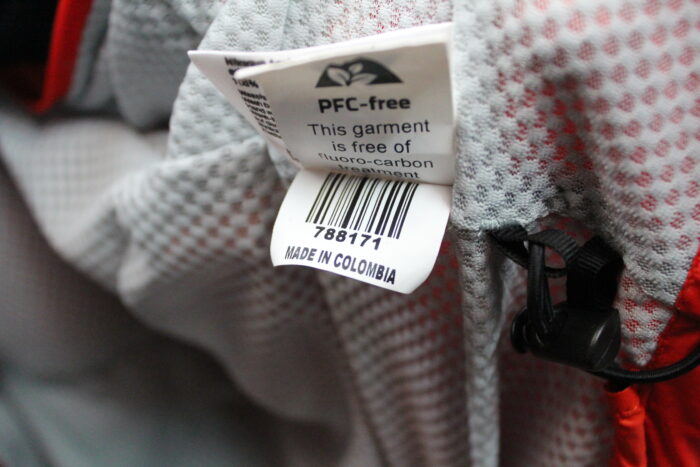
Sus prendas de vestir son producidas con el mayor cuidado sólo mediante la compra de proveedores que cumplen con los requisitos establecidos por la legislación colombiana y las especificaciones requeridas por Inglaterra (específicamente hablando de ropa producida para Páramo); Y aunque el poliéster es ampliamente utilizado debido a su resistencia, este material ha sido previamente tratado para eliminar de sus componentes el fluorocarbono, un alto contaminante para el Medio Ambiente y para la Vida Humana, para lo que Greenpeace hace una campaña fuerte para que su uso esté prohibido. También las prendas llevan un proceso de nanotecnología aplicada para obtener anti-fluidos que repelen sustancias externas y preservan mejor la ropa.
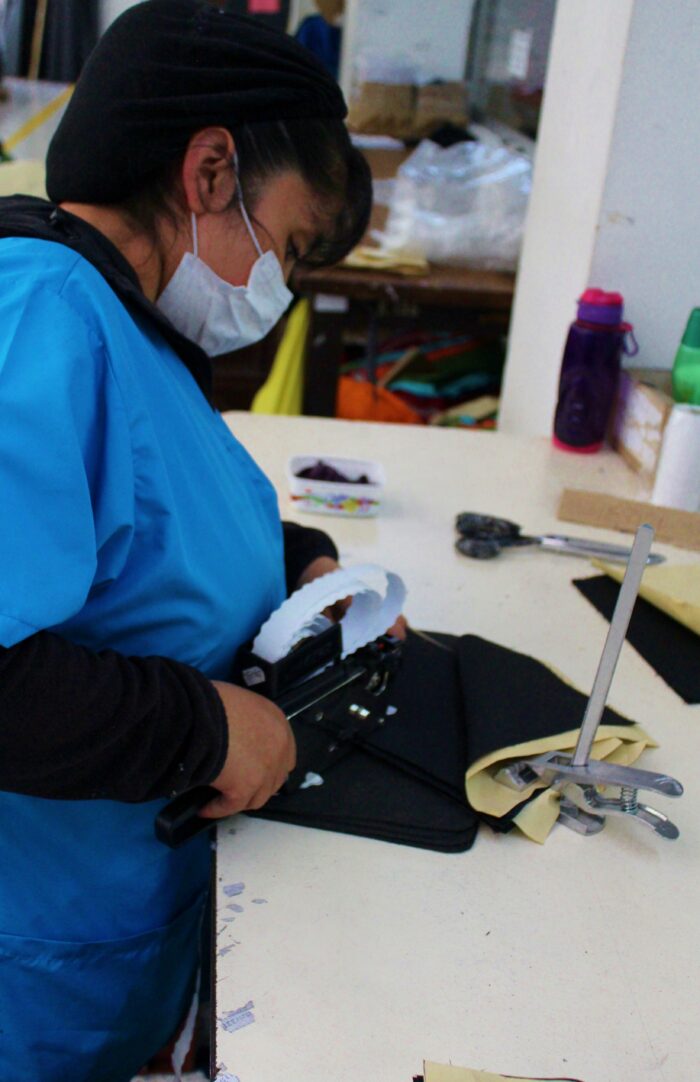
Además, los procesos internos están perfectamente establecidos con un área delimitada para cada parte del ciclo; Y con todas las garantías para que sus empleados estén protegidos de accidentes; Sus líneas de trabajo se hacen para que las prendas se produzcan con el mayor cuidado y para garantizar una trazabilidad que da calidad a su trabajo; Porque para ellos la calidad no es un problema es una solución; Este es el valor añadido de su ropa y es por eso que siguen ganando el respeto de aquellos que los conocen.
De este modo, Creaciones Miquelina ha podido cumplir plenamente con los diez principios del Comercio Justo; con el apoyo de Caritas Alemania y del Ministerio Federal Alemán de Cooperación Económica y Desarrollo, se llevó a cabo un riguroso proceso de un año de recopilación de documentos y pruebas que finalmente los acreditaron como ganadores del Premio Mundology y la Certificación del Comercio Justo Mundial Garantizado por la WFTO en enero de 2017.
Miquelina se registró como una organización caritativa en 1997 y recibió la certificación de calidad ISO 9001 en 2002. Todos los beneficios de la fábrica se reinvierten en equipos de fabricación y proyectos sociales. Una cooperativa de vivienda en un distrito de Bogotá da a las mujeres la oportunidad de adquirir una propiedad a un precio justo Barrio Juan José Rondón.
Las monjas construyeron un centro comunitario, una biblioteca virtual, un vivero y una cantina para estudiantes locales. Recientemente se lanzó un proyecto satelite en Pereira con el fin de ampliar la valiosa obra de Miquelina en un nuevo lugar.
Sobre Páramo
Páramo ofrece ropa deportiva outdoor sostenible y de alto rendimiento para una mayor comodidad y control de la humedad en muchas de las actividades deportivas al aire libre. La empresa se fundó en 1992 por Nick Brown, fundador de Nikwax®. Páramo es la elección de ropa de equipos de rescata de montaña y cuerpos expedicionarios como la Investigación Antártica Británica. Páramo fue la primer empresa deportiva outdoor en unirse al Compromiso de Desintoxicación de Greenpeace en 2016, eliminando el tratamiento con químicos perfluorados de toda su gama. En 2017 se cumplen 25 años de colaboración con la Fundación Miquelina, una empresa social de Bogotá, Colombia responsable del 80 % de la producción de Páramo. Miquelina se convirtió en un miembro pleno de la Organización Mundial del Comercio Justo en enero de 2017. paramo-clothing.com
Sobre Caritas Alemania
El departamento internacional de la organización benéfica Caritas Alemania lleva 10 años apoyando el centro de formación de Miquelina. Con la ayuda del Ministerio Federal de Cooperación Económica y Desarrollo alemán se están construyendo otros siete centros de formación en Colombia y en Ecuador. Al final de 2017 más de 4,000 mujeres habrán recibido una formación laboral en varios campos. caritas-germany.org
Sobre la Organización Mundial del Comercio Justo
La Organización Mundial del Comercio Justo es una red global de organizaciones de comercio justo dedicadas con miembros en más de 70 países. El sistema de garantías de la WFTO (por sus siglas en inglés) garantiza que las organizaciones cumplen los 10 Principios del Comercio Justo y el Estándar Global de las Organizaciones del Comercio Justo. wfto.com

This website was created and maintained with the financial support of the European Union. Its contents are the sole responsibility of Fashion Revolution and do not necessarily reflect the views of the European Union.