What the lives of garment workers can teach multi-national brands and their customers
Fatima, Sokhaeng, and Usha are all garment workers making clothes for multi-national brands in factories across South and Southeast Asia. Fatima lives and works in Dhaka, Sokhaeng in Phnom Penh, and Usha in Bangalore. Their work is similar—cutting and sewing garments for eight or more hours per day, but their lives and the lives of their compatriots also vary in important ways. What can the lives of these women teach multi-national brands and their customers about how to create and maintain sustainable supply-chains, where people who make the clothes that the world wears are treated with respect and do more than just survive? In other words, how can brands, with the support of consumers, win the “race to the top” where all do well, rather than the proverbial “race to the bottom” where brands compete by getting as much out of their workers for as little as possible?
Fatima, Sokhaeng, and Usha are three of 540 women that Microfinance Opportunities has been tracking for the last eight months or so. We have been asking them about how they earn and spend their money, their daily schedules, whether they are happy, in pain, or suffered an injury, the conditions in their workplace, and any special events that happened in their lives. From this information we have been able to weave together the individual stories of the workers, as well as generate an aggregate picture of the lives of the women who make our clothes. You can find accounts of these stories here for Bangladesh, Cambodia, and India.
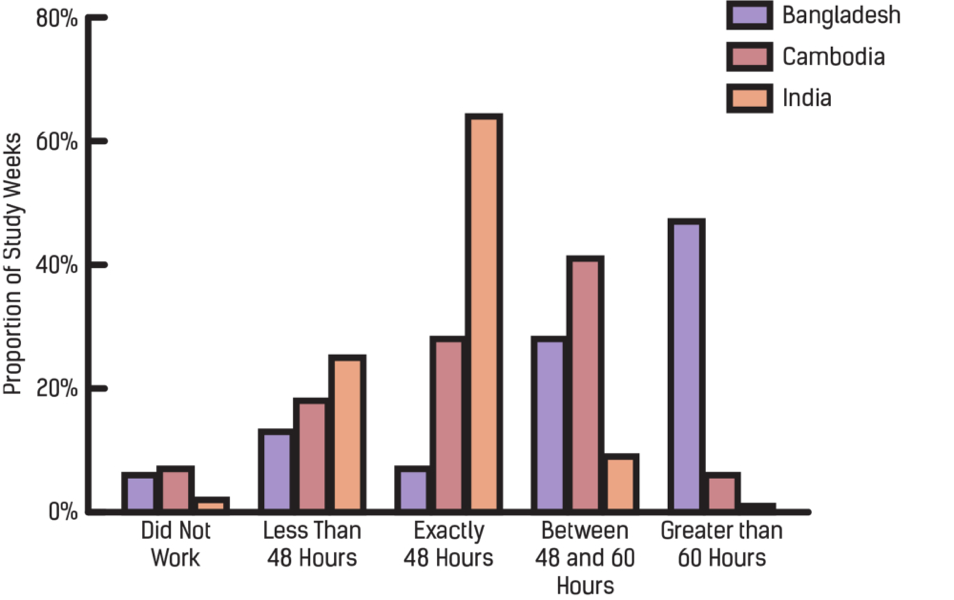
Fatima and others like her who are participating in the Garment Worker Diaries in Bangladesh often worked over 60 hours a week in the latter part of 2016 during the first few months of the study. In contrast, Usha and the other workers in Bangalore invariably worked 48 hours a week or less—still a lot but far less than the women in Bangladesh. The women in Cambodia fell somewhere in between—48- to 60-hour weeks were the most common in Cambodia. Furthermore, in both Bangladesh and Cambodia, the number of hours the women worked per week varied far more than they did in India, where the women consistently reported 48-hour weeks.
Figure 1: Hours Worked per Week
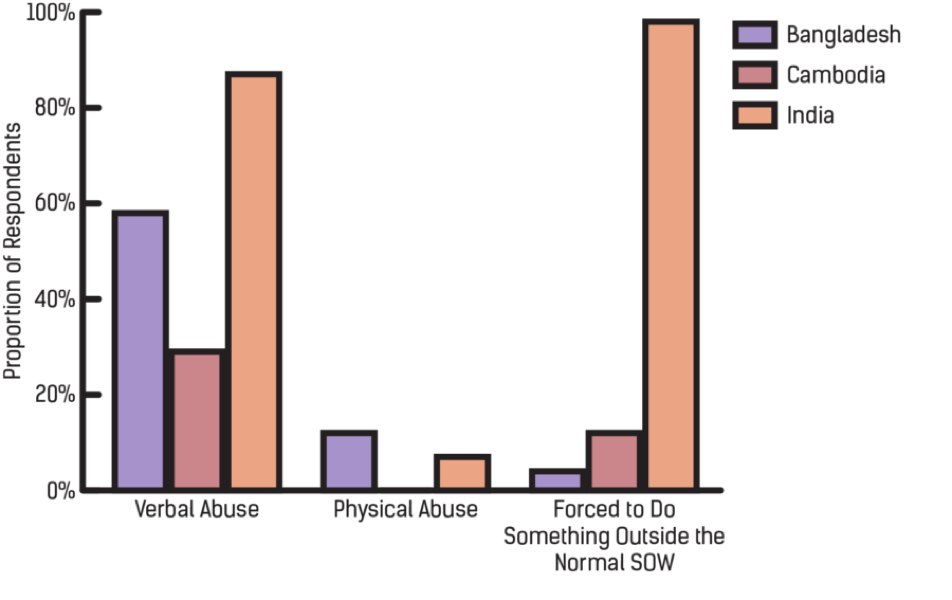
From the reports of how many hours they worked and how they varied from week to week, it looks like the women in India are the best off. But this is not altogether the case. Usha and her Indian counterparts reported far higher levels of verbal abuse in the workplace than did the women in Dhaka or Phnom Penh. And women in India consistently reported being forced to do more work than their allotted quota for the day. Meanwhile, women in Cambodia had the fewest reports of verbal abuse and no reports of physical abuse.
Figure 2: Reports of Abuse at Work
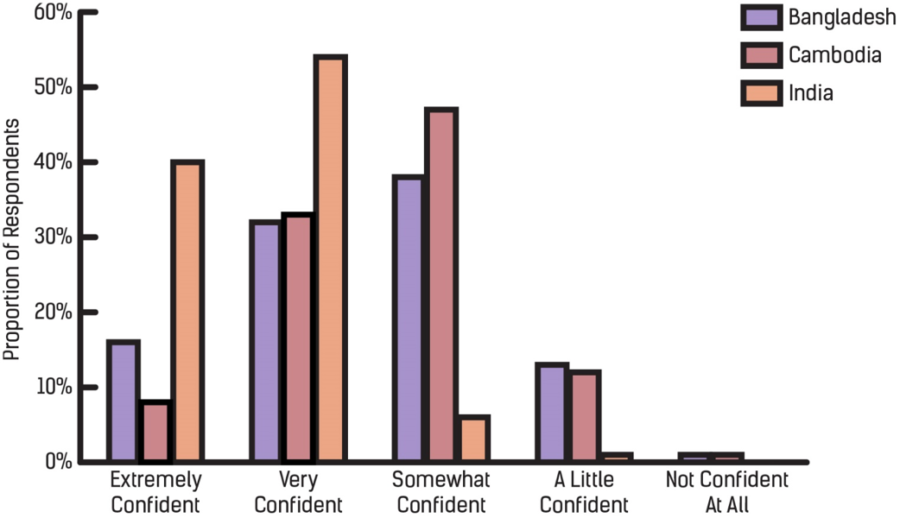
Further complicating the picture, women in Bangladesh and Cambodia participating in the Diaries study reported having mixed levels of confidence in whether they would be able to use the emergency exits in their workplaces in case of an emergency—almost 40 percent of Bangladeshi and 50 percent of Cambodian workers were only somewhat confident, while the Indian women reported the most confidence—over 90 percent reported they were extremely or very confident.
Figure 3: Confidence in Use of Emergency Exits
There may, of course, be differences across the countries in how the women perceive their situation, but even taking this possibility into account the differences across countries are so great that it is hard to fathom that they are simply due to differences in perception. What these findings suggest is that just because a set of factories in one country have worse conditions than factories in another country on one dimension does not mean that they have the worse conditions on all dimensions. So why can’t factories in Bangladesh and Cambodia and the brands that hire them have their workers work reasonable hours? Why can’t Indian factories stop the verbal abuse their workers suffer? Why can’t the Bangladeshi and Cambodian factories ensure that their workers can use designated exits in an emergency?
From a human rights perspective we can simply argue that the factories and the brands that hire them should stop treating their workers badly and adhere to some basic standards—higher than the best experiences of the women in our study. But these findings suggest that even by the lower standards of “business necessity” there is no justification for the behavior of the factory managers and the brands that hire them: other factories are able to treat their workers better in certain ways and stay in business, so why shouldn’t all factories be able to do so? In other words, there is no excuse for the treatment of the workers that the Diaries data are revealing, even by the lower standard of “we have to treat our workers this way just to stay in business.” It is time that the brands send this message loud and clear to factory managers, and that consumers ask the same of the brands. This way, maybe we can see the beginnings of a “race to the top.”
Phnom Penh, Cambodia
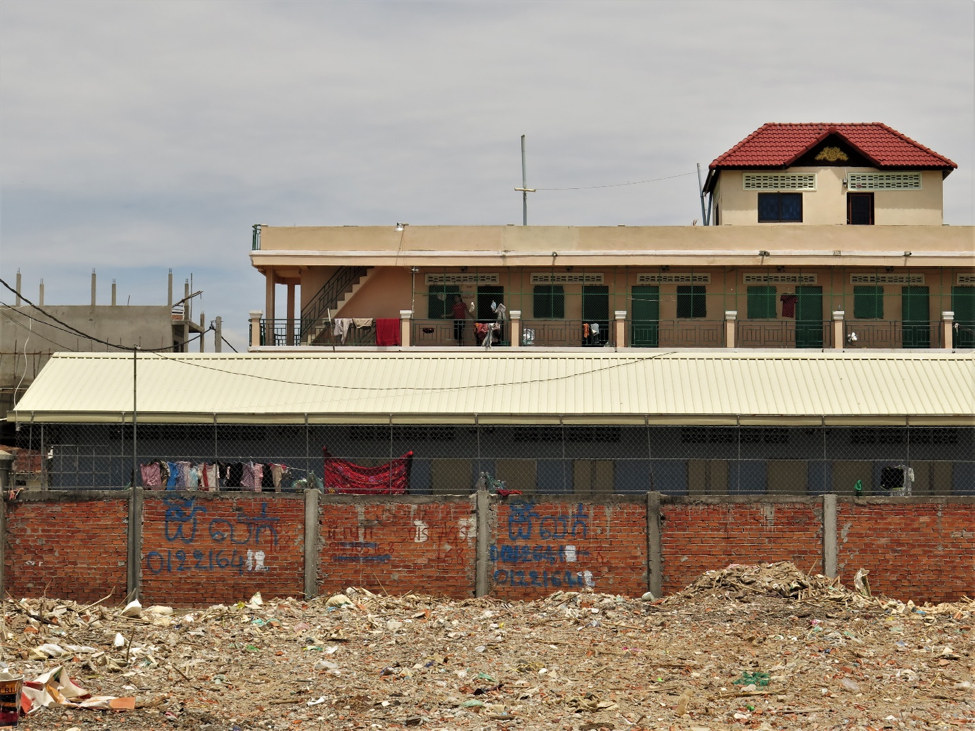
Garment workers in Phnom Penh often live in housing blocks like the ones seen here—single rooms in dystopian looking concrete buildings. While the homes often have electricity and private bathrooms, there are many in less-developed areas of the city like these, which are located next to an informal trash dump. On average, a room in one of these buildings will cost 120,000 riels per month, equal to about $30.
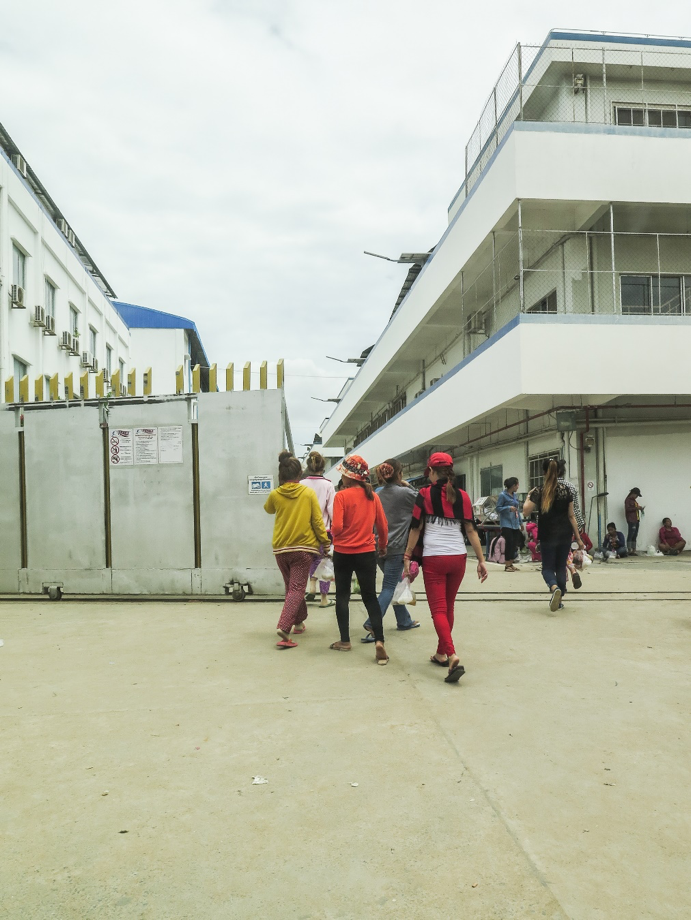
Workers leave their homes early in the morning to walk to their factories. The factories vary in size and formality but they are often in walled compounds with large metal gates. Conditions in factories have improved over the years but many of our respondents report that they are concerned for their safety for various reasons.
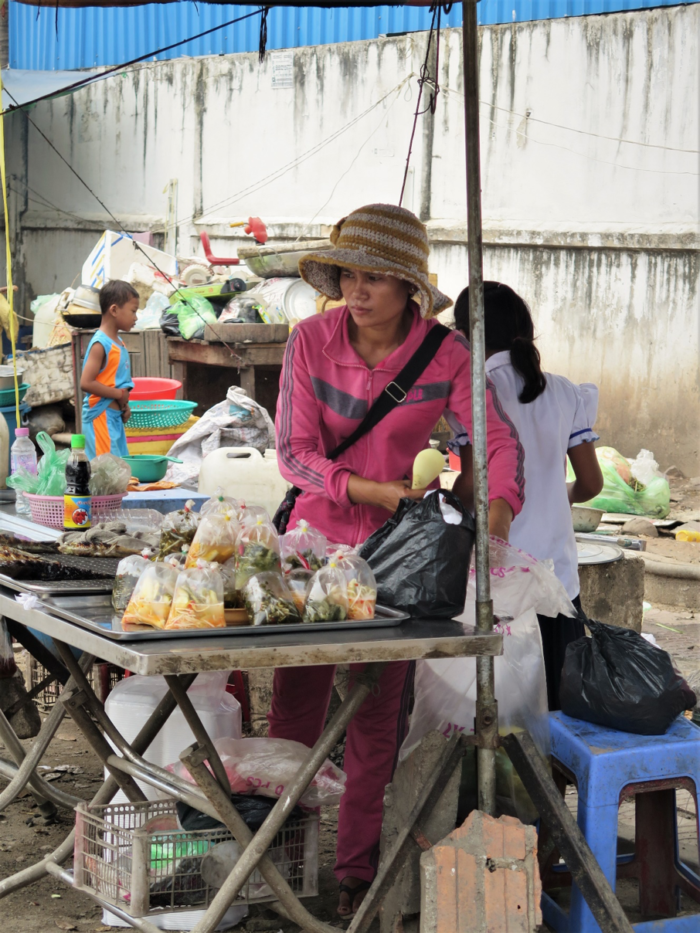
Workers typically get a quick break for lunch and crowds of women will surround vendors like this one, snatching up her prepared lunch fare for a few thousand riels. Workers will also sometimes buy prepared breakfasts and dinners from vendors too.
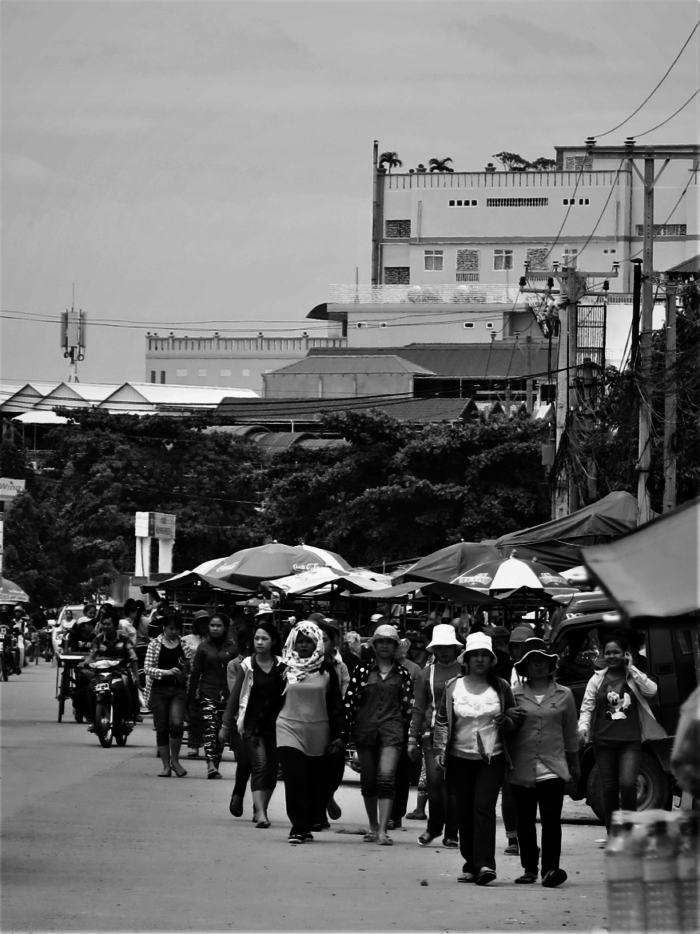
After their shifts, which can last anywhere from eight to 12 hours, garment workers leave their factories and walk home. The women in the photo wear hats and long sleeves shirts to protect themselves for the sun. Some wear scarves or facemasks, which they use to try to limit dust and chemical smells they breathe in while working.
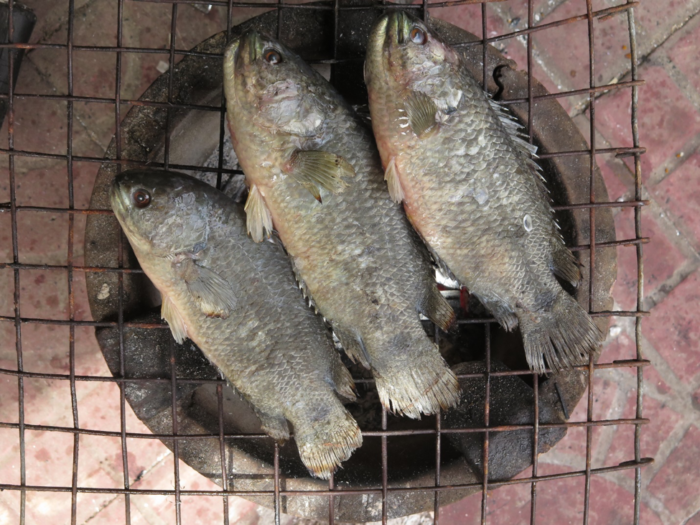
The women in our study will often purchase food for dinner on the way home from the factory. They do this almost every day—food will spoil if kept too long and most homes do not have refrigerators. The markets of Phnom Penh are loaded with fish, snails, chicken, and beef as well as fruits and vegetables. While many respondents cook using gas stoves, fish is best cooked over coals.
Long days at the factory followed by chores around the home tire our garment workers. The women in our study like to relax at the end of the day, if they have the time, and many enjoy watching television. However, many cannot watch for much longer than an hour—they have to sleep so that they are rested for another day of sewing clothes destined for Western markets.
Kampong Speu, Cambodia
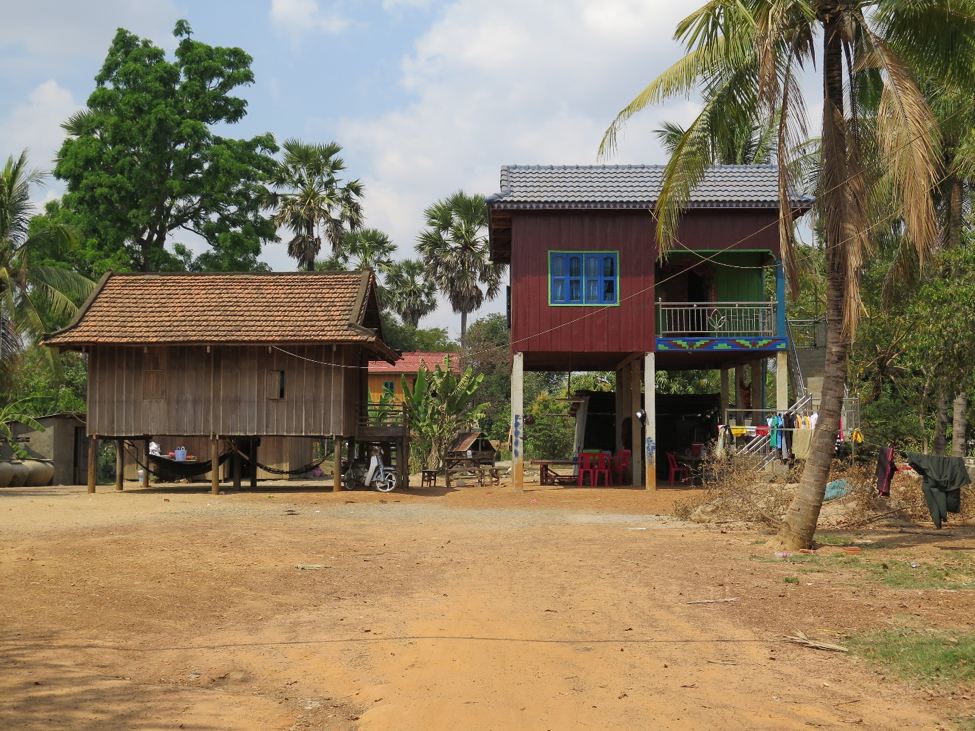
Most garment factories in Cambodia are in Phnom Penh but they are also located in other provinces of Cambodia, including Kampong Speu. Life here is much different from life in Phnom Penh. Homes here are larger and similar in style to the home above.
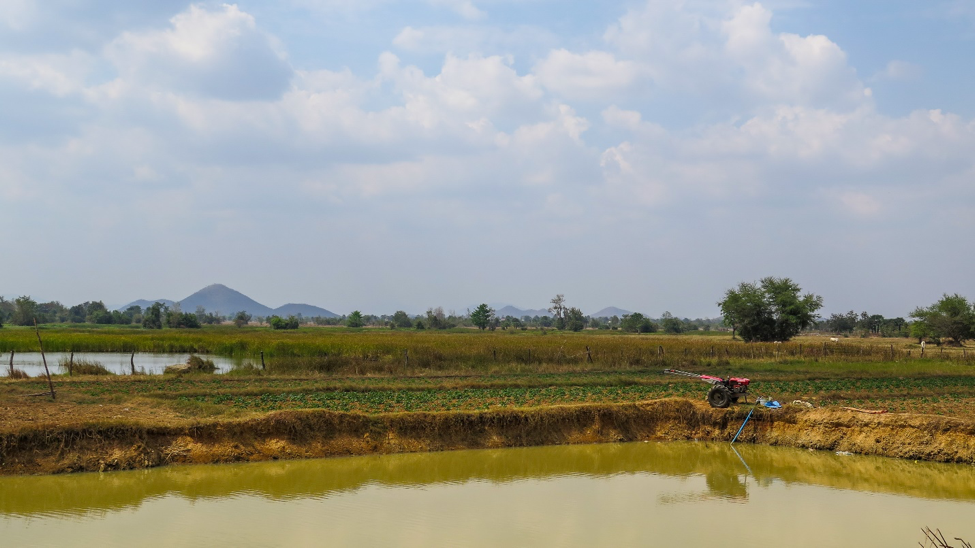
Garment work is an important source of employment for young women living in this area but households often engage in other livelihoods too. For example, many households engage in some type of agriculture.
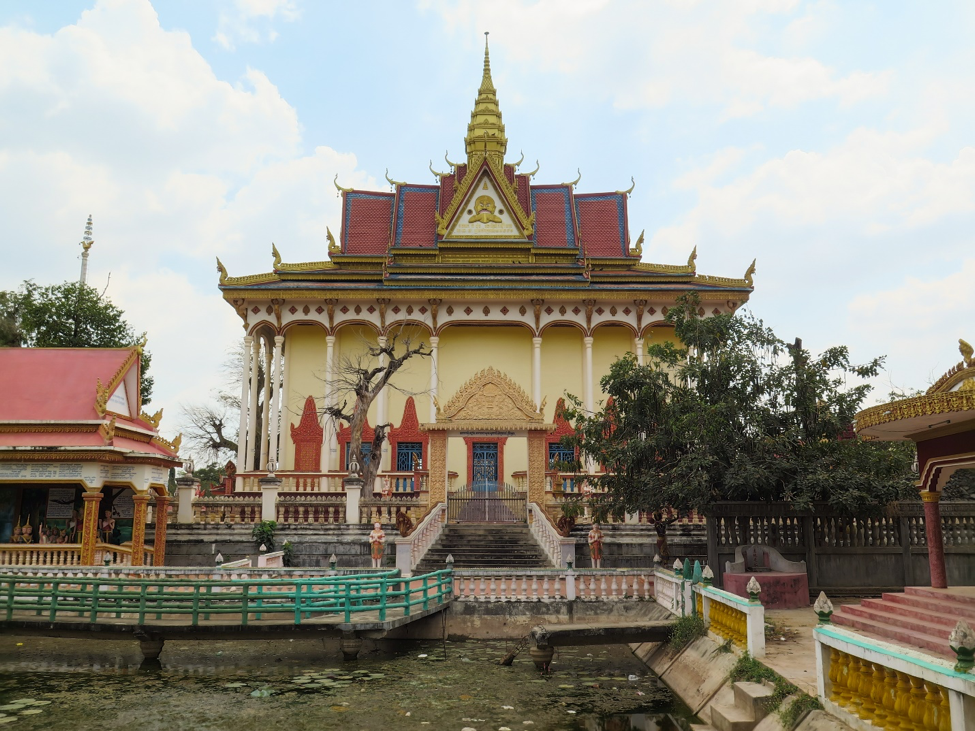
Buddhism is the national religion of Cambodia and evidence of its influence is visible throughout the country. One key example—many communities have a Buddhist temple similar to this one. It is a place for meditation and learning. Our respondents in Kampong Speu sometimes bring offerings to temples during religious holidays.
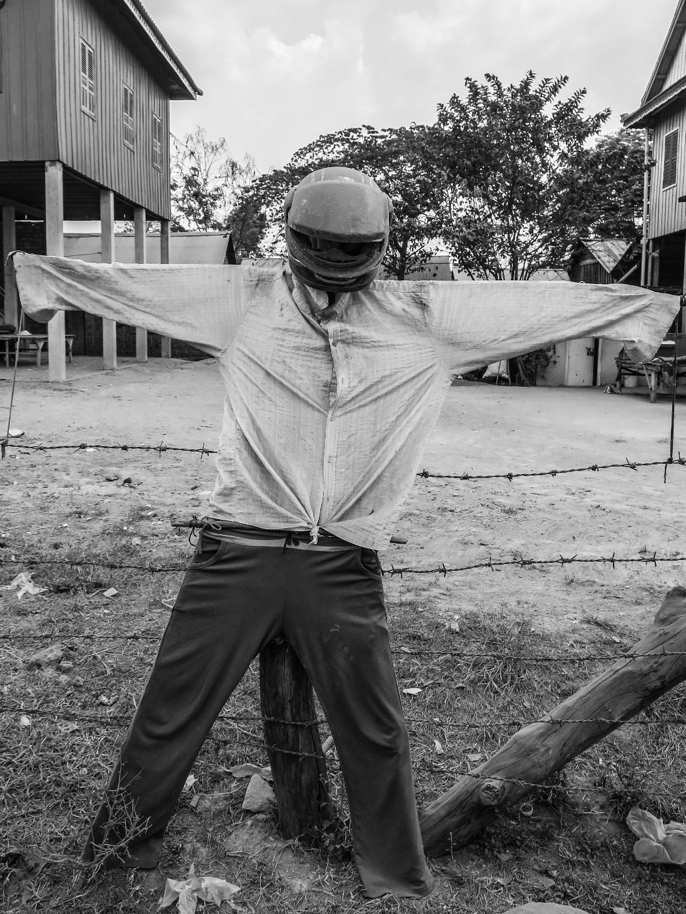
Religious and traditional beliefs are prevalent in this area. Figures, like the one shown here, guard homes from evil spirits. People hope that the figures will keep things like illnesses or curses into the home.
Bangalore, India
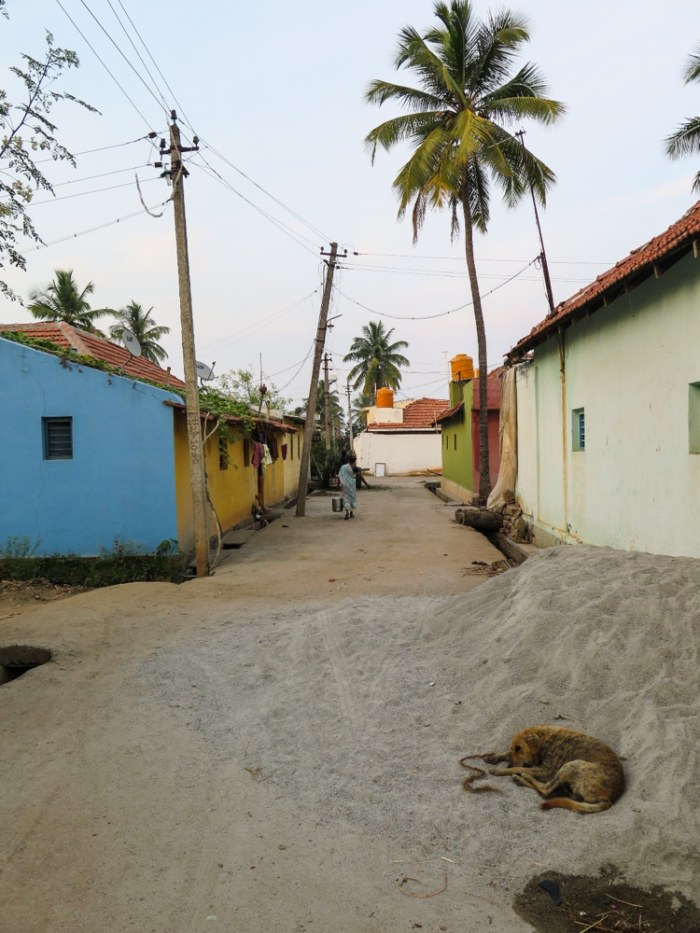
Our respondents in Bangalore live in a variety of types of homes. Some live in in single-family, detached homes like those in this community near the town of Mandya.
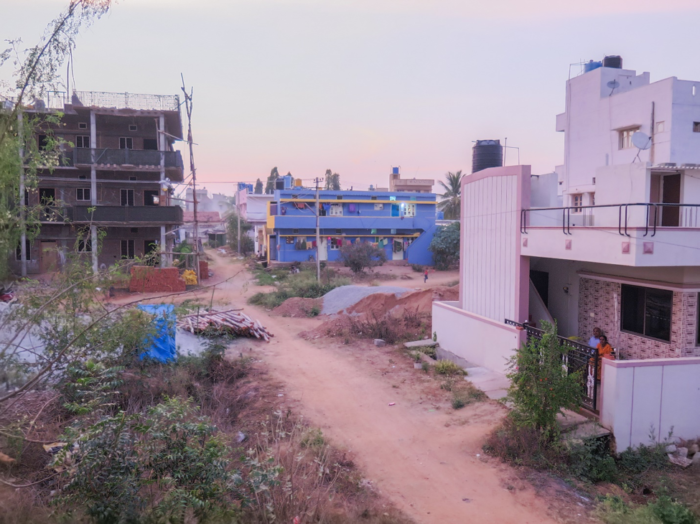
Others live in apartment buildings of various shapes and size. These apartments are located near the town of Bidadi, less than an hour away from Bangalore by car. The unpaved roads and construction show that this area is still developing.
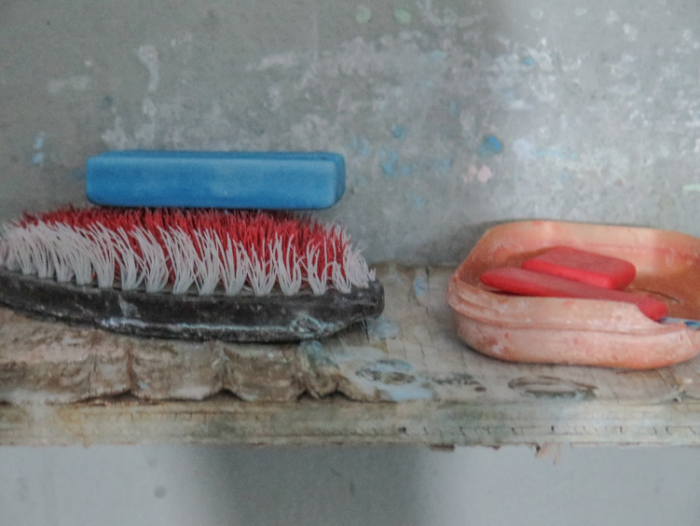
Regardless of where respondents live, they are all bound by a schedule set by the factories. Each morning, the garment workers wake-up early to prepare themselves and their families for the day. They will often take a factory-sponsored transport to their jobs where they will work for eight hours.
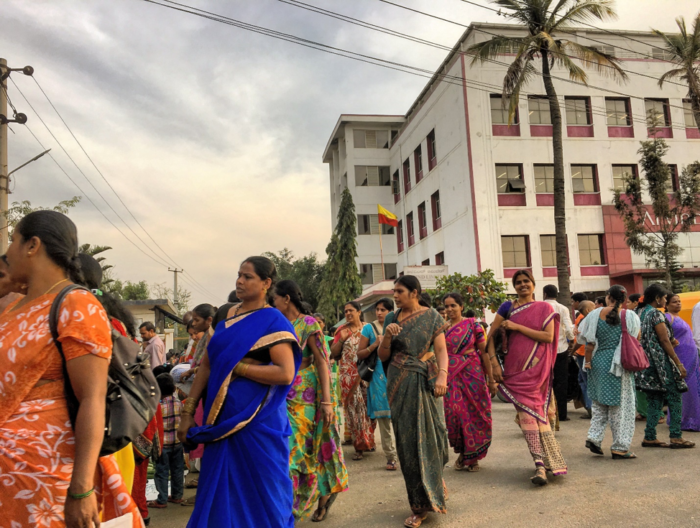
After their shifts, the women stream out of their factories and board transports headed back to their homes. Some work conditions here are better than in the other countries we are studying, but the women in our sample report that their supervisors yell at them frequently.
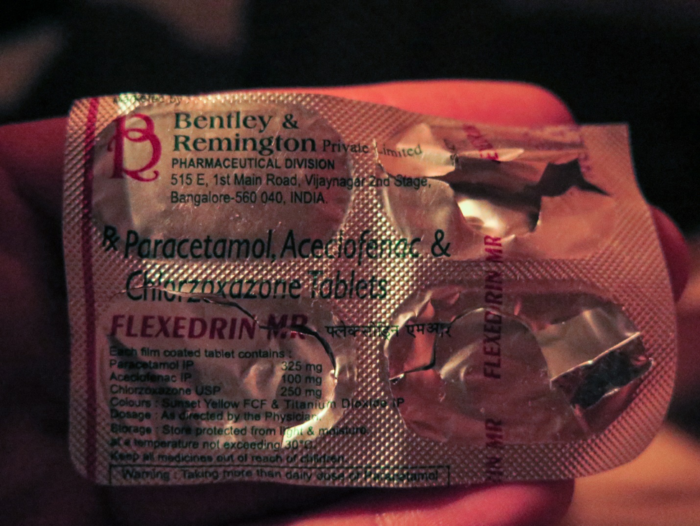
While the workers here often have shorter days than those in Bangladesh and Cambodia, the repetitive nature of their tasks takes its toll. Many workers complain of pain in the arms, back, and legs. One worker we visited had gone to the clinic and a doctor prescribed these painkillers.
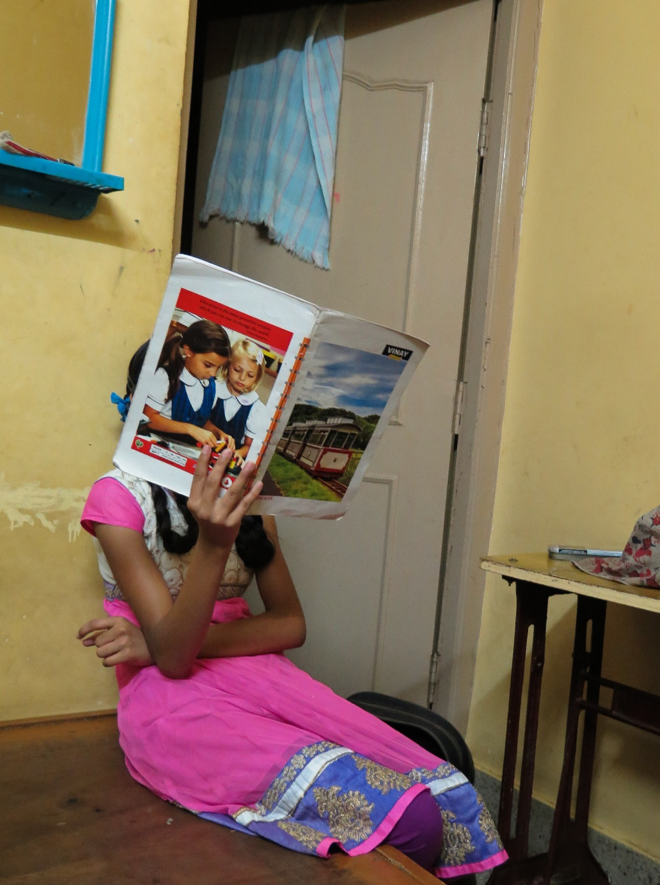
The women in our sample often do not get much leisure time—they have to cook and clean for their families and care for their children. In this photo, the daughter of one of our respondents studies. Outside the frame, her mother is keeping a watchful eye even as she conducts an interview with one of our enumerators.

Many of the respondents in our sample are Hindu and devout followers often have some kind of shrine in their homes. Images of gods, oil candles, and decorative flowers are common. At the end of a long day, some workers will say a quick prayer before beginning their routine again the next day.
Tamay & Me is a fascinating collaboration of two women from two sides of the world, from two entirely different cultures. They make hand spun and woven, indigo jackets with exquisite reclaimed embroidery details. Their mission is to create conversation about the best bits of ancient and modern culture using clothing as a starting point.
Tamay comes from the Red Dzao an ethnic minority group who live in the mountains in North Vietnam. Hannah, the Me part of Tamay & Me, is originally an anthropologist based in Bristol in the UK. They met in 2008 when Tamay taught Hannah the extraordinary detailed Dzao embroidery, sitting together for 3 months, since then they have been the best of friends.
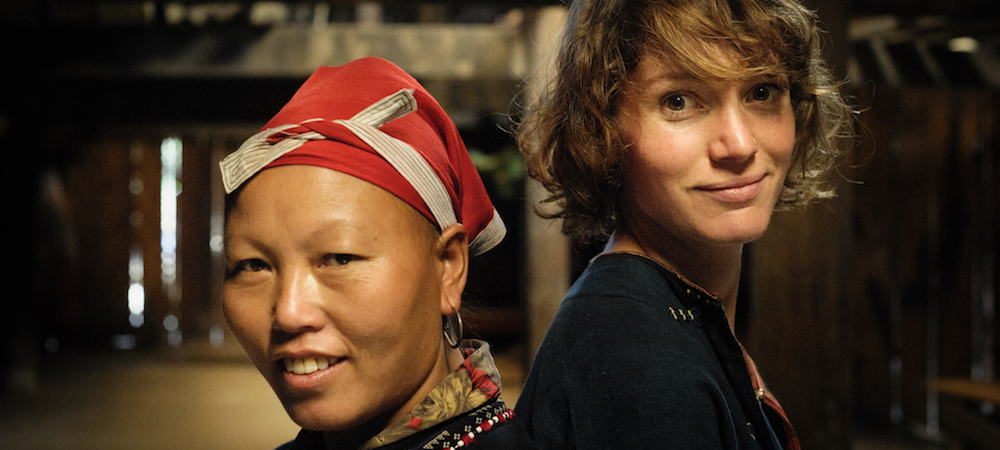
Hannah shares with us a fascinating insight about the Dzao way of wearing clothes…
The Dzao people live and breathe ethical. In the West, we are trying to re-find a way of wearing clothes that doesn’t cost the earth. The Dzao have been doing it for centuries, in the most beautiful way.
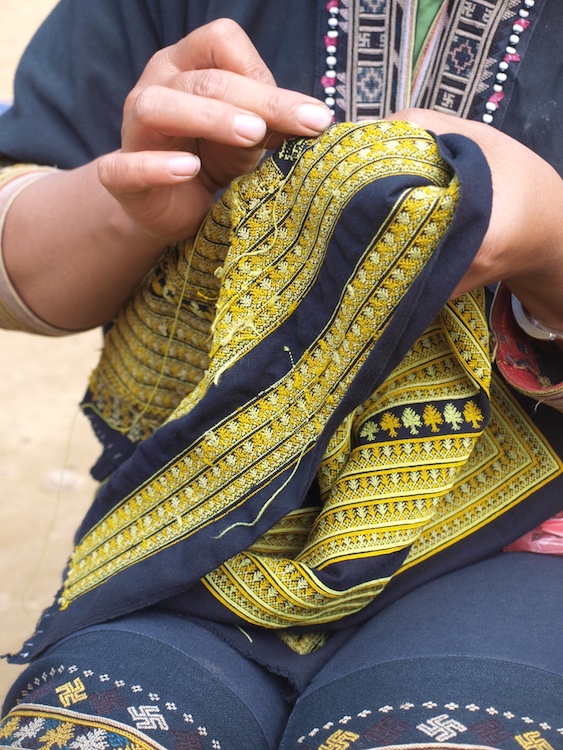
The Dzao make all their own clothes. They make them with pride to show off their skills and their identity. Every year a Dzao woman will make themselves a new set of clothes. A pair of trousers covered in embroidery and a jacket with the finest tail piece, sleeve embroidery and another panel of embroidery on the back, so much embroidery!
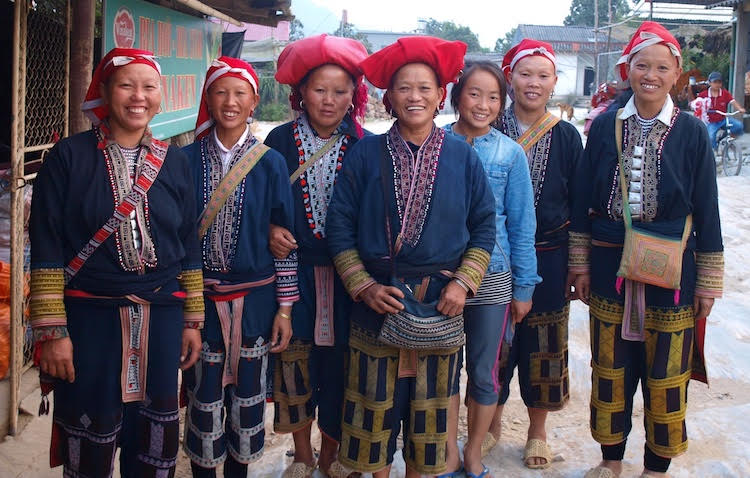
When they go to the market, when they are on the bus, on the back of a motorbike, visiting other towns and cities they can be spotted from far away as Dzao. They can even be identified as to which village they come from. Everywhere they go they carry a clear, visual expression of where they come from and move around with a sense of belonging. It is just in the same way as so many sub-cultures do in the West. This is what clothing is all about; beyond keeping us warm and dry, what we put on in the morning is an expression of our own identity and so often a group or culture that we belong to. Function and belonging is the purpose of clothing and for so many cultures across the world – it is important, clothes matter.
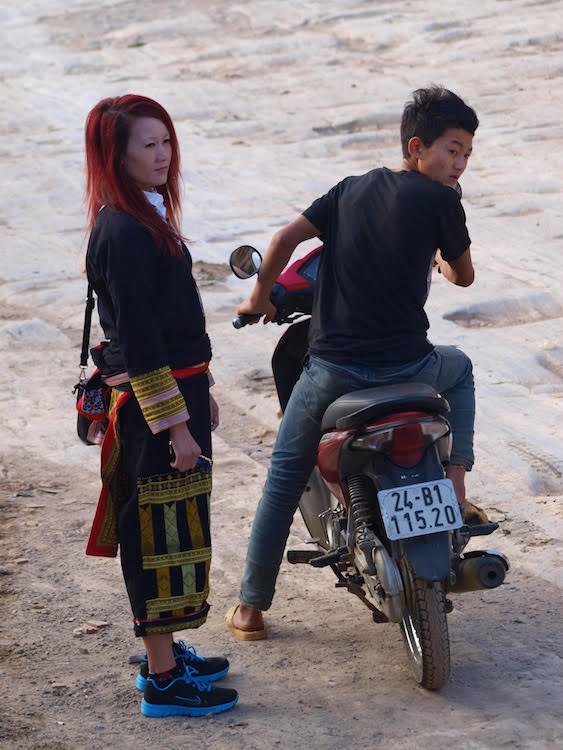
What the Dzao do, which is unusual, is they spend hours and hours, weeks and months making these clothes. They respect themselves for making their clothes and they respect each other for making their own clothes. Embroidery is valued, indigo cloth is valued. It is the process of making that is valued. Value lies in the time spent to make something, value lies in the quality of the materials that go into making the garment and value lies in the concentration and the skills required to make too. Through making your own clothes the Dzao understand that this makes you a stronger person. Making embroidery is a sort of meditation, it requires being present and getting on and doing. When you are making embroidery there is a sense of calm that happens, not only that, but a sense of satisfaction too. You are the creator of something extremely beautiful and it happens as you do it.
In the 8 year time period that I have known the Dzao their lives have catapulted from an ancient world with no electricity in their homes, access to only local foods, all homegrown, handmade clothing and a completely independent cultural community with their own practices and beliefs. To the modern Asia, internet, smartphones, washing machines, rice-cookers, education, an intertwined community with modern Vietnam. It is a huge time of change for the Dzao culture and a time that challenges the traditional way of making clothes and wearing clothes.
This change is happening synchronously as we in the West are tired of bad quality garments, exploitation, throwaway culture and chemical production, everything that Fashion Revolution stands against.
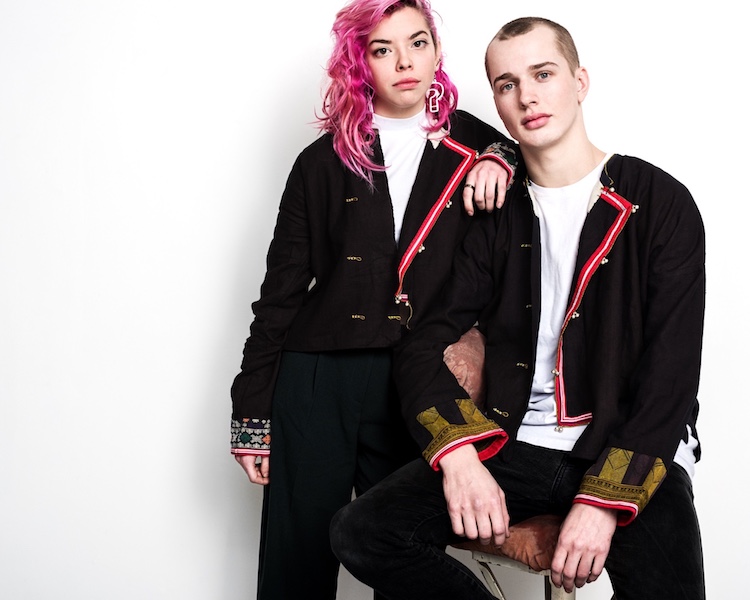
Tamay & Me have designed a series of jackets around the skills and the needs of the Dzao and the Black Tay people. The jackets are based on a traditional men’s style from these mountains and worn by men across the region to work in the fields, in everyday life and also for special occasions. Tamay is a figure head in her village in North Vietnam and is passionate to share the story of her culture’s embroidery and also to ensure that wealth is equally distributed in the village. She organises production. The cloth comes from a nearby Black Tay village where the families grow, spin and weave the organic cotton on hand looms in their homes, as they always have done. This cloth is much more expensive than manufactured cotton from China and so losing popularity in the local market. Like so many other handmade products it stands the test of time in another way becoming, more and more beautiful with time. The weavers work closely with the indigo dyer who dyes the different coloured tones of fermented indigo in her back garden using two buckets. She also uses her own homegrown indigo. Since working with Tamay these families have been able to pay for their kids to go onto further education.
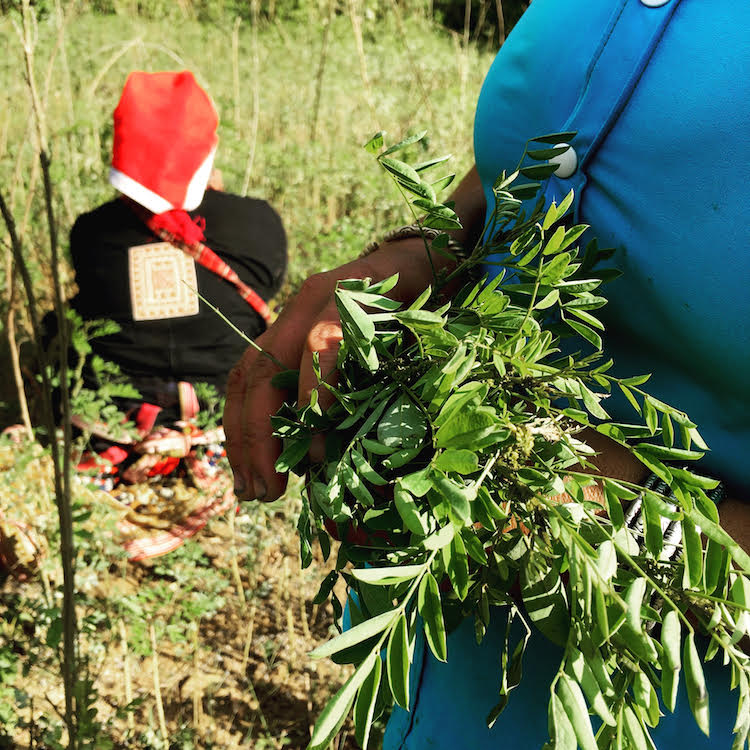
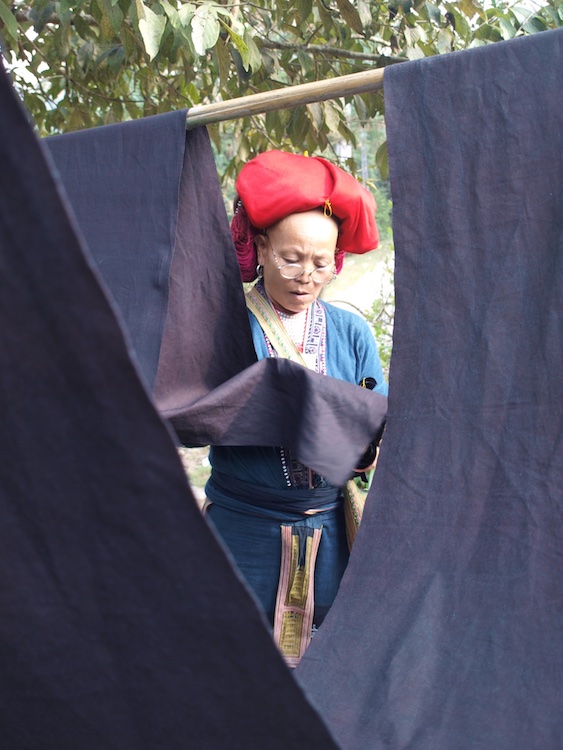
The embroidery for the jackets is carefully bought from families who really need money in Ta Phin village where Tamay lives. Tamay buys pieces that have been reclaimed from old clothes so that people continue primarily to make clothes for themselves. The jackets are finished with hand plaited silk, appliqué work and metal buttons, all also sourced from local traditional artisans. Phan Ta May, Chou and his wife May make the jackets into finished garments. They work from home in their own time, delighted to be able to have a regular income away from the tourist industry that they can pick up and put down with family life. Chou works on the industrial sewing machine in the house and May works on the terrace doing the hand-stitching.
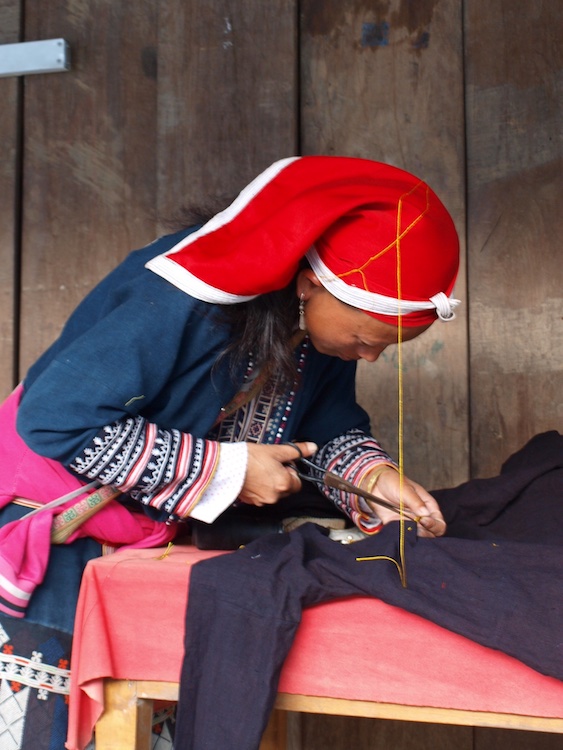
Every step of the Tamay & Me jackets celebrates the way the Dzao make and wear clothes. The Dzao are a rare community to still be making clothing in this way. They have a lot to teach the world. It is so important that we all understand where our clothes come from, just like our food. If we know how clothes are made then we are happy to pay for them and we want to look after them and wear them for longer. It is going to take a long time but it is beginning to happen.
I am always delighted to see how people react when I explain where every component comes from. It surprises people and is always a conversation starter, a mini Fashion Revolution happens!
The Dzao clothes don’t really have anything to do with fashion and perhaps that is what is wonderful about them. I love being able to bring them into the fashion world to inspire a response. The Dzao way is the traditional way and the Dzao show that it is possible to live well with less and be beautiful.
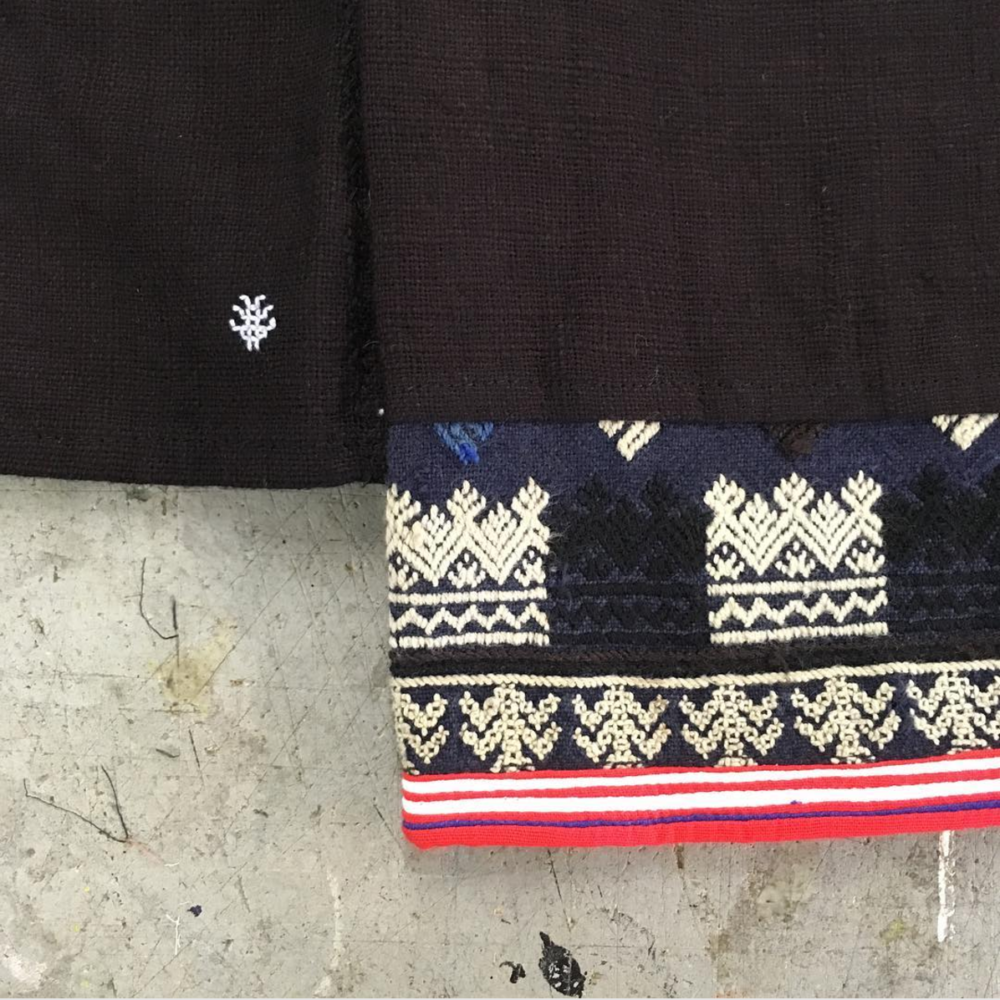
Follow Tamay & Me on instagram @tamayandme / www.tamayandme.com
People’s presence in the supply chain for branding and labeling in fashion is paramount.
Avery Dennison RBIS provides end-to-end solutions for some of the most exciting brands, prominent retailers, and state-of-the-art manufacturers in the apparel and footwear industry around the world. In the spirit of Fashion Revolution Week, we are sharing some information on #whomademyclothes, and what this means for branding and labeling for some of the biggest fashion brands in the world.
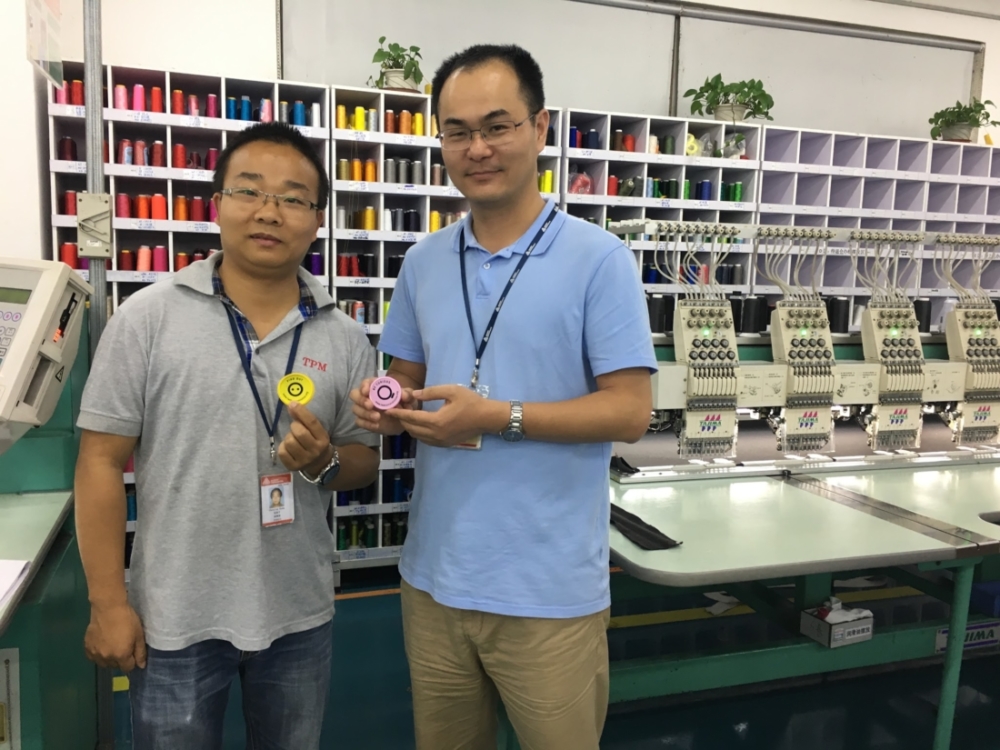
Observant, hardworking, resourceful and talented.
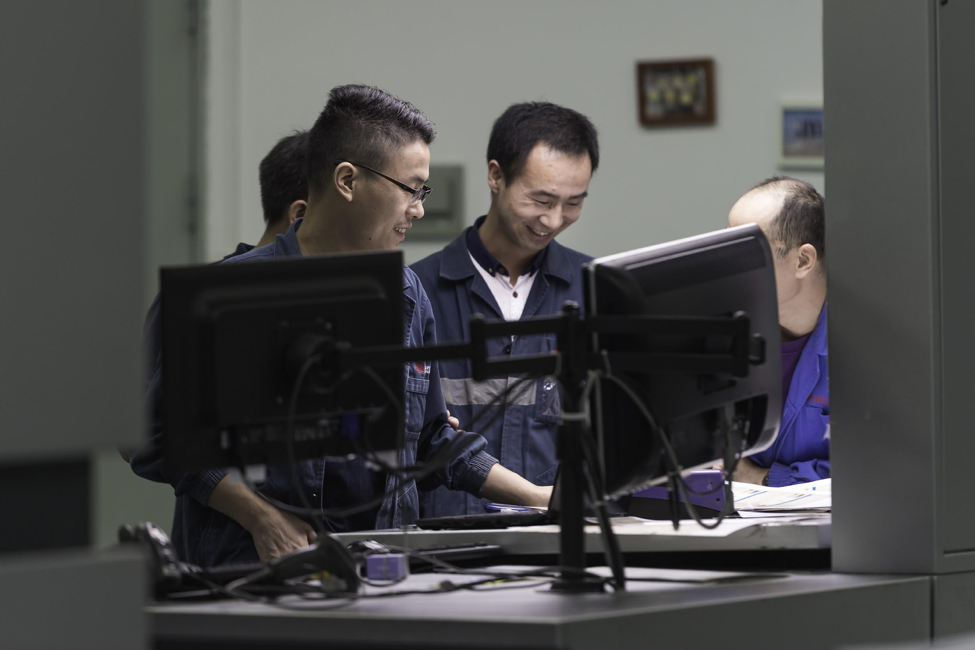
The people of Avery Dennison RBIS are integral to its success and our factories play a valuable role providing our customers with the latest in innovation and trends. Operating world-class manufacturing facilities, offering branding, retail and technical solutions, our global sites are designed to efficiently meet the needs of our customers, regardless of where they are.
Established in 2000, our Panyu facility in Guangzhou, China provides many global garment and textile brands with breakthrough apparel labeling and branding solutions, operating with excellent quality and service. With over 40,062m2 operated by nearly 3,800 employees, Panyu leads world class thermal printing, RFID applications, printed fabric labels, heat transfer labels and woven labels.
This is where the majority of woven labels for care content and branding patches are produced using recycled yarns.
Our commitment to sustainability
Guided by our 2025 sustainability goals, we work hard to ensure our employees are treated fairly and with respect, while delivering innovative products that reduce our environmental footprint to the best of our abilities.
As a publicly owned company, our biennial sustainability report is available online and in other forums, and the conversation is kept moving among stakeholders both inside and outside our company.
About the Fashion Revolution patches
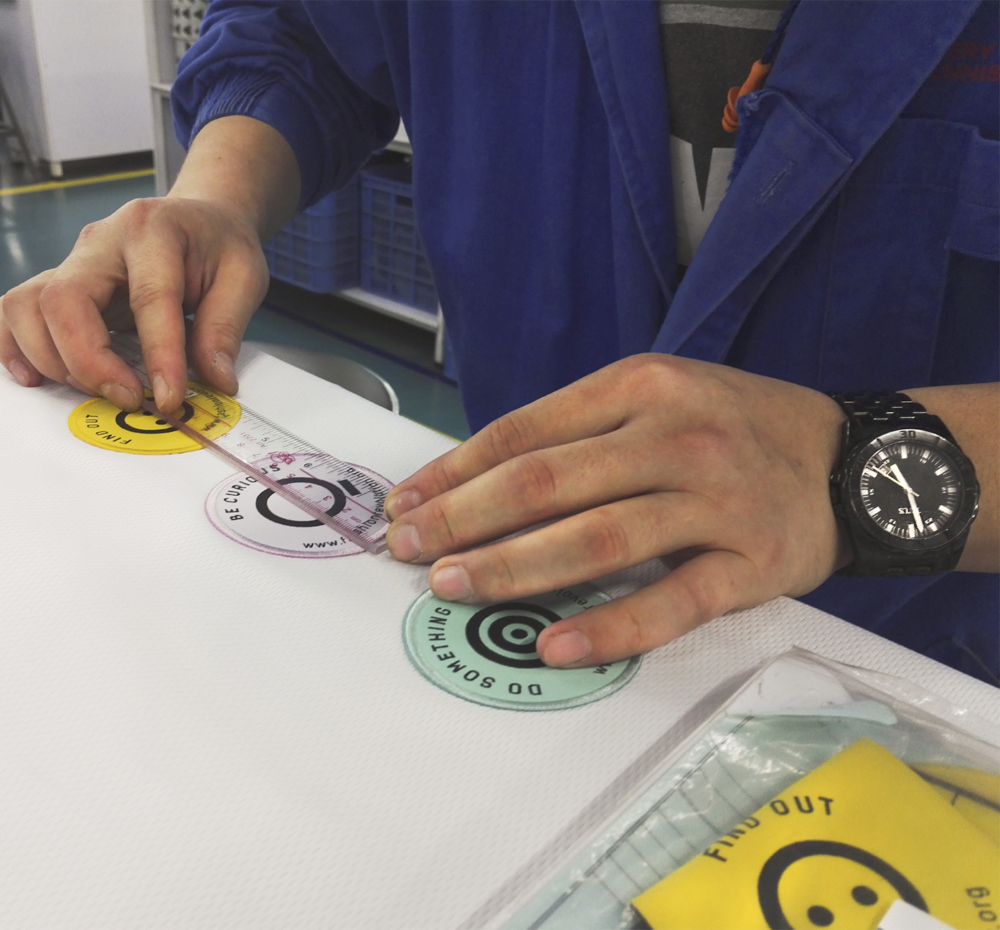
Made with up to 90% recycled yarns, you may have seen these in the #haulternative videos, on how to apply a patch. Recycled yarns are made with Post Consumer Waste, consisting of responsibly sourced and certified materials, which are then cleansed, scoured, ground up and dyed, then woven as warp or weft yarns into beautiful fashion statements.
This process means Avery Dennison RBIS purchased more than 74 tonnes of recycled yarns in the first quarter of 2017 for North Asia alone, substantially reducing the need for virgin yarns and the waste materials destined for landfills. The reduction in weight is an average of half of the same patch or design with only virgin yarns, also reducing overall weight of garments.
One of the reasons these Fashion Revolution patches are so beautiful is because they remind us how we can update or mend our treasured items into something new, without contributing to the waste stream.
Want to learn more about our sustainability goals and our people?
rbis.averydennison.com
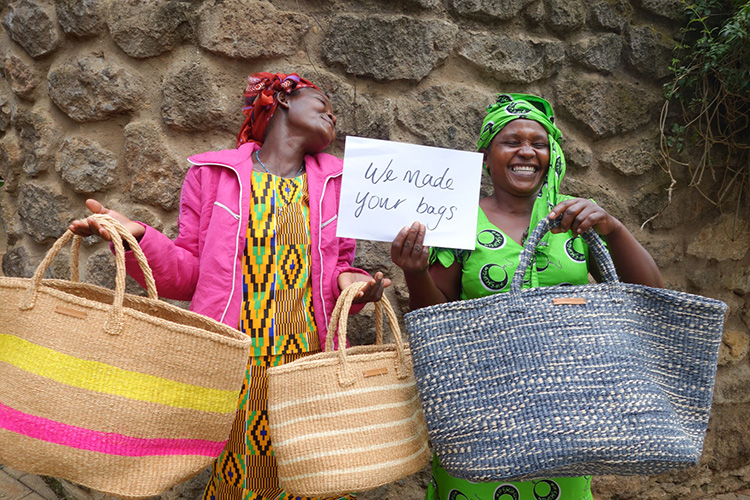
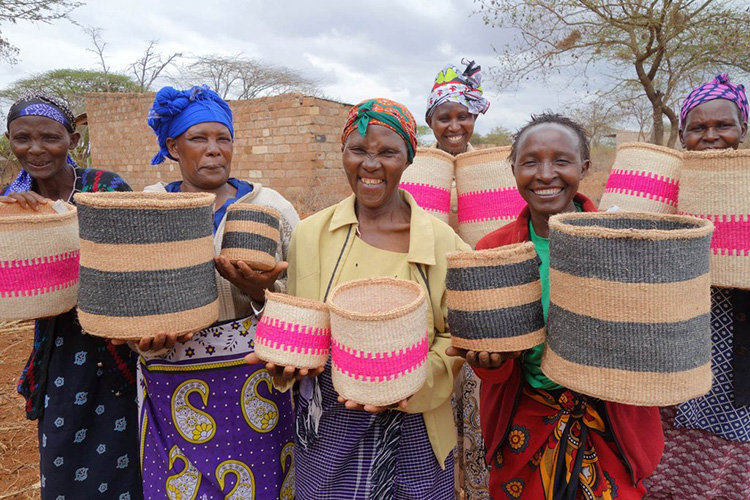
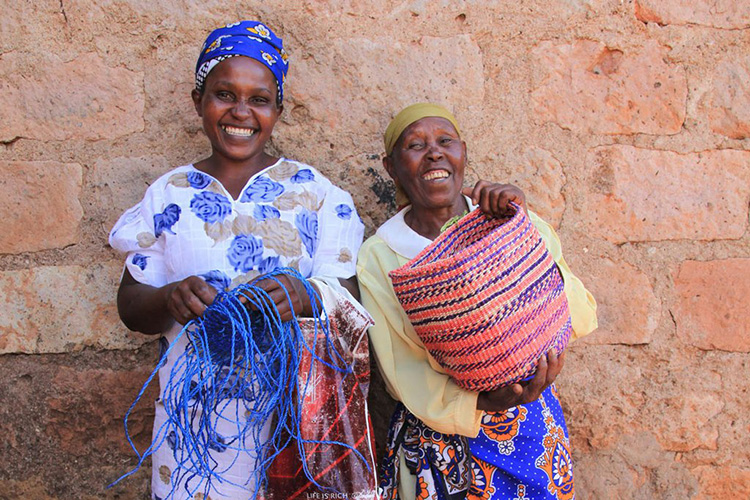
This week we are celebrating Fashion Revolution and the journeys of two women and acknowledge the barriers they have overcome. Nobody tells it better than the weavers themselves – they’re the true beating hearts of The Basket Room and the story behind each woven basket we sell. So we caught up with two members of the Kenyan weaving cooperative we work with: Peninah and Florence. Here’s what these talented craftswomen have to say about being working women in 2017, and the barriers they have overcome through basket weaving and working within a cooperative.
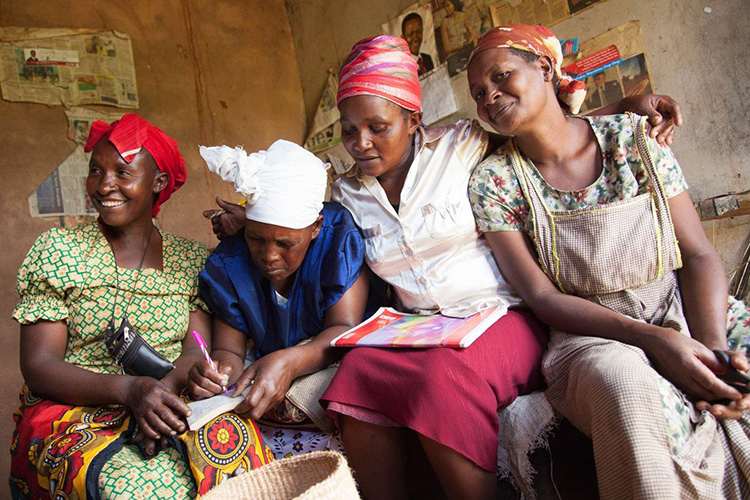
Peninah Munyao was born in 1978. She is married and has three sons aged 16, 11 and 4. As a housewife, she manages the household and also dabbles in farming and of course, basket weaving. Like so many of the weavers we work with, Peninah was taught to weave by her grandmother.
Florence Bernard is treasurer of the weaving cooperative Peninah works for, and was born in 1962. With five children aged between 38 and 23, Florence also runs a greengrocers’ as well as weaving baskets and travelling frequently to Nairobi to sell baskets. Florence has been weaving baskets since 2001 and was taught the craft as a child, by her mother.
What do you feel you have achieved as a working woman?
PENINAH: From basket weaving, I am able to meet the needs of my household: paying school fees, putting food on the table and buying clothes and other essentials, as well as having some money left over to save.
FLORENCE: I have been able to support my greengrocery and basket trading businesses from the money I make from basket weaving. I also use this income to support the needs of my family.
What challenges do you face as a working woman?
PENINAH: Sometimes it is difficult to source enough sisal fibre, since the plant is grown in a different region and it can take a while to arrive at our markets. Since I am also a mother and a housewife, my duties – primarily, taking care of my family – have to take precedence over weaving, which means that sometimes I cannot produce as many woven baskets as I would like to.
FLORENCE: Rain, although a massive blessing to farmers and food sellers, impedes basket weaving. When it does rain, weaving must stop so that the crops can be tended to. Likewise, drought also hinders basket production because again weaving must stop so that we can travel further afield than normal to find water.
Has work given you more independence?
PENINAH: Yes! Before I joined our weaving cooperative a few years ago, I used to rely on my husband for everything we needed at home. Back then, I felt I couldn’t even ask him for money for a new pair of shoes because there were just too many more important things for the home that we needed first. But when I started weaving with our cooperative, I had the means to not only help support the family, but also to surprise my husband with new things for him, like a new hat or a pair of trousers.
FLORENCE: I never travelled much before, but since we started selling the baskets in Nairobi, I’ve realised how much I enjoy travelling. I am now able to travel all over Kenya with my work, and sometimes I take my family with me. I also don’t have to rely solely on my husband’s income in running my household anymore.
Do you feel successful being part of a growing weaving cooperative?
PENINAH: Yes, I do! Not only because this is the best way to trade with buyers, but also because of the togetherness that comes from doing something you love with friends and people who can relate to and understand what you are going through.
FLORENCE: Yes. We usually contribute part of the sales of our baskets to our cooperative. These contributions have made it possible for us to purchase a piece of land where we intend to construct rental properties or a community centre. Group members can also take out loans from the savings we have.
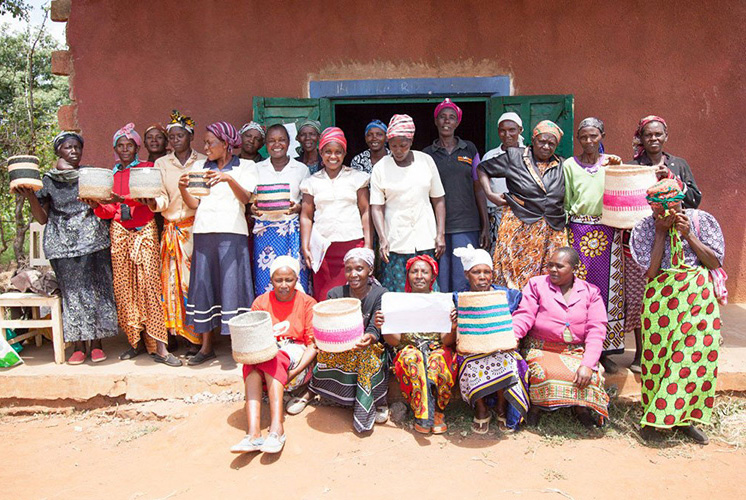
Thank you to Peninah and Florence for sharing their stories with us. Peninah and Florence belong to the Kenyan weaving cooperatives that produce our popular Linear Fusion range of woven baskets and shoppers.
Every purchase matters. When you buy fair trade, you can positively impact the lives of the people who make your clothes, improve communities, and protect the environment.
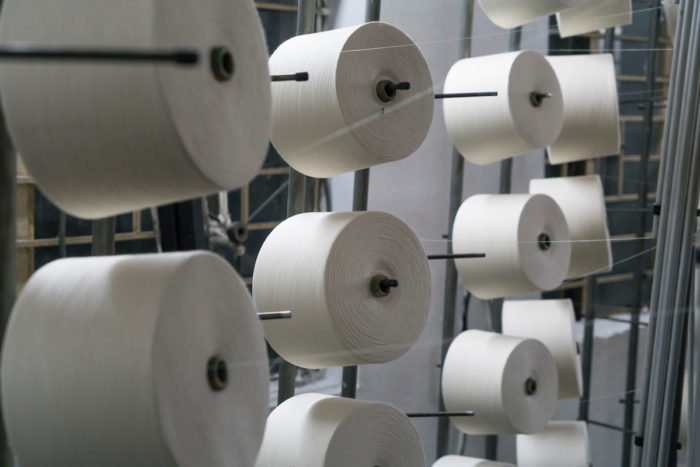
Follow the journey of garments through a fair trade factory in India, from thread and fabric to finishing and packing, and meet the people who make them…
Thread being woven into fabric
Operating the knitting department

Lakindar Ray, 26, from Samastipur, Bihar, an operator in the knitting department, has worked since 2008 at Rajlakshmi Cotton Mills in Howrah. Ray has two children. “I hope that Fair Trade consumers will continue to support us and our family. The first year I received my Fair Trade premium was a major change in life. My wife asked for some household goods and we bought a clothing cupboard. Next year, I hope to buy a TV. Whatever we buy with the premiums we receive, it’s like a memory of the year that has gone past. This is something I received from the factory, something to be proud of. I appreciate the transparency of the Fair Trade premium arrangement at our factory – everyone gets the same amount, people can join the committee and help make decisions for the worker body. Friends from other factories are envious that we have this benefit.”
Fabric being cut into garments

Preparing the fabric for sewing

Assembling t-shirts


Mohammad Zunaid Alam, 30, from Malda, West Bengal, from the sewing section, has worked for 8 years at Rajlakshmi Cotton Mills in Howrah. Alam has two daughters, 4 and 1.5 year old. “Since the Fair Trade program started here, the factory has improved overall and we have received different types of orders from abroad. I like that by working to make a good product, we are also able to help our families and each other. The past four years of premiums have really helped my family – one year, I was able to fix my roof; I’ve invested in savings which will double in 5 years. As my two daughters grow, they will need funds for furthering their education and to get married. I want to thank Fair Trade consumers for helping us improve our lives.”
Ironing

Cristy Martinez, 36, irons fabric at Nature USA, the first Fair Trade Certified factory in the U.S. She is excited to learn more about how the Community Development Premiums can benefit the workers, and even her family back home.
Sample making


Tharun Sardar, 36, from Howrah, West Bengal, has worked as a screen printer for 6 years at Rajalakshmi Cotton Mills in Howrah. Has 3 children. “Fair Trade not only provides us with valuable premiums but also helps broaden our market, allowing us to work with different clients. Over the past few years, I’ve improved my life by using the premiums that come back each year to invest in savings accounts.
“When I talk to other workers, friends from other factories, they’re always very curious about the Fair Trade program we have and ask how they can join specifically because of the Fair Trade premium program. I have helped two friends join my printing department and they are similarly happy to have the chance to invest in their own work and futures.”
Finishing
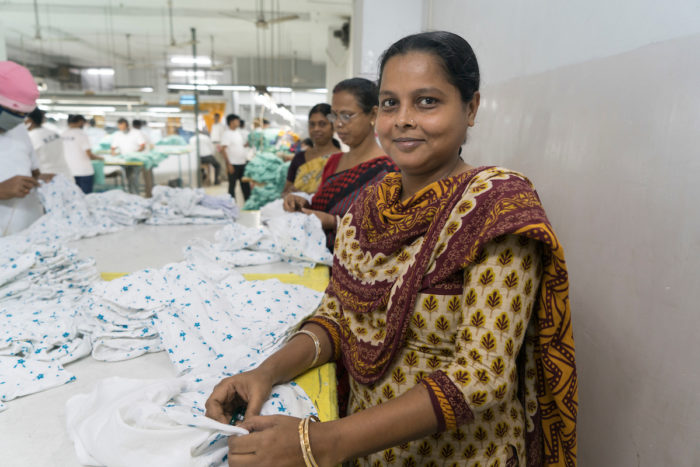
Rehana Middey, 34, from Howrah, West Bengal, works in finishing at the Rajlakshmi Cotton Mills in Howrah. She has 2 boys; both have graduated from 10th grade and are working in factories. “By working at this factory, I’m able to support my family and meet daily needs. Every year when we receive our Fair Trade premiums, I’m able to put them into savings – which may become important later in life. I remember the first year when the factory joined Fair Trade, I was able to buy a bicycle for my son to ride to school – I was so proud! If the customers buy our products, we can benefit and improve our lives while also providing good clothing for people all over the world.”
Packing

As consumers we are becoming more ethically conscious. We now recognise the importance of understanding who is making our clothes and where they are coming from. Luckily, there’s a growing opportunity to buy straight from the source as, with the support of non-profit organisations, ethical brands are increasingly being given the platform to bring their products to market.
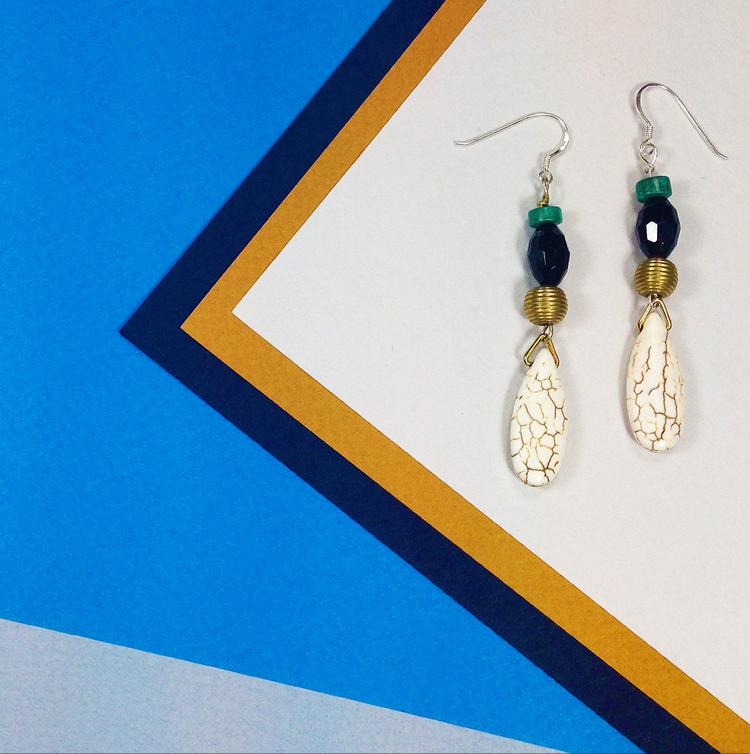
Safe Child Thailand is a UK-based charity that works to safeguard at-risk children in Thailand. The organisation has partnered with a women’s centre in Thailand to bring beautiful handmade ethical jewellery to British consumers while empowering vulnerable women in Thailand.
Thailand has a long-standing reputation for sex-tourism, with hundreds of thousands of tourists visiting each year to take advantage of its nightlife. The number of sex workers in Thailand is estimated to be as high as 2 million. Chonburi province, just south of Bangkok, is a sex-tourism ‘hotspot’ and home to tens of thousands of prostitutes who work in bars, massage parlours, nightclubs and brothels under the watchful eyes of traffickers, pimps and bar owners.
The centre never looks down on marginalised women, it’s about empowerment, giving energy and self-confidence – Mee* who attends the women’s centre
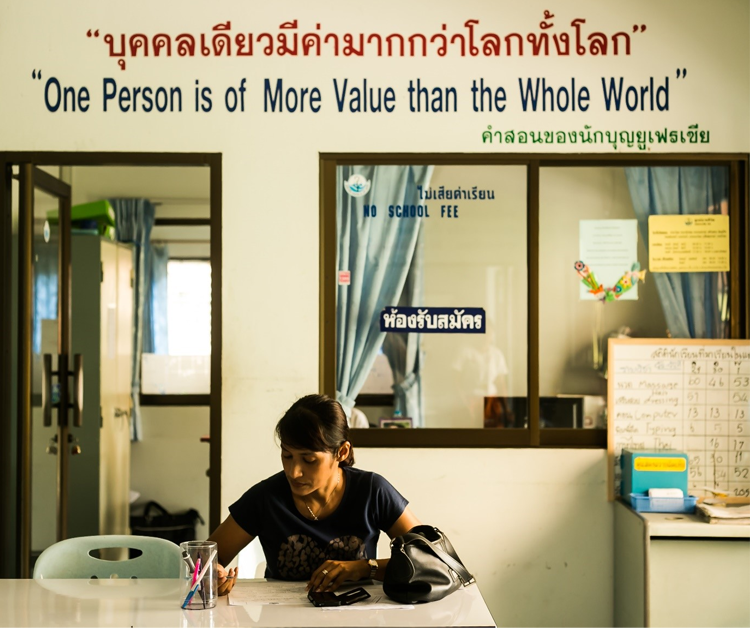
Kai found herself working in Chonburi. She, like many other women, came from a poor rural community. She had left her family, children and home in an attempt to earn a living in the city, but she quickly found herself consumed by a dark world of exploitation. So many vulnerable women share a similar fate to Kai and end up working in a degrading and low-paid job, with little freedom, no dignity or opportunities to educate themselves, gain vocational and life skills or even realise their basic human rights. Fortunately for Kai, she found a women’s centre – established to support and empower women who have nowhere else to turn.
As well as providing support, the women’s centre has several courses including a bespoke jewellery course which offers a real alternative to a life spent working on the streets. The course provides design and craft training, commercial knowledge, peer mentoring and professional support to empower women to create and sell their own jewellery. Jewellery that builds a brighter future and gives them the chance to escape a life of exploitation. The women at the centre created a brand for their jewellery – Jit-win-yan (จิตวิญญาณ) which means “spirit” or “soul”.
The logo they created represents the Thai word for “woman” and the blue colour symbolises support, strength, warmth, security, peace and love. Not only did they create a beautiful line of unique jewellery but they also created a community and a safe place for women like themselves. Before they started making their unique pieces, they made simple leather blue friendship bracelets to symbolise unity and sisterhood.

They made matching friendship bracelets to give to all the women at the centre so that when they were out working in the street and saw someone else wearing one – they knew they had a friend. – Charlie, Head of Programmes at Safe Child Thailand
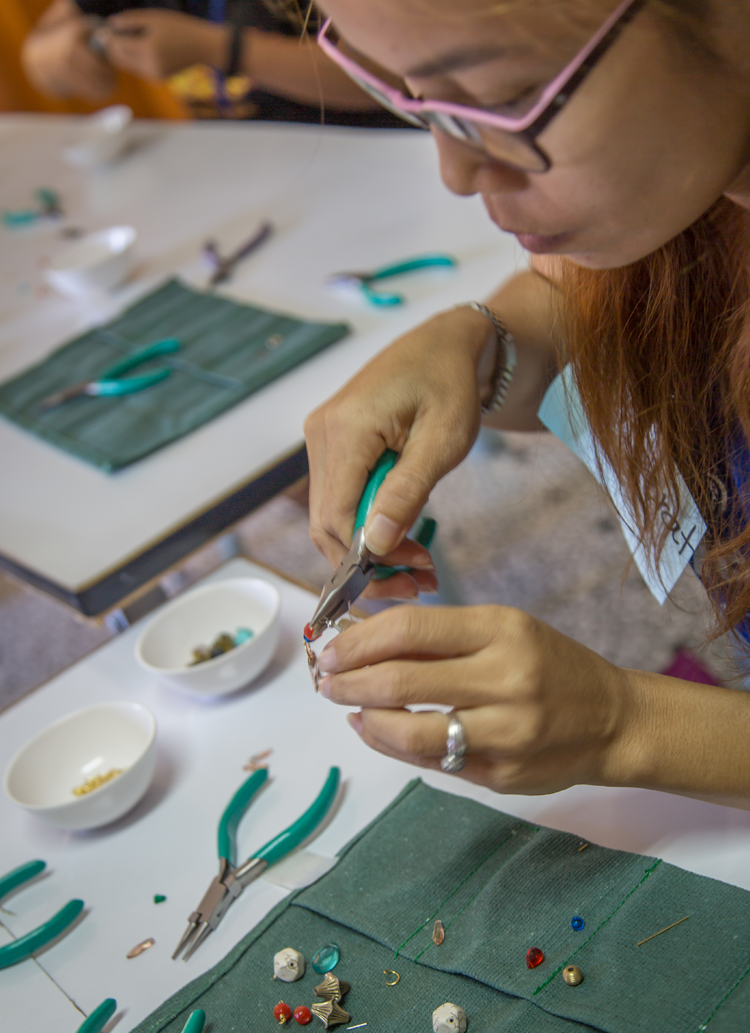
Kai joined the jewellery course and learnt how to design and craft jewellery, source semi-precious stones and a host of entrepreneurial skills to market and sell her jewellery. It gave her the opportunity of a new life, away from prostitution and bar work. She was even able to move back to her family home to be with her children.
Using her new skills, Kai has set up a small business making and selling jewellery and now teaches children and their mothers in her village how to make their own jewellery that they can sell at schools and local markets. She has become a wonderful role model for her children and the community, making sure they are not subjected to what she went through.
Through purchasing unique ethical jewellery, you can empower vulnerable women directly and give them a chance in life.
It is the first Saturday of July 2016, and the streets of Phnom Penh’s Meanchey district—an area concentrated with garment factories—are relatively calm.
It is late morning, and food vendors are preparing for the busiest time of the day: lunch. They put small helpings of rice, vegetables, and fish into little plastic bags, hastily organizing their offerings on top of their pushcarts for easy perusal. Their work is rhythmic: pack, tie, and place, pack, tie, and place. In front of them, motorbikes weave past each other, a scene of organized chaos with the mid-pitch hum of tiny engines as the soundtrack.
By noon, dozens of the factories that dot this area have opened their doors and thousands of garment workers are filling the streets. Girls and women pull off headscarves and facemasks even as the marching crowd kicks dust into the air. The market turns into a feeding frenzy as workers hastily snatch up bagged lunches for a couple thousand riels.* Some go back to the factory grounds to eat and rest. Others find informal bars and restaurants and watch TV. Pregnant workers stretch gingerly. Within the hour, they will all be back at their stations, cutting and sewing garments for a range of multi-national brands.
Sokhaeng’s story
Somewhere in the crowd, Sokhaeng stands near a vendor, debating between fish with a mango relish or rice and vegetables for her lunch. She will make her purchase and return to the sea of workers flowing in and out of factory gates.
Sokhaeng is one of the thousands of women who sit at a sewing machine for hours, turning pieces of cloth into garments destined for Western markets. She is also one of 187 women in Cambodia participating in the Garment Worker Diaries, a yearlong project capturing data on the lives of garment workers.
Sokhaeng’s story, which includes data from the first week in July 2016 to the second week in November 2016, is relevant because the data so far suggest that it is indicative of the experience of our sample of garment workers. She lives in a home that is typical for garment workers in Phnom Penh and has similar demographic and economic characteristics. Her experience in her factory is characteristic of those of the other women we interviewed and her day-to-day activities are reflective of the rhythms of these women’s lives. In other words, Sokhaeng’s story illuminates the experience of garment workers in our study generally.
To find out what Sokhaeng has done to scrape by on the low pay she receives as a garment worker, read the report below. Will she be able to afford her dream of becoming a beautician and provide for her family’s basic needs at the same time?
Read her story (pdf)
Read the summary (2 page pdf)
*On April 3, 2017, one U.S. dollar equated to roughly 4,000 Cambodian riels; one British Pound equated to roughly 5,000 Cambodian riels; and one Euro equated to roughly 4,300 Cambodian riels.”
Sheepskins and Knitting Yarn in the Outer Hebrides, Scotland.

The shipping forecast issued by the Met office at 11:30 UTC on Friday 27 January 2017. Northwest Hebrides, Bailey – Southeasterly 6 to gale 8, becoming cyclonic gale 8 to storm 10 then southwesterly 5 to 7 later. Very rough or high, becoming rough or very rough later. Rain then showers. Moderate or poor, becoming good.

January and February are always the toughest months in the Hebridean islands off the north-west of Scotland. For both humans and animals our resources and resilience are at their lowest point, the days are short and dark, the weather extreme and wild.
However, amongst all this there is still beauty and special moments of fiery sunrises, otter tracks to the shore and soaring golden eagles.

In 2015, I tentatively started The Birlinn Yarn Company from our family croft (small holding) at Sunhill on the small Hedridean island of Berneray in the Sound of Harris. We have lived here for the past twenty years, worked, renovated two properties and brought up two sons. We now produce deep luxurious sheepskins and a range of knitting yarn from our own fleeces and those we buy from neighbouring crofters.

Hebridean sheep, dark fleeced and horned, were originally brought here by the Vikings in their long boats around 800 A.D. Overtime the long boats, built for long distance sea voyages were adapted for inter-island travel and became the Hebridean galley or Birlinn. Hence the brand name Birlinn Yarn, what’s more they are still ‘seafaring sheep’ as we take them to and fro from the islands by boat.

Supporting and maintaining traditional crofting (small scale agricultural) practice, which has maintained equilibrium and respect for the ecology for hundreds of years, is very import to our business ethos. We use seaweed to fertilise our crops, keep stock to low intensive levels and every activity or action is measured against the impact to the environment.
Our agricultural activities are set mainly by the rhythms of the weather and seasons. Our sheep lamb on the croft, then once the lambs are strong enough we take them all to the islands for summer grazing. Here they graze on a wide variety of plants, including seaweed, a bit like trying to attain our 5/day fruit and veg – resulting in a good healthy diet.
In July, we return to shear all the sheep on the islands. We choose a good forecast, wait for a crowd of cousins to come up on holiday to help out and it always turns out to be a long, hard but very enjoyable day.

In the autumn the ewes are brought back to the croft to meet their boyfriend (the tup) and then they spend the winter months grazing on the machair (raised beach) to the West of the island. And so the cycle continues …
Amongst many other activities, I am also a practicing visual artist http://www.megrodger.com with an exhibition currently showing at Taigh Chearsbhagh Museum & Art Gallery in Lochmaddy, North Uist. While my current fascination is working with the wind to generate drawings, I am always taking note of the wonderful range of colours we have in the Hebrides.
Thus, just this week, I have launched a new organically dyed knitting yarn range reflecting the subtle tones and shades of the Hebrides. Our ecosystems here are as much Highland as Island given that our habitats range from moor, to machair, shore and sea. In relatively short distances, you can encounter gliding golden eagles, wild orchids, playful otters and roaring Atlantic breakers on the shore.

This range of organic dyed yarns have been produced as a unique and small batch to complement out natural yarns. By over-dying a blended yarn this has given the colours both texture and depth. The yarns come in four colours: Sgeir – Reef, Còinneach – Moss, Monadh – Moor and Duileasg.

What next? Well, I hope this year to work with a knitwear designer who understands our ethos and brand to develop knitting patterns incorporating both the Norse and Hebridean heritage of our sheep and islands.
In the meantime, why not take a look at our website, be tempted and knit yourself a wee bit of the Scottish Hebrides.
http://www.birlinnyarn.co.uk
https://twitter.com/BirlinnYarn
https://www.facebook.com/BirlinnYarn/
Por: Microfinance Opportunities
hace 2 meses.
Autores: Conor Gallagher y Guy Stuart, Microfinance Opportunities
Hace cuatro años, un incendio en la fábrica de Tazreen Fashions en las afueras de Dhaka mató a 112 trabajadores de la confección y lesionó casi al doble. Entre otras consecuencias, se produjo un clamor internacional pidiendo una mayor regulación de las condiciones de seguridad y salud en las fábricas de confección textil en todo el país. Las marcas de ropa y los minoristas se reunieron y acordaron controlar mejor las condiciones de trabajo dentro de las fábricas de confección donde se hacen sus prendas. Después ocurrió el desastre de Rana Plaza, fue entonces cuando el gobierno de Bangladesh adoptó nueva legislación para fortalecer el organismo regulador que lleva a cabo las inspecciones de seguridad. En marzo de 2016, el Departamento de Inspección de Fábricas y Establecimientos había inspeccionado 1.549 fábricas de prendas de vestir ya confeccionadas en todo el país.
Aún así, los trabajadores de las fábricas de confección continúan enfrentándose a malas condiciones de seguridad y salud no sólo en Bangladesh, sino también en otros países exportadores de prendas de vestir principalmente. Estas malas condiciones no tienen por qué dar lugar a grandes tragedias como las de la fábrica Tazreen Fashions o la de Rana Plaza, pero sí que exponen a los trabajadores de las fábricas a condiciones poco seguras y sufren dolores y padecimientos innecesarios.
Hay equipos de investigación del proyecto de Los Diarios de los Trabajadores de la Confección[1] en Bangladesh, Camboya e India que han estado recolectando datos semanalmente sobre lo que los trabajadores de la confección ganan y sobre lo que pueden comprar cada semana, cómo pasan su tiempo a diario y si experimentan acoso, lesiones u otros hechos significativos mientras que están en las fábricas. Aunque todavía estamos en las primeras etapas de la recolección de datos, nuestro proyecto abarca a 540 trabajadores de estos tres países, y estamos escuchando lo que ellos nos cuentan sobre los peligros de seguridad y salud a los que se enfrentan.
Los trabajadores de nuestro estudio nos han informado sobre los principales acontecimientos que han tenido lugar en las fábricas. En Bangladesh, las mujeres de dos fábricas diferentes nos han informado sobre incendios. En el primer caso, se produjo un incendio durante la hora del almuerzo y tuvieron que apagarlo los propios trabajadores. En el segundo caso, el incendio se produjo durante un turno de medianoche y se tardó una hora en extinguirlo. No se reportaron bajas en ninguno de los casos.
En Camboya, una trabajadora nos informó que el dueño de su fábrica no le había pagado su salario, por lo que terminó yendo al puesto de guardia de la fábrica para tratar de obligarlo a pagar. A la semana siguiente, presentó una demanda en el juzgado contra el dueño, pidiendo de nuevo que le pagaran. Esto ocurrió hace más de dos meses y la situación aún no se ha resuelto. Hemos visto incidentes similares en Bangladesh. Por ejemplo, seis trabajadores de una fábrica cerca de Dhaka informaron de una huelga general en la fábrica ya que el propietario no había pagado sus salarios a tiempo. Esto dio lugar a altercados con agentes de policía, presionando al propietario a pagar poco después de que estallaran los enfrentamientos.
No todos los problemas a los que se enfrentan los trabajadores son asuntos tan graves como incendios o huelgas. Los trabajadores nos cuentan también algunos desafíos más frecuentes y recurrentes a los que se enfrentan. Los trabajadores de nuestro estudio nos han informado sobre acosos reiterados en el lugar de trabajo. Incidentes que van desde que les griten o insulten hasta el acoso sexual. En Camboya, los trabajadores han sido capaces de compartir con nosotros los insultos que reciben. Algunos ejemplos incluyen a mujeres a las que se les llama “idiotas” o “chicas locas”, mientras que el supervisor de una de ellas le dijo que “su futuro no es muy brillante con su descuidada forma de trabajar”.
Finalmente, los trabajadores de nuestro estudio nos cuentan los dolores que padecen a causa de su trabajo. En India y Camboya, por ejemplo, los trabajadores nos informan habitualmente de casos de dolor crónico. Los encuestados en estos países tienen dolencias comunes: los trabajadores en la India suelen padecer dolor de espalda y en Camboya han informado con más frecuencia de dolores de cabeza. Estos dolores son comunes entre los trabajadores de las fábricas de confección, ya que se enfrentan a condiciones de trabajo incómodas que les obligan a permanecer encorvados mientras realizan tareas repetitivas durante interminables horas. Estas condiciones causan estragos en los cuerpos de los trabajadores conforme pasa el tiempo, convirtiéndose en los tipos de dolor crónico de los que nos informan los encuestados a menudo. Existen casos extremos como el de tres de trabajadores de la India que informaron que padecen dolor de espalda todas las semanas, y que el dolor puede permanecer desde una hora a varios días.
Todavía estamos en las primeras etapas de recopilar y analizar los datos de las 540 mujeres que participan en nuestro estudio. A medida que avance el Diario de los Trabajadores de la Confección, seguiremos recopilando información sobre lo que sucede en las fábricas de confección en Bangladesh, Camboya e India. Utilizaremos entrevistas y encuestas para profundizar en las condiciones de trabajo específicas a las que se enfrentan los trabajadores.
Ahora le preguntamos:
¿qué le gustaría saber sobre las mujeres que hacen nuestra ropa y las condiciones laborales a las que se enfrentan?
Puedes preguntarnos utilizando @fash_rev #workerdiaries
[1] Los Diarios de los Trabajadores de la Confección es un proyecto de investigación de un año de duración liderado por Microfinance Opportunities en colaboración con Fashion Revolution y con el apoyo de C&A Foundation. Estamos recopilando datos sobre la vida de trabajadores de la confección en Bangladesh, Camboya e India. Fashion Revolution utilizará las conclusiones de este proyecto para abogar por cambios en el comportamiento de los consumidores y las empresas y por cambios de política que mejoren las condiciones de vida y de trabajo de los trabajadores de la confección en todo el mundo.
Strikes, Rents, and Wages
During the last two weeks of 2016, as consumers in the United States and Europe were donning their new holiday outfits, the garment workers who made those clothes in the manufacturing hub of Ashulia in Bangladesh were being arrested by police, and factory owners sacked workers by the thousands.
The heavy-handed actions were a response to workers’ protests against high rents and low wages. Garments workers said they could not pay rent and purchase daily necessities like food, basic clothing, and medicine on the paltry minimum wage of $68 a month. In response, the Government of Bangladesh’s Minister of Commerce Tofael Ahmed announced that the government would ensure that rents in the Ashulia area would not increase for three years.
Unfortunately, new data from Microfinance Opportunities’ Garment Worker Diaries shows that current rent levels are driving garment workers to accumulate debt in order to provide basic necessities for themselves and their families. Consequently, the government’s promise to hold rents steady is unlikely to provide workers with financial relief.
Debt for the Renters
We are currently conducting weekly interviews with 181 female garment workers who live in manufacturing hubs throughout Bangladesh, including 16 who live in Ashulia. Two-thirds of the sample are responsible for paying their household’s rent. Women who do and do not pay rent share many similarities. The majority of the women are married, and they have comparable education levels and positions in their factories, although those who pay rent are slightly older. The women that are married live with their husbands and children in one room with no bathroom or formal cooking area; those that are not share similar spaces with other family members or other garment workers.
The economic behavior of these two groups is as different as their demographic characteristics are the same. The data make clear that rent is a huge burden for the two-thirds of women who pay it, demanding 40 percent of the value of a monthly paycheck on average. These women purchase goods on store credit more than twice as often as the women who do not pay rent, borrowing goods each month with a value equivalent to almost 20 percent of an average paycheck. The goods they purchase are not luxuries – they borrow basics like food, soap, and medicine for themselves and their families.

Women who pay rent use more cash loans too – they receive cash loans once every two months on average compared to once every four months for those who do not pay rent. Women who pay rent borrow loans that are almost three times the size of the ones that other garment workers borrow. At $37, these loans are roughly equivalent to our garment workers’ monthly rent.

Debt, In Cycles
Women do not acquire this debt haphazardly or in response to unusual events – their behavior is cyclical. In the weeks between monthly paychecks, women borrow goods from store vendors and take cash loans, using the cash to purchase basic goods they cannot get on credit and to pay rent for the upcoming month.
Their paychecks make them flush with cash but only for a moment – in addition to rent, they have to repay their outstanding loans from the previous month. After paying their rent and these loans, they are short on cash, and the cycle of taking on and repaying debt begins again.

Holding Rents: Nothing More Than a Platitude
This cycle has the makings of a catastrophe. An unexpected event, like a medical emergency, could be devastating for women already living on the financial edge. Women who lose their factory jobs may be unable to repay their debts, forcing them to borrow from riskier sources, and pushing them deeper into a debt trap.
From this perspective, the Government of Bangladesh’s promise to hold rents steady is nothing more than a platitude, a promise that while garment workers’ rent-induced stress may not increase, it will not be relieved in the near future. Instead, the workers will continue to exist in a status quo defined by the pressure of borrowing to make ends’ meet and working 60 hour weeks to ensure debts can be paid.
by Eric Noggle
The Garment Worker Diaries is a yearlong research project that is collecting data on the lives of garment workers in Bangladesh, Cambodia, and India. Microfinance Opportunities is leading the project with support from C&A Foundation. Fashion Revolution will use the findings from this project to advocate for changes in consumer and corporate behavior and policy changes that improve the living and working conditions of garment workers everywhere.
Follow the yearlong study on social media #workerdiaries
Los Diarios de los Trabajadores de la Confección es un proyecto de investigación de un año de duración liderado por Microfinance Opportunities en colaboración con Fashion Revolution y con el apoyo de C&A Foundation. Estamos recopilando datos sobre la vida de trabajadores de la confección en Bangladesh, Camboya e India. Fashion Revolution utilizará las conclusiones de este proyecto para abogar por cambios en el comportamiento de los consumidores y las empresas y por cambios de política que mejoren las condiciones de vida y de trabajo de los trabajadores de la confección en todo el mundo.
Docenas de fábricas de ropa de color beige se alinean en las calles de las afueras de Phnom Penh. Los complejos están protegidos por muros de más de 3 metros de altura, puertas metálicas y controles de seguridad en las entradas. Por la mañana temprano, los trabajadores de la confección que viven cerca salen de su casa – a menudo una habitación de 6,5 metro cuadrados con baño compartido – y entran en estas fábricas, contándose por miles los que comienzan su jornada de trabajo. Durante las siguientes ocho a 12 horas, cortan y cosen prendas para las grandes marcas de ropa, quienes le venden los productos terminados a personas como usted y a miles de millones más en todo el mundo. Cuando los trabajadores salen, muchos se quejan de dolores de cabeza y dolor crónico en brazos y espalda, agravados por los movimientos repetitivos de su trabajo. Realizan esta rutina seis días a la semana, y por su trabajo, el gobierno de Camboya ordena que los propietarios de las fábricas les paguen un mínimo de 140$ al mes, o setenta centavos la hora basándose en una semana laboral de 50 horas. Las situaciones en Bangladesh y la India son similares. Cientos de miles de trabajadores trabajan largas horas con la esperanza de recibir el salario mínimo, que está fijado en 68$ y 105$ al mes, respectivamente.
Los defensores de los derechos laborales dicen que los trabajadores a menudo reciben menos del salario mínimo en Bangladesh, Camboya e India. Incluso si reciben el salario mínimo, dicen los defensores, puede que no sea suficiente para los trabajadores que necesitan pagar los gastos de vivienda y proveer de alimentos, atención médica y otras necesidades a sí mismos y a sus familias.
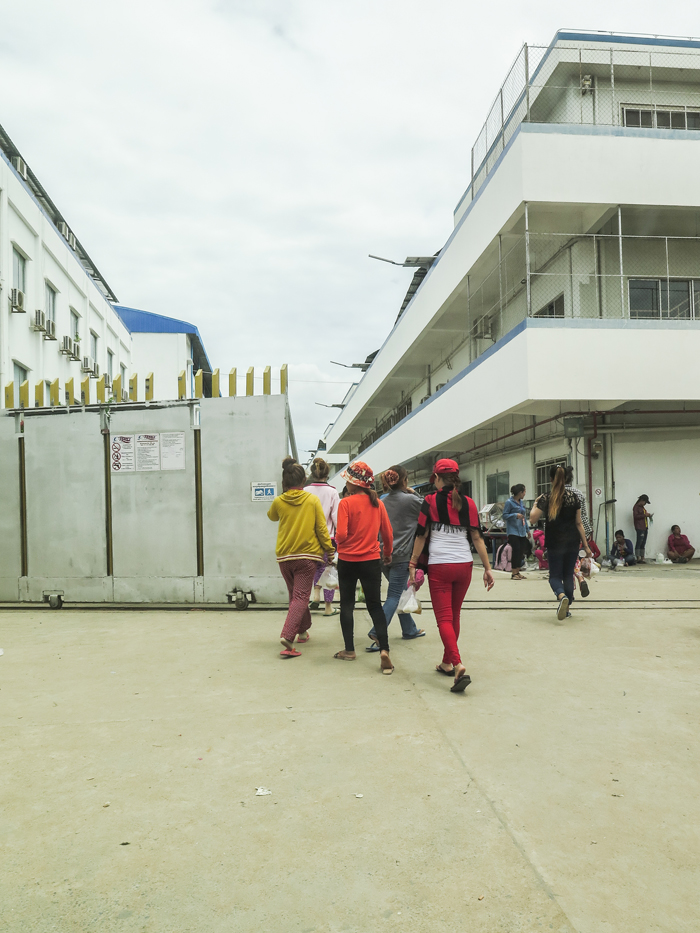
Si su salario no puede cubrir sus necesidades, ¿cómo sobreviven? ¿De dónde sacan el dinero para cubrir los gastos básicos? ¿Eligen entre enviar dinero a sus familias en las aldeas rurales o comprar la comida suficiente para alimentarse durante la semana?
¿Qué pasa detrás de esas grandes puertas metálicas? ¿Sus supervisores les animan o les amonestan cuando hay una orden importante de ropa? ¿Con qué frecuencia experimentan dolor crónico a causa de su trabajo? ¿Qué hacen cuando se lesionan?
Estamos supervisando a investigadores de campo que están haciendo estas preguntas a 180 trabajadores de la confección por país en Bangladesh, Camboya e India. Durante los próximos 12 meses, los entrevistadores visitarán al mismo grupo de trabajadores de la confección semanalmente para conocer los detalles íntimos de sus vidas. Preguntarán a los trabajadores de la confección sobre lo que ganan y compran, cómo invierten su tiempo a diario, y si experimentan algún tipo de acoso, lesiones o dolencias mientras están en la fábrica. Los entrevistadores aprenderán también sobre eventos importantes que ocurran en las vidas de los trabajadores, desde fiestas de cumpleaños y bodas hasta enfermedades y funerales de familiares y amigos.
Estos datos son un tesoro: imagina lo que aprenderías sobre una persona haciendo preguntas detalladas sobre su vida semanalmente, cada semana durante un año entero. Nuestro trabajo como investigadores es analizarlo objetivamente y proporcionar respuestas a las preguntas de lo que sucede detrás de las puertas de esas fábricas y, lo que es más importante aún, lo que sucede después, cuando salen los trabajadores.
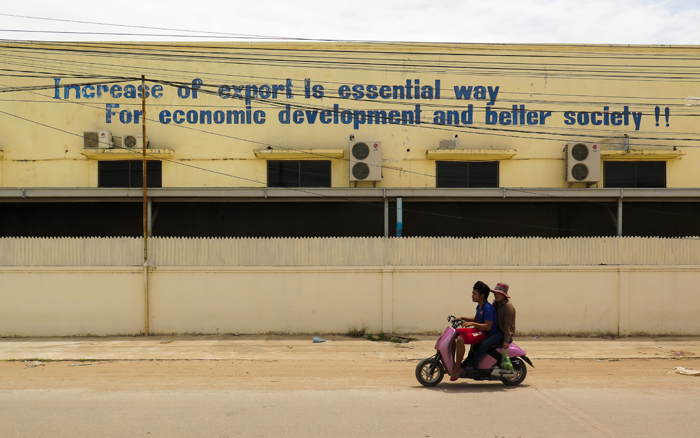
Nuestra esperanza es que las empresas de ropa, los consumidores, los dueños de fábricas y los encargados de formular las políticas puedan utilizar las ideas que identificamos para entender cómo afectan las decisiones que toman a la situación de los trabajadores de la confección. Para ello, estamos trabajando con Fashion Revolution para poner nuestros datos a disposición de los responsables del cambio quienes pueden influir en la cadena de suministro de ropa global, el marco normativo y las protecciones sociales disponibles para los trabajadores de la confección.
Uno de los agentes más importantes del cambio es usted: consumidor, impulsor de tendencias y comprador de ropa. A lo largo de los próximos meses, Fashion Revolution y nuestro equipo compartirán los hallazgos de nuestro proyecto a través de medios sociales, blogs, fanzines, informes y exposiciones. Le animamos a mantenerse informado de nuestro trabajo para así también poder defender a las personas que hicieron su ropa.
Autores: Eric Noggle y Guy Stuart, Microfinance Opportunities
C&A Foundation está proporcionando apoyo financiero para Los Diarios de Trabajadores de la Confección. Estamos colaborando con Fashion Revolution para distribuir los resultados. Nuestros socios locales son BRAC (Bangladesh), TNS (Camboya) y Morsel Ltd. (India).

This website was created and maintained with the financial support of the European Union. Its contents are the sole responsibility of Fashion Revolution and do not necessarily reflect the views of the European Union.