Beyond functionality: How repair forces us to slow down and cherish our clothing
In Conversation with: Dr. Julia English.
Beyond functionality: How repair forces us to slow down and cherish our clothing.
By: Fashion Revolution Australia
As part of our interview series spotlighting emerging voices in Australia’s fashion landscape, we sat down with Dr. Julia English — a researcher and creative practitioner, exploring how we engage with clothing beyond consumption.
Dr Julia English is a Fashion Design Lecturer at Swinburne University, and an award winning researcher and creative practitioner, whose work spans written, audio, digital and textile media. Her research focuses on understanding how small businesses and designers may approach developing remake fashion products and encouraging clothing repair.
Repair: does it really matter?
J: The lovely thing with repair is that it makes us slow down. We talk about slow fashion and how crucial it is, but with repair you’re literally slowing down because it takes time. Yes, it can be functional by getting something fixed, but it can also be this space to cherish the clothing we have – it’s nourishing for yourself, it’s nourishing for your clothes.
For someone who’s never picked up a needle and thread, where’s the best place to start? Any easy repairs we can try at home?
J: First of all – sew on a button. It’s not difficult and you can find 15 different ways to do it online and they’re all right! If it stays on, you’ve sewn it on fine. You can do a criss cross, double parallel lines, you can do some weird hodge podge – if the button is on, the button is on. I was part of a project with RMIT’s PlaceLab which was called the Wear & Care Project and as part of it they interviewed Brunswick secondhand stores and found that they struggled to sell garments without a button. So take the time to fix garments with missing buttons, it will make your donations that much more valuable to your favourite Op Shops.
I would also suggest to start with the things you enjoy wearing and that you aren’t precious about. If you’ve got a busted seam, you can repair it with a bit of hand sewing thread. It doesn’t have to be complicated and guess what, every time you wear your tracky pants you’ll get this little burst of satisfaction that the hole in the pocket has been fixed.
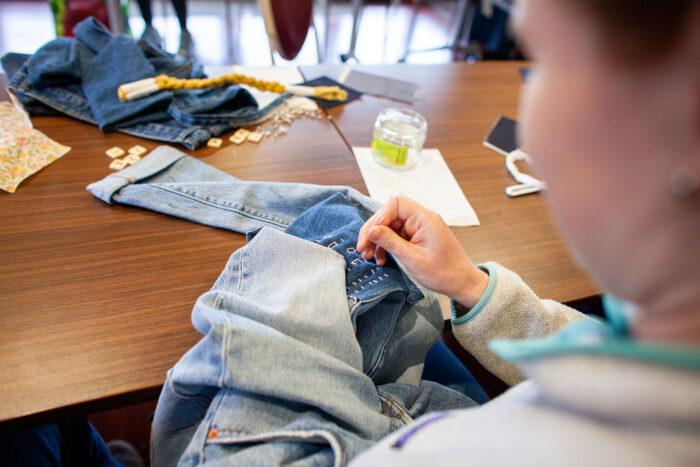
Many people feel intimidated by sewing. What’s your advice for making repair less daunting?
J: There are two ways to approach it, depending on your time and capacity. The first is to think about what’s functional, what’s the stuff that just needs to get done to make it back in the wardrobe. Sewing on a button is a prime example.
The other way to approach it is as a creative hobby – think: can I sew on a patch or pick up an iron-on patch on my next trip? Rather than something solely functional, repair can become a hobby, a lovely way to make garments your own and help you feel even more attached to them.
What are some affordable or accessible ways people can learn to repair?
J: There are heaps of online resources, which are great if you need some simple instructions for something that is obvious. When you want more creative support, or you’re not sure how to approach a project, community spaces can be great. Repair cafés are a wonderful resource, they’re one of the best ways to participate in that space and often they will have someone who specialises in clothing.
Outside of that, ask your friends – I think we underrate skill sharing as a way of connecting with people. Maybe your friend had a really nifty aunt who taught her some great darning techniques. Do we ask our friends: ‘do you know how to repair, I’m trying to figure out what to do with these pants?’ I don’t think we do, but I think we should.
How can people participate in remake or upcycling?
J: I like the language of remake because whether or not the value of the piece has increased, it’s just about the process – you’ve tried making it again in some way, shape or form.
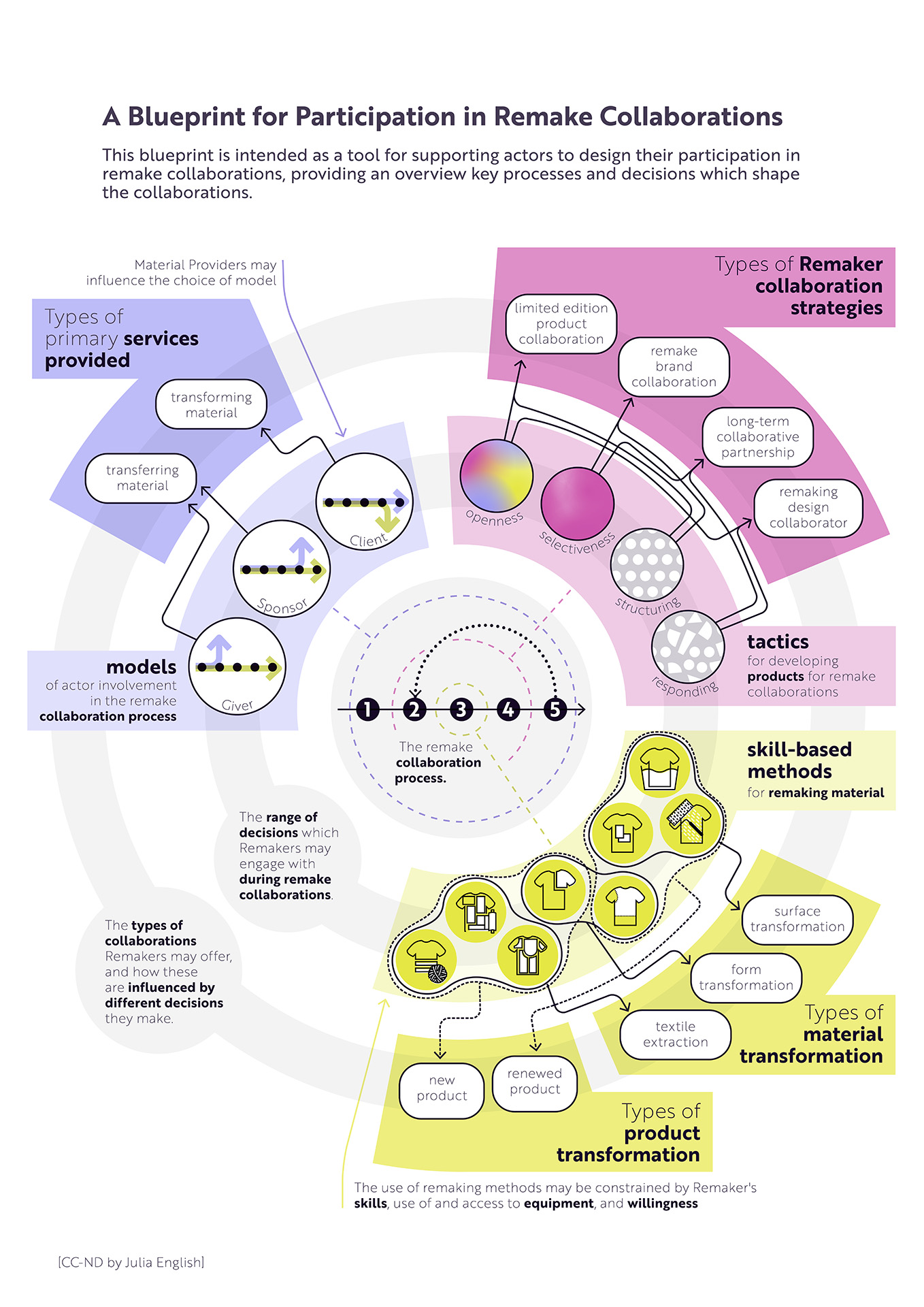
Within that framework one of the things I looked at are the methods involved and how we can approach it. This might be quite helpful for people who are trying to figure out how they can engage in remaking practices.
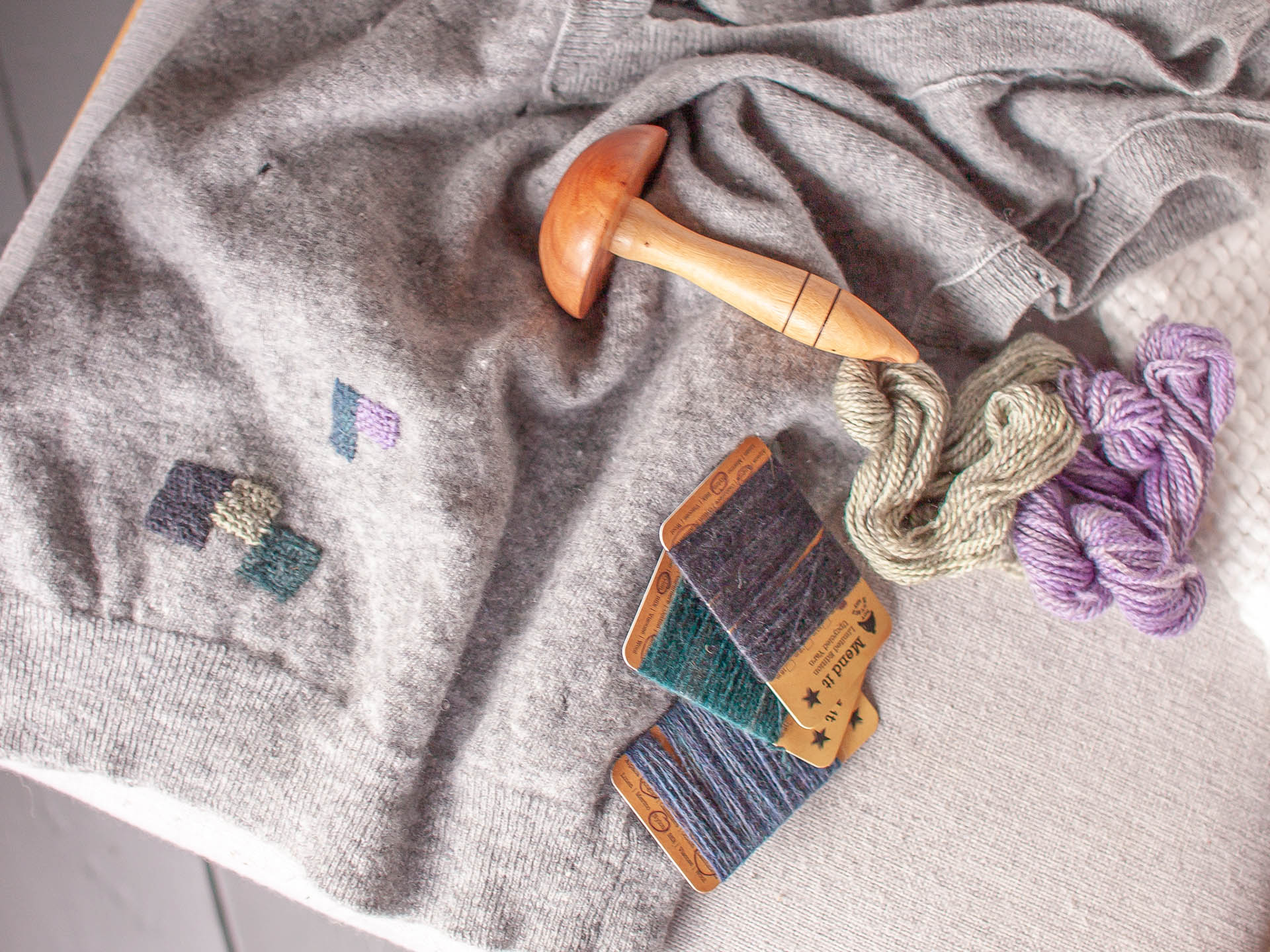
Take the surface of the material – something like a stain or a hole, that’s not necessarily a problem with the whole fit or the form, it’s just that there’s something going on at the surface. I talk about three different methods here – overprinting, dyeing, or embellishing and these are all different ways to interact and change the surface.
When the pants are a weird fit, or there’s something wrong with the whole form, then I talk about how we can transform the form. I split that up into two different ways, one is alterations and the other is when we start to combine multiple garments together, that’s what I refer to as ‘splicing’.
The last one that I talk about is textile extraction, where we’re treating these existing materials as fabric and processes like patternmaking, piecing or patchworking to make a new fabric.
Definition
For clarity, I think remake should be under the umbrella of developing a new design proposition and repair as restoring the original design proposition, or restoring the way it was intended to look. If someone wants the pockets of their jeans moved up, if you’re fixing a seam that was broken – there is a lot of skill in being able to alter, fix garments and make them look how they were supposed to. If we’re looking at something like darning in this creative embellishing space, to me, that’s a form of remake, because you’re adding a new design element.
 |
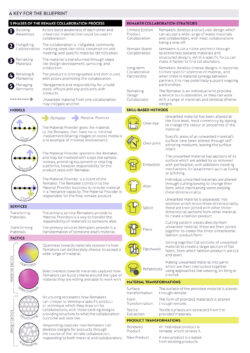 |
Designing Collaborations to Remake Waste: A Blueprint for Fashion Businesses by Dr Julia English
How can individuals help normalise repair culture and shift fashion’s focus away from disposability?
J: There’s so much opportunity for repair to be beyond a business centric space. Yes, having services to repair garments is great, but you’re always going to run into the problem of cost – when garments are produced offshore, the cost to repair them locally is always going to feel high in comparison because of the labour involved.
When we think about all of the problems with our world and this idea of how we’re struggling to connect and understand people, I think any tool like this which brings people together around a physical thing that keeps us present and look at what we have in our lives. Typically if you want to repair something it’s because you love it – how special is that, that we have something in our lives that we love enough that we want to fix it. Who’s going to fix it, if not you?

Want to learn more about Julia’s award-winning research on remake and repair? You can connect with her below.
Website: juliaenglish.com.au
Instagram: @_julia.english_
LinkedIn: Julia English